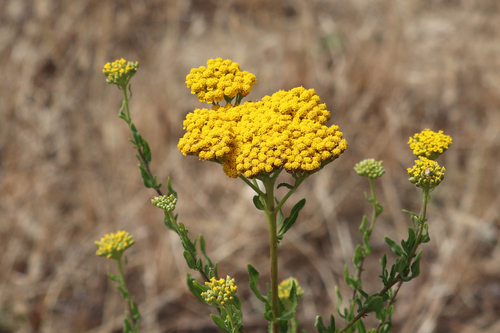
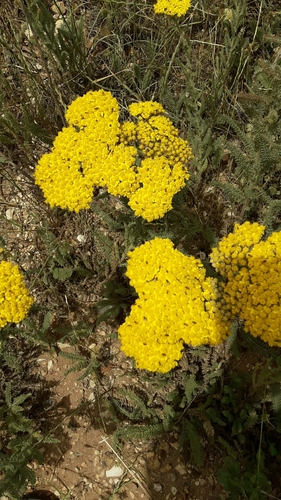
Inula cappa
(Buch.-Ham.) DC.
Sheep's ear

(c) loni_ma, some rights reserved (CC BY-NC)

(c) Alan Kwok (King Lun), Ada Tai (Ah Heung) / 阿達蘭 AdAlan, some rights reserved (CC BY-NC)

(c) Alan Kwok (King Lun), Ada Tai (Ah Heung) / 阿達蘭 AdAlan, some rights reserved (CC BY-NC)
What to Eat
Edible parts: Leaves, Vegetables, Root - tea
No edible uses are known for this plant.
Where to Find It
It is a tropical plant. In Yunnan.
Asia, China, Himalayas, India, Myanmar, Nepal, Northeastern India, SE Asia,
How to Identify
A hermaphroditic shrub growing to 1.8 meters. Tolerates light sandy, medium loamy, and heavy clay soils across mildly acid to mildly alkaline pH ranges. Can grow in semi-shade or full sun and prefers moist conditions.
How to Grow
Propagation: Propagate by seed.
Medicinal Uses
The plant is considered anodyne, antiphlogistic, carminative, depurative, and expectorant, and is used to dispel clots. The juice of the root is used to treat peptic ulcers, indigestion, and other gastric disorders. A decoction of the root is used in the treatment of fevers, and is also added to bath water to relieve body aches caused by hard physical work. A poultice of pounded root is applied to the forehead to relieve headaches. The juice of the bark, mixed with equal quantities of bark juice from Ficus semicordata and Myrica esculenta, is used in the treatment of menstrual disorders.
Other Uses
No other uses are known for this plant.
Wikipedia
A hermaphroditic shrub growing to 1.8 meters. Tolerates light sandy, medium loamy, and heavy clay soils across mildly acid to mildly alkaline pH ranges. Can grow in semi-shade or full sun and prefers moist conditions.
Production
Leaves are available all year round.
Other Information
It is sold in local markets in China.
Names & Synonyms
Bai mian feng, Chelimpui, Gai tihare, Gai tiware, Lahuma
References (5)
- Dangol, D. R. et al, 2017, Wild Edible Plants in Nepal. Proceedings of 2nd National Workshop on CUAOGR, 2017
- Li, D. et al, 2017, Ethnobotanical survey of herbal tea plants from the traditional markets in Chaoshan, China. Journal of Ethnopharmacology. 205 (2017) 195-206
- Teron, R. & Borthakur, S. K., 2016, Edible Medicines: An Exploration of Medicinal Plants in Dietary Practices of Karbi Tribal Population of Assam, Northeast India. In Mondal, N. & Sen, J.(Ed.) Nutrition and Health among tribal populations of India. p 149
- Thapa, L. B., et al, 2014, Wild Edible Plants used by endangered and Indigenous Raji Tribe in Western Nepal. International Journal of Applied Sciences and Biotechnology. Vol 2(3):243-252
- Xu, You-Kai, et al, 2004, Wild Vegetable Resources and Market Survey in Xishuangbanna, Southwest China. Economic Botany. 58(4): 647-667.