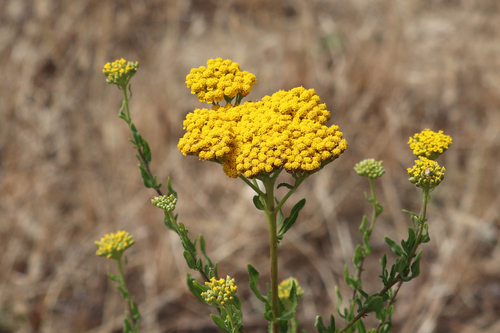
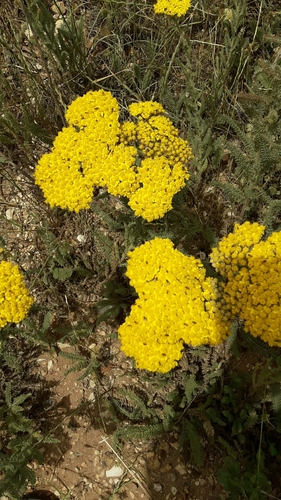
Centaurea iberica
Trevir. ex Spreng.
Iberian star thistle, Spanish thistle

(c) Arthur Chapman, some rights reserved (CC BY-NC-SA)
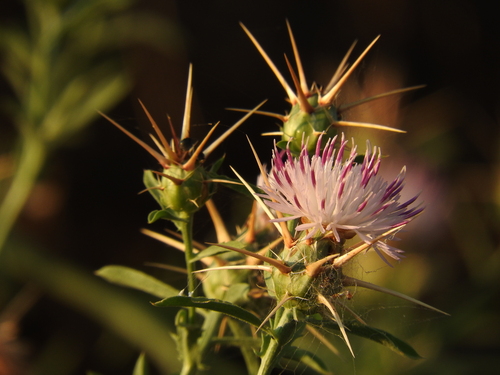
(c) Γιώργος Παντάκης, some rights reserved (CC BY-NC)
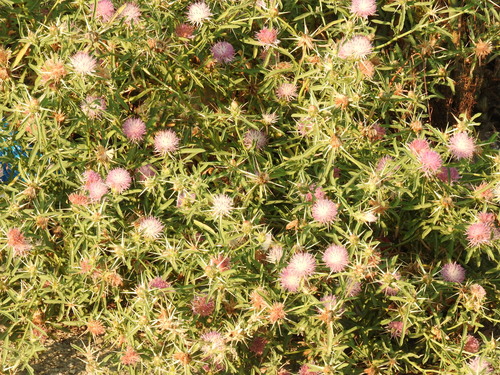
(c) Γιώργος Παντάκης, some rights reserved (CC BY-NC)
What to Eat
Edible parts: Leaves, Leaf stalks, Young stems
The plant is used as a cooked vegetable, though the specific part used is not recorded.
Where to Find It
It is a Mediterranean climate plant. It grows in mountainous regions in the Mediterranean. In western China it grows on mountain slopes between 500-900 m above sea level.
Afghanistan, Argentina, Asia, Caucasus, Central Asia, Europe, Georgia, India, Jordan, Kazakhstan, Kyrgyzstan, Lebanon, Mediterranean, Middle East, North America, Pakistan, Russia, South America, Tajikistan, Turkey, Türkiye, Turkmenistan, USA, Uzbekistan,
How to Identify
A herb. It grows 20-100 cm tall. It grows for one or two years. The leaves are divided along the stalk. There are about 4 pairs of side lobes or segments. Leaves get smaller up the stem.
How to Grow
Succeeds in ordinary garden soil. Prefers a well-drained fertile soil and a sunny position. Tolerates dry, low fertility and alkaline soils. This species is closely related to C. calcitrapa. Members of this genus are rarely if ever troubled by browsing deer.
Propagation: Sow seed in April in a cold frame. Once seedlings are large enough to handle, prick them out into individual pots and plant out during the summer.
Medicinal Uses
The plant has demonstrated antioxidant, antimicrobial, antibacterial, and antifungal activity. In Turkish folk medicine it is used to relieve pain and inflammation associated with rheumatoid arthritis, to reduce high fever, ease headaches, and aid wound healing. Several of its traditional uses within its native range are being validated by scientific research.
Other Uses
None known.
Wikipedia
Source ↗Centaurea iberica, the Iberian knapweed or Iberian star-thistle, is a species of Centaurea. It is native to southeastern Europe and southwestern Asia. It is known elsewhere as an introduced species and a noxious weed.
Notes
There are 400 to 600 Centaurea species.
Names & Synonyms
Cakirdikeni, Hari qbila, HIstiri cavbellok, Histrizerk, Murrar, Pincari teal, Strizerk.
References (12)
- Al-Ismail, A. et al, 2007, Antioxidant Activities of some Edible Wild Mediterranean Plants. Ital. J. Food Sci. n. 3, vol. 19 - 2007 287
- Al-Qura'n, S. A., 2010, Ethnobotanical and Ecological Studies of Wild Edible Plants in Jordan. Libyan Agriculture Research Center Journal International 1(4):231-243
- Cakir, E. A., 2017, Traditional knowledge of wild edible plants of Iğdır Province (East Anatolia, Turkey). Acta Soc Bot Pol. 2017;86(4):3568.
- Demir, I. & Ayaz, N., 2022, Wild edible plants contributing to the traditional foods of Mardin (Turkey) Province. Indian Journal of Traditional Knowledge Vol 21(3), July 2022, pp 569-582
- Dobriyal, M. J. R. & Dobriyal, R., 2014, Non Wood Forest Produce an Option for Ethnic Food and Nutritional Security in India. Int. J. of Usuf. Mngt. 15(1):17-37
- Ertug, F, Yenen Bitkiler. Resimli Türkiye Florası -I- Flora of Turkey - Ethnobotany supplement
- Kaya, O. M., et al, 2020, An ethnobotanical research in Sanhurfa central district and attached Villages (Turkey). Indian Journal of Traditional Knowledge. Vol. 19(1) pp 7-23
- Luczaj, L. et al, 2017, Comfrey and Buttercup Eaters: Wild Vegetables of the Imereti Region in Western Georgia, Caucasus. Economic Botany, 71(2), 2017, pp. 188–193
- Plants for a Future database, The Field, Penpol, Lostwithiel, Cornwall, PL22 0NG, UK. http://www.scs.leeds.ac.uk/pfaf/
- Syst. veg. 3:406. 1826
- Tukan, S. K., et al, 1998, The use of wild edible plants in the Jordanian diet. International Journal of Food Sciences and Nutrition. 49:225-235
- Wild Edible Plants in Lebanon. Promoting dietary diversity in poor communities in Lebanon. http://www.wildedibleplants.org/