Artemisia argyi
H. Lev. & Vaniot
Seomae mugwort

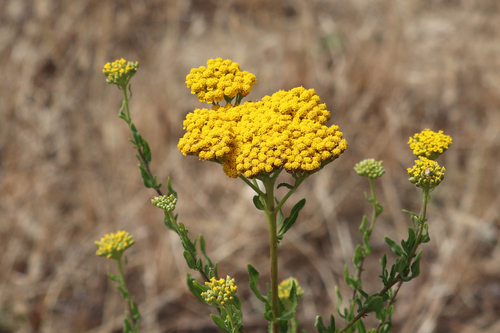
(c) V.S. Volkotrub, some rights reserved (CC BY-NC), uploaded by V.S. Volkotrub

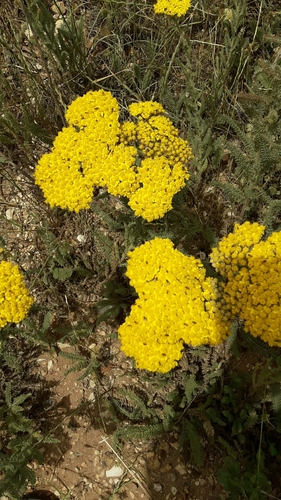
(c) α Sco, some rights reserved (CC BY-NC), uploaded by α Sco

(c) Dmitriy Bochkov, some rights reserved (CC BY), uploaded by Dmitriy Bochkov
What to Eat
Edible parts: Leaves, Flavouring, Leaves - tea, Buds
None known
Known Hazards
Where to Find It
It is a tropical plant. It grows on hills and in waste places from low elevations to 1,500 m above sea level. In XTBG Yunnan. In Sichuan.
Asia, China, Europe, Korea, Mongolia, North America, Russia, USA,
How to Identify
A herb. It keeps growing from year to year. It grows 80-150 cm tall. The leaves in the middle of the stem are oval or triangle shaped and 5-8 cm long by 4-7 cm wide. They are grey underneath. The leaves near the top of the stem are divided into 2 or 3 segments. The flowers are in panicles with branches 10 cm long.
How to Grow
We have very little information on this species and do not know if it will be hardy in Britain, though judging by its native range it could succeed outdoors in many parts of this country. The following notes are based on the general needs of the genus. Easily grown in a well-drained circumneutral or slightly alkaline loamy soil, preferring a sunny position. Plants are longer lived, more hardy and more aromatic when they are grown in a poor dry soil. Members of this genus are rarely if ever troubled by browsing deer.
Propagation: Seed - surface sow spring in a greenhouse. Do not allow the compost to dry out. When large enough to handle, prick the seedlings out into individual pots and plant them out in early summer.
Medicinal Uses
Antiasthmatic Antiseptic Expectorant Febrifuge Styptic The leaves are antiseptic, expectorant, febrifuge and styptic. They are used in the treatment of sterility, functional bleeding of the uterus, dysmenorrhoea, coughs and asthma. They are also used in moxibustion. The leaves have been found to have an antibacterial action, effective against Staphylococcus aureus, Bacillus typhi, B. dysenteriae, E. coli, B. subtilis, Pseudomonas etc. A volatile oil extracted from the plant is particularly effective in the treatment of bronchitis and asthma - the oil is sprayed into the throat and takes effect within one minute.
Other Uses
None known Special Uses Scented Plants
Wikipedia
Source ↗Artemisia argyi, commonly known as silvery wormwood or Chinese mugwort, is a herbaceous perennial plant with a creeping rhizome. It is native to China, Korea, Mongolia, Japan, and the Russian Far East (Amur Oblast, Primorye). It is known in Chinese as àicǎo (艾草) or ài yè (艾葉) or ài hāo (艾蒿), in Japanese as Chōsen yomogi (朝鮮蓬 [et al.], lit. "Korean wormwood/mugwort") and in Korean as Hwanghae ssuk (황해쑥; 黃海쑥; lit. "Yellow Sea mugwort"). It is used in herbal medicine for conditions of the liver, spleen and kidney.
Other Information
It is sold in local markets in China. It is cultivated.
Names & Synonyms
Ai cao, Gaiyou
References (4)
- Kang, Y., et al, 2012, Wild food plants and wild edible fungi in two valleys on the Qinling Mountains (Shaanxi, central China) Journal of Ethnobiology and Ethnomedicine; 9:26
- Li, D. et al, 2017, Ethnobotanical survey of herbal tea plants from the traditional markets in Chaoshan, China. Journal of Ethnopharmacology. 205 (2017) 195-206
- Trendafilova, A., et al, 2020, Research Advances on Health Effects of Edible Artemisia Species and Some Sesquiterpene Lactones Constituents. Foods 2021, 10, 65. p 4
- Urgamal, M., Oyuntsetseg, B., Nyambayar, D. & Dulamsuren, Ch. 2014. Conspectus of the vascular plants of Mongolia. (Editors: Sanchir, Ch. & Jamsran, Ts.). Ulaanbaatar, Mongolia. “Admon“ Press. 334pp. (p. 199-230).