Senecio scandens
Ham.
Climbing senecio

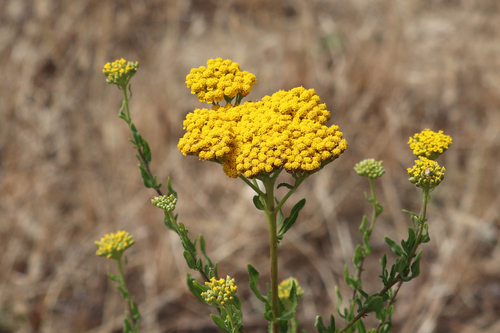
(c) 潘立傑 LiChieh Pan, some rights reserved (CC BY-NC-SA)

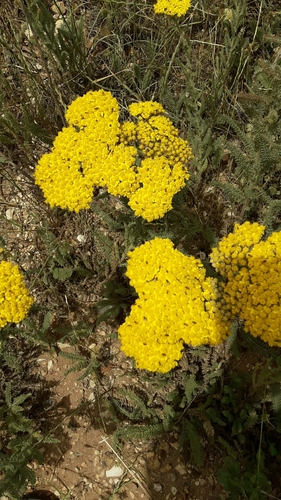
(c) 潘立傑 LiChieh Pan, some rights reserved (CC BY-NC-SA)
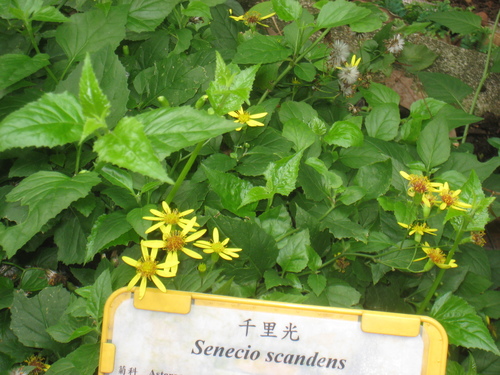
Daderot, no known copyright restrictions (public domain)
What to Eat
Edible parts: Leaves, Flowers
No edible uses are known for this plant.
Known Hazards
Where to Find It
It is a tropical and subtropical plant. It climbs in forests and near streams from sea level to 4,000 m above sea level. In Sichuan and Yunnan.
TEMPERATE ASIA: China (Anhui Sheng, Fujian Sheng, Gansu Sheng, Guangdong Sheng, Guangxi Zhuangzu Zizhiqu, Guizhou Sheng, Hubei Sheng, Hunan Sheng, Jiangsu Sheng, Jiangxi Sheng, Qinghai Sheng, Shaanxi Sheng, Sichuan Sheng, Xizang Zizhiqu, Yunnan Sheng, Zhejiang Sheng), Japan (Honshu, Kyushu, Shikoku), Taiwan TROPICAL ASIA: Bhutan, India (Himachal Pradesh, Meghalaya, Tamil Nadu, Uttar Pradesh, West Bengal, Sikkim), Sri Lanka, Nepal, Myanmar, Thailand, Philippines
How to Identify
A herb. It lies along the ground. It keeps growing from year to year. The stems are long and flexible and 2-5 m long. They are branched and can be hairy. The leaves are oval to narrowly triangle shaped and 3-12 cm long by 2-5 cm wide. They are wedge shaped at the base and can have deep teeth or lobes. There can be 2-6 side lobes towards the base.
How to Grow
Succeeds in a sunny position in most well-drained moderately fertile soils. Not very hardy in Britain, it succeeds outdoors in the milder areas of the country where it needs to be grown on a sunny sheltered wall. Requires a warm, dry essentially frost-free climate. Plants can be cut back to the ground in cold winters, though they usually resprout from the base. A climbing plant, it needs support and to be tied onto wires. Any pruning is best carried out in spring.
Propagation: Seed - sow in spring in a greenhouse, just barely covering the seed. Prick seedlings out into individual pots once large enough to handle, and grow on in the greenhouse for at least their first winter. Plant out into permanent positions in late spring or early summer, after the last expected frosts. Can also be propagated by division in spring or by root cuttings taken in early spring.
Medicinal Uses
The whole plant is depurative, febrifuge, and ophthalmic. Internally, a decoction is used to treat epidemic influenza, malaria, boils and abscesses, acute conjunctivitis, dysentery, and enteritis. The plant can also be crushed and applied externally.
Other Uses
No other uses are known for this plant.
Wikipedia
Source ↗Senecio scandens, also known as climbing Senecio, is a climber in the family Asteraceae that is native to Southeast Asia and the Indian subcontinent.
Names & Synonyms
Jiuliming, Tsing-daw, Serkiling
References (2)
- Kang, Y., et al, 2012, Wild food plants and wild edible fungi in two valleys on the Qinling Mountains (Shaanxi, central China) Journal of Ethnobiology and Ethnomedicine; 9:26
- Tsering, J., et al, 2017, Ethnobotanical appraisal on wild edible plants used by the Monpa community of Arunchal Pradesh. Indian Journal of Traditional Knowledge. Vol 16(4), October 2017, pp 626-637