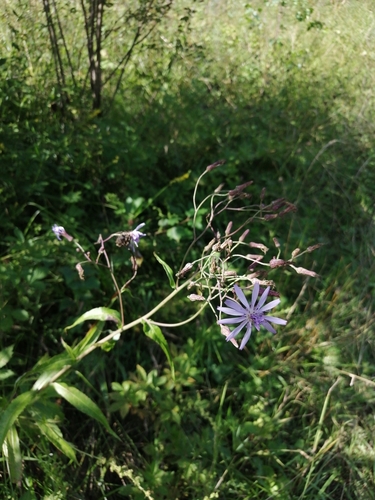
Lagedium sibiricum
(L.) Sojak
AsteraceaeLeaves
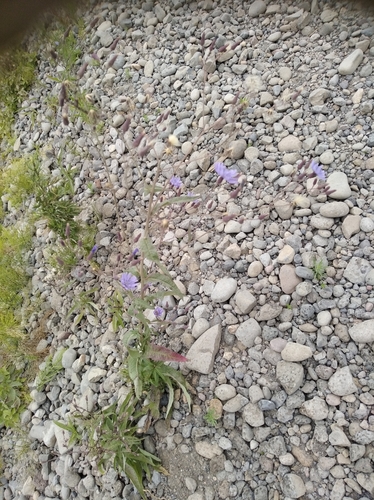
iNaturalist · cc-by-nc
(c) vadim_kirichenko, some rights reserved (CC BY-NC)
(c) vadim_kirichenko, some rights reserved (CC BY-NC)
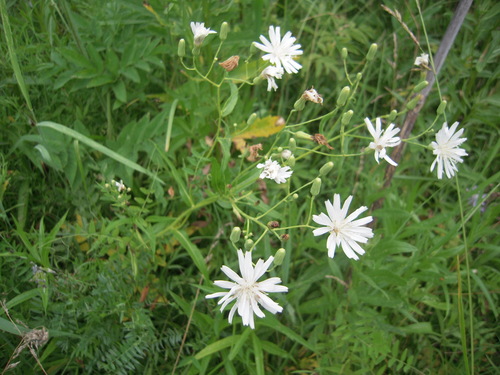
iNaturalist · cc-by-nc
(c) Владимир, some rights reserved (CC BY-NC)
(c) Владимир, some rights reserved (CC BY-NC)
iNaturalist · cc-by
(c) Roman A. Lagazyuk (Роман А. Лагазюк), some rights reserved (CC BY)
(c) Roman A. Lagazyuk (Роман А. Лагазюк), some rights reserved (CC BY)
What to Eat
Edible parts: Leaves
The young leaves and stems are used as a potherb.
Where to Find It
It is a temperate plant. It grows in wetlands.
Asia, China,
Countries: United Arab Emirates, Afghanistan, Armenia, Azerbaijan, Bangladesh, Bahrain, Brunei, Bhutan, China, Georgia, Indonesia, Israel, India, Iraq, Iran, Jordan, Japan, Kyrgyzstan, Cambodia, North Korea, South Korea, Kuwait, Kazakhstan, Laos, Lebanon, Sri Lanka, Myanmar, Mongolia, Maldives, Malaysia, Nepal, Oman, Philippines, Pakistan, Qatar, Saudi Arabia, Singapore, Syria, Thailand, Tajikistan, Timor-Leste, Turkmenistan, Turkey, Taiwan, Uzbekistan, Vietnam, Yemen
How to Identify
An herbaceous plant in the Asteraceae family found in temperate wetland habitats. The young leaves and stems are used as a potherb.
Notes
There is only one Lagedium species.
Names & Synonyms
Mulgedium kamtschaticum Ledeb.
References (3)
- Luo, B., et al, 2019, Wild edible plants collected by Hani from terraced rice paddy agroecosystem in Honghe Prefecture, Yunnan, China. Journal of Ethnobiology and Ethnomedicine 15:56
- Wujisguleng, W., & Khasbagen. K., 2010, An integrated assessment of wild vegetable resources in Inner Mongolian Autonomous Region, China. Journal of Ethnobiology and Ethnomedicine 6:34
- Zhang, Y., et al, 2014, Diversity of wetland plants used traditionally in China: a literature review. Journal of Ethnobiology and Ethnomedicine. 10:72