Chondrilla juncea
L.
Naked weed, Skeleton weed
(c) Alexander Rumpel, some rights reserved (CC BY-NC)
(c) Alexander Rumpel, some rights reserved (CC BY-NC)
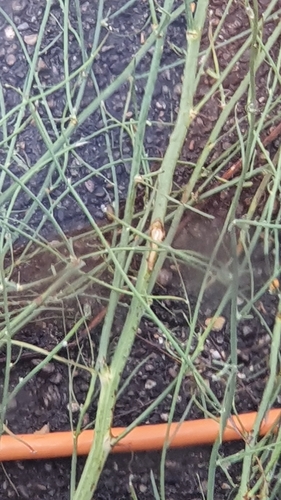
(c) Alexander Rumpel, some rights reserved (CC BY-NC)
What to Eat
Edible parts: Leaves
The leaves can be eaten raw or cooked. They have a pleasant, mild flavour and are a favoured wild salad green in France.
Known Hazards
Where to Find It
Afghanistan, Africa, Albania, Algeria, Argentina, Armenia, Asia, Australia, Austria, Balkans, Belarus, Bosnia, Bulgaria, Caucasus, Central Asia, China, Croatia, Czech Republic, Egypt, Europe, France, Germany, Greece, Hungary, India, Iran, Iraq, Israel, Italy, Kazakhstan, Libya, Luxembourg, Mediterranean, Middle East, North Africa, Poland, Portugal, Romania, Siberia, Sicily, Slovenia, South America, Spain, Switzerland, Syria, Tasmania, Turkey, Türkiye, Ukraine, Yugoslavia,
How to Identify
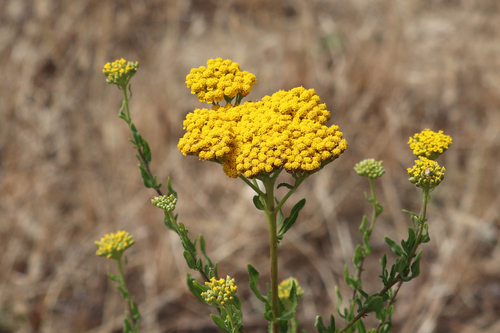
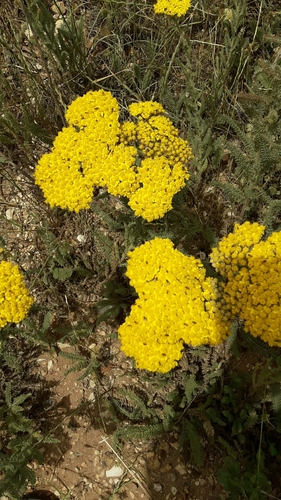
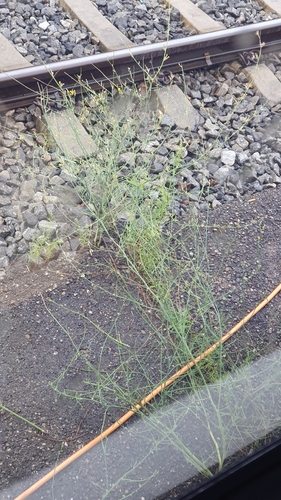
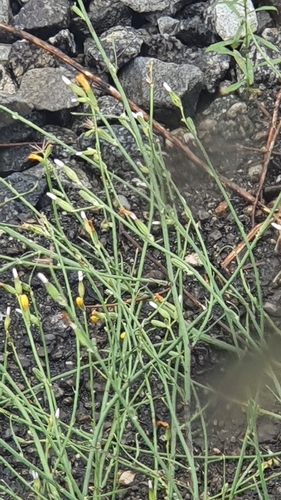
A biennial or perennial herb reaching 1 meter tall, hardy to UK zone 7. It flowers from July to September with small yellow blooms pollinated by insects. The plant has both male and female organs. It grows well in light sandy and medium loamy soils that are well-drained, tolerating mildly acidic to basic pH. It requires full sun and adapts to dry or moist conditions.
Nutrition Score: 45/100
| Part | Moisture | kJ | kcal | Protein | Vit A | Vit C | Iron | Zinc |
|---|---|---|---|---|---|---|---|---|
| Leaves | 89.8 | 148 | 36 | 3.2 | — | 32 | 8.1 | 0.4 |
How to Grow
We have very little information on this species and do not know if it will be hardy in Britain, though judging by its native range it should succeed outdoors in many parts of this country. Judging by its native habitat it probably requires a very well drained light soil in a sunny position.
Propagation: Sow seed in early spring in a greenhouse, barely covering it. When seedlings are large enough to handle, prick them out into individual pots and grow on under glass for at least their first winter. Plant out into permanent positions in late spring or early summer, after the last expected frosts.
Medicinal Uses
The plant can be used as a stomachic.
Other Uses
No other uses are known for this plant.
Wikipedia
Source ↗Chondrilla juncea is a species of flowering plant in the family Asteraceae known by a number of common names, including rush skeletonweed, gum succory, devil's grass, and nakedweed. The plant is native to Europe, Asia, and North Africa, but it is known throughout most temperate regions of the world as an introduced species which is usually considered a noxious weed.
Notes
The Tasmanian occurrence is a little uncertain.
Names & Synonyms
Ajenjera, Ajinjera, Ajonjera, Alijonjera, Balaguera, Baleo, Cengel sakizi, Cicoria, Citnik, Cutulidda, Gayeki benuste, Jattarulu, J'nstrodde, Karavuk, Like, Mastec, Sakizlik, Su porru, Talleras, Tavka, Zcevak
References (39)
- Biscotti, N. & Pieroni, A., 2015, The hidden Mediterranean diet: wild vegetables traditionally gathered and consumed in the Gargano area, Apulia, SE Italy. Acta Societatis Botanicorum Poloniae 84 (3): 327-338
- Biscotti, N. et al, 2018, The traditional food use of wild vegetables in Apulia (Italy) in the light of Italian ethnobotanical literature. Italian Botanist 5:1-24
- Blamey, M and Grey-Wilson, C., 2005, Wild flowers of the Mediterranean. A & C Black London. p 467
- Blanco-Salas, J., et al, 2019, Wild Plants Potentially Used in Human Food in the Protected Area “Sierra Grande de Hornachos” of Extremadura (Spain). Sustainability 2019, 11, 456
- Cerne, M., 1992, Wild Plants from Slovenia used as Vegetables. Acta Horticulturae 318
- Dogan, Y., 2012, Traditionally used wild edible greens in the Aegean Region of Turkey. Acta Societatis Botanicorum Poloniae 81(4): 329-342
- Dolina, K. & Luczaj, L., 2014, Wild food plants used on the Dubrovnik coast (south-eastern Croatia) Acta Soc Bot Pol 83(3):175–181
- Ertug, F., 2000, An Ethnobotanical Study in Central Anatolia (Turkey). Economic Botany Vol. 54. No. 2. pp. 155-182
- Ertug, F, Yenen Bitkiler. Resimli Türkiye Florası -I- Flora of Turkey - Ethnobotany supplement
- Geraci, A., et al, 2018, The wild taxa utilized as vegetables in Sicily (Italy): a traditional component of the Mediterranean diet. Journal of Ethnobiology and Ethnomedicine (2018) 14:14
- Gonzalez, J. A., et al, 2011, The consumption of wild and semi-domesticated edible plants in the Arribes del Duero (Salamanca-Zamora, Spain): an analysis of traditional knowledge. Genetic. Resour Crop Evolution 58:991-1006
- Guzelsoy, N. A., et al, 2017, Nutritional Properties of some Wild Edible Plant Species in Turkey. ANADOLU, J. of AARI 27(2) 2017, 39-45
- Hedrick, U.P., 1919, (Ed.), Sturtevant's edible plants of the world. p 186
- Hussey, B.M.J., Keighery, G.J., Cousens, R.D., Dodd, J., Lloyd, S.G., 1997, Western Weeds. A guide to the weeds of Western Australia. Plant Protection Society of Western Australia. p 92
- Kargioglu, M. et al, 2010, Traditional Uses of Wild Plants in the Middle Aegean Region. Human Ecology 38:429-450
- Lamp, C & Collet F., 1989, Field Guide to Weeds in Australia. Inkata Press. p 74
- Lentini, F. and Venza, F., 2007, Wild food plants of popular use in Sicily. J Ethnobiol Ethnomedicine. 3: 15
- Licata, M., et al, 2016, A survey of wild plant species for food use in Sicily (Italy) – results of a 3-year study in four Regional Parks. Journal of Ethnobiology and Ethnomedicine 12:12
- Luczaj, L. et al, 2012, Wild food plant use in 21st century Europe: the disappearance of old traditions and the search for new cuisines involving wild edibles. Acta Soc Bot Pol 81(4):359–370
- Luczaj et al, 2013, Wild vegetable mixes sold in the markets of Dalmatia (southern Croatia). Journal of Ethnobiology and Ethnomedicine. 8:2
- Luczaj, L. et al, 2013, Wild food plants used in the villages of the Lake Vrana Nature Park (northern Dalmatia, Croatia). Acta Societatis Botanicorum Poloniae, 82(4): 275-281
- Luczaj, L. et al, 2014, Wild Food Plants of Dalmatia (Croatia). in A. Pieroni, C. L. Quave (eds.), Ethnobotany and Biocultural Diversities in the Balkans, p 142
- Molina, M. et al, 2014, Weeds and Food Diversity: Natural Yield Assessment and Future Alternatives for Traditionally Consumed Wild Vegetables. Journal of Ethnobiology 34(1): 44–67
- Nebel, S., Pieroni, A. & Heinrich, M., 2006, Ta cho`rta: Wild edible greens used in the Graecanic area in Calabria, Southern Italy. Appetite 47 (2006) 333–342
- Özdemir, E. and Kültür, S., 2017, Wild Edible Plants of Savaştepe District (Balıkesir, Turkey), Marmara Pharm J 21/3: 578-589
- Paczkowska, G. & Chapman, A.R., 2000, The Western Australian Flora. A Descriptive Catalogue. Western Australian Herbarium. p 159
- Pasta, S., et al, 2020, An Updated Checklist of the Sicilian Native Edible Plants: Preserving the Traditional Ecological Knowledge of Century-Old Agro-Pastoral Landscapes. Frontiers in Plant Science. Volume 11|Article 388
- Plants for a Future database, The Field, Penpol, Lostwithiel, Cornwall, PL22 0NG, UK. http://www.scs.leeds.ac.uk/pfaf/
- Rivera, D. et al, 2006, Gathered Mediterranean Food Plants - Ethnobotanical Investigations and Historical Development, in Heinrich M, Müller WE, Galli C (eds): Local Mediterranean Food Plants and Nutraceuticals. Forum Nutr. Basel, Karger, 2006, vol 59, pp 18–74
- Royal Botanic Gardens, Kew (1999). Survey of Economic Plants for Arid and Semi-Arid Lands (SEPASAL) database. Published on the Internet; http://www.rbgkew.org.uk/ceb/sepasal/internet [Accessed 11th April 2011]
- Sanchez-Mata, M. C., et al, 2010, Wild vegetables of the Mediterranean area as valuable sources of bioactive compounds. Genet. Resourc. Crop Evol. 59:431-443
- Senkardes, I & Tuzlaci, E., 2016, Wild Edible Plants of Southern Part of Nevsehir in Turkey. Marmara Pharmaceutical Journal 20:34-43
- Signorini, M. A., et al, 2009, Plants and traditional knowledge: An ethnobotanical investigation on Monte Ortobene (Nuoro, Sardinia). Journal or Ethnobiology and Ethnomedicine, 5:6
- Sp. pl. 2:796. 1753
- Tardio, J., et al, 2006, Ethnobotanical review of wild edible plants in Spain. Botanical J. Linnean Soc. 152, 27-71
- Tardio, J., 2011, Alimentos silvestres: la despensa mas natural y nutritiva. Ambienta 95/June 2011 p 45
- Tasmanian Herbarium Vascular Plants list p 6
- Yesil, Y., et al, 2019, Wild edible plants in Yeşilli (Mardin-Turkey), a multicultural area. Journal of Ethnobiology and Ethnomedicine (2019) 15:52
- Yesil, Y., et al, 2019, Traditional knowledge of wild edible plants in Hasankeyf (Batman Province, Turkey). Acta Societatis Botanicorum Poloniae. 88(3):3633