Solanum undatum
Lam.

(c) Noopur🍀, some rights reserved (CC BY-NC)
(c) zebedeugalinha, some rights reserved (CC BY)
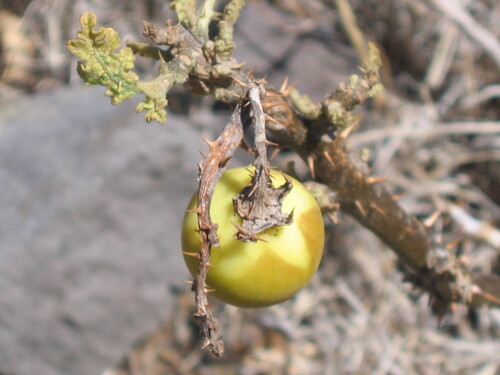
(c) zebedeugalinha, some rights reserved (CC BY)
What to Eat
Edible parts: Fruit
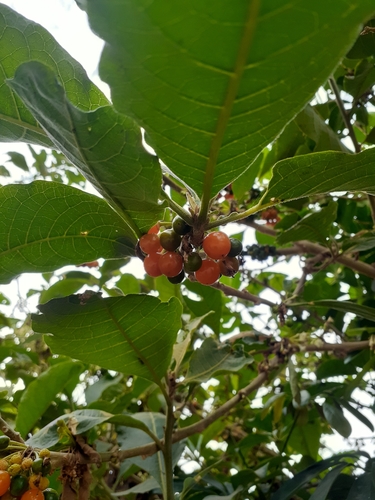
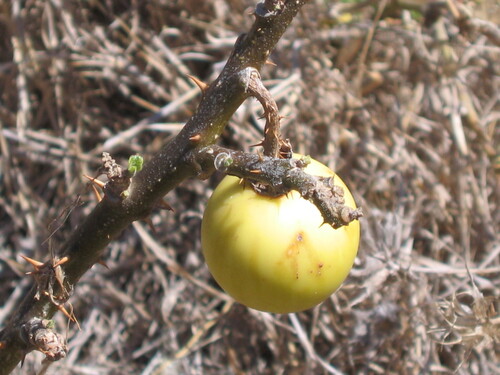
The unripe fruit is cooked and eaten as a vegetable. The fruit of this species is rounded, smooth, about 2.5 centimeters in diameter, and green mottled with white, or yellow.
Known Hazards
Where to Find It
It is a tropical plant. In southern China it grows between 200-1,100 m above sea level. In Yunnan.
Afghanistan, Asia, China, India, Indochina, Indonesia, Malaysia, Pakistan, SE Asia, Taiwan, Thailand, Vietnam,
How to Identify
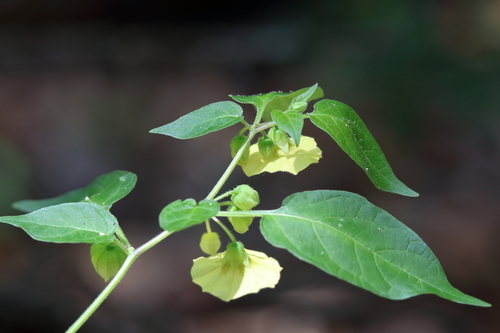
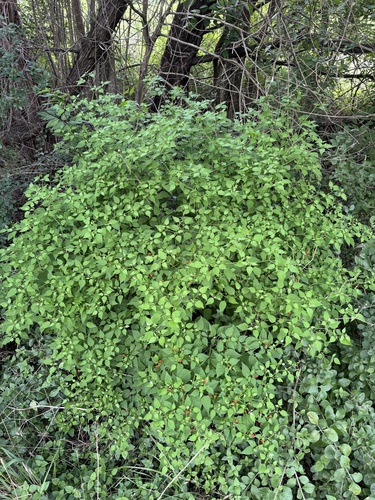
A small shrub. It may or may not have thorns. It can grow 1 m high. It is hairy. The leaves are in pairs and unequal. They are oval and 5-12 cm long by 4-7 cm wide There are a few flowers in a group near the axils of leaves. They are purple-blue or white.
How to Grow
Propagation: Seed - sow in trays in a nursery. Prick out the seedlings into individual pots when they are large enough to handle and grow them on fast. Plant them out when 10cm or more tall. Cuttings of half-ripe wood. Very easy, the cuttings root within a couple of weeks Division
Medicinal Uses
The leaves used in poultices are said to be mitigating and resolvent. The seeds are employed as a sedative, and are sometimes used to cure toothache.
Other Uses
An extract of the fruit is used as an ingredient in commercial cosmetic preparations as a skin protector.
Other Information
Leaves are sold in local markets.
Names & Synonyms
Ge lan, Ke kua, Ni ga zi
References (2)
- Cao, Y., et al, 2020, Ethnobotanical study on wild edible plants used by three trans-boundary ethnic groups in Jiangcheng County, Pu’er, Southwest China. Journal of Ethnobiology and Ethnomedicine (2020) 16:66
- Ochse, J. J. et al, 1931, Vegetables of the Dutch East Indies. Asher reprint. p 695 (As Solanum undatum Poir.)