Cichorium endivia
L.
Endive

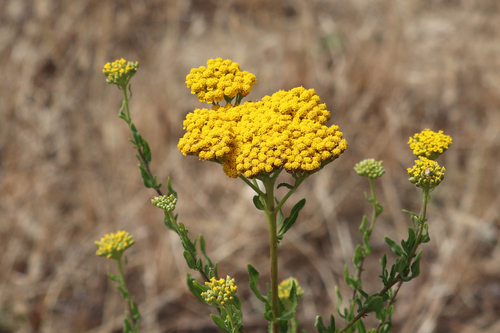
(c) maayan-p, some rights reserved (CC BY-NC), uploaded by maayan-p

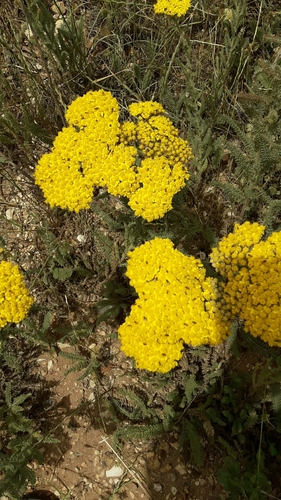
(c) Christoph Zurnieden, some rights reserved (CC BY)
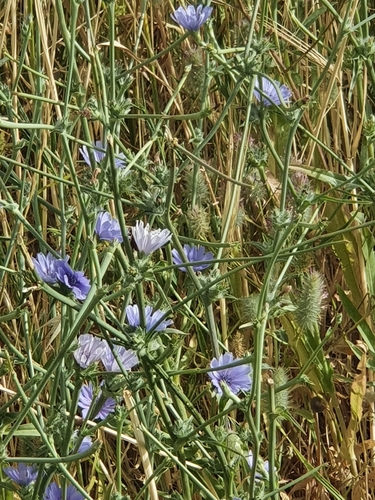
(c) עומר וינר, some rights reserved (CC BY-NC), uploaded by עומר וינר
What to Eat
Edible parts: Leaves, Vegetable
Leaves can be eaten raw or cooked. Wild plants are very bitter, but many named cultivated forms have only a slight bitterness. The leaves are quite large and often form a cabbage-like rosette, making them easy to harvest. Endive works well in moderate quantities as a salad addition, though the bitterness is too pronounced for most people to use it as a primary salad leaf. Blanching — achieved by excluding light from the growing plant — reduces bitterness but also lowers the nutritional value of the leaves.
Where to Find It
A warm temperate plant. Plants grow from sea level up to 2600 m altitude in the tropics. It needs a fertile soil and the soil needs to be well drained. It is more tolerant to heat, than lettuce. It suits hardiness zones 9-11.
Africa, Albania, Andorra, Asia, Australia, Balkans, Belgium, Britain, Bulgaria, Cambodia, Cape Verde, China, Crete, Cuba, Cyprus, East Africa, Ecuador, Egypt, Europe, France, Greece, Hawaii, Himalayas, India, Indonesia, Italy, Kiribati, Korea, Macedonia, Madagascar, Malaysia, Mediterranean, Nepal, North Africa, Pacific, Papua New Guinea, PNG, Philippines, Portugal, SE Asia, Serbia, Somalia, South Africa, Southern Africa, Spain, Switzerland, Tasmania, Thailand, Turkey, Türkiye, USA, West Indies,
How to Identify
An annual plant, or one which grows one year, then flowers the next. It grows 20-50 cm high and spreads 20-50 cm wide. The plant looks a lot like lettuce but the leaves are wrinkled near the edge. The leaves are single, broad and slightly toothed at the edge. The flower heads are greatly thickened and the outer flower bracts are almost equal in length. The outer bracts often have curved tips.
Nutrition Score: 36/100
| Part | Moisture | kJ | kcal | Protein | Vit A | Vit C | Iron | Zinc |
|---|---|---|---|---|---|---|---|---|
| Leaves raw | 93.7 | 47 | 11 | 1.8 | 2000 | 12 | 2.8 | 0.3 |
How to Grow
Succeeds in any moderately fertile well-drained soil. Prefers a medium to light sandy or gravelly soil that is rich in humus. Prefers a sunny position but with light shade in the summer to prevent plants running to seed. Tolerates a pH in the range 5.3 to 8.3. Endive is often cultivated, especially in Europe, for its edible leaves, there are many named varieties. These varieties can be divided into two main types, the plain-leafed and the curly-leafed. Although more decorative, the curly-leafed forms are less suitable for late autumn/winter use because they are less hardy and their leaves tend to hold moisture and therefore encourage mildew and other disease problems. In Britain, the plants grow best in Cornwall. Through successional sowing, and careful selection of varieties, it is possible to obtain leaves all year round. The main season of availability is autumn to early winter, though this can be extended through the winter if the plants are given protection. A combination of low temperatures and short days causes the plants to flower.
Propagation: For an autumn and winter crop, sow seed in situ from early to mid July, or up to mid August for succession. Seedlings can be transplanted. Successional sowings from April onward will provide a summer crop, though these plants are prone to bolting in hot weather or after a cold spell in late spring.
Medicinal Uses
Endive is used as a resolvent and cooling medicine and in the treatment of bilious complaints. Its effect is similar to but milder than that of chicory (Cichorium intybus), making it a beneficial tonic for the liver and digestive system. The root is demulcent and tonic, and has been used to treat dyspepsia and fevers. The fruit (likely the seed) has been used in the treatment of fevers, headaches, bilious complaints, and jaundice.
Other Uses
None known.
Wikipedia
Source ↗Cichorium endivia is a species of flowering plant belonging to the genus Cichorium. It is widely cultivated as one of the species of similar bitter-leafed vegetables known as endive and escarole. There is considerable confusion between the species and C. intybus (common chicory).
Production
Plants are ready about three months after transplanting.
Other Information
It is a commercially cultivated vegetable. Not widely grown in Papua New Guinea.
Notes
There are about 9 Cichorium species.
Names & Synonyms
Achicoria blanca, Andewi, Endiba, Escarola, Escarole, Grumolo, Indiva, Kashini, Kasini, Kiku jisha, Ku ju, Phakkat-foi, Saladingita
References (39)
- Ambasta, S.P. (Ed.), 2000, The Useful Plants of India. CSIR India. p 124
- Arora, R. K., 2014, Diversity in Underutilized Plant Species - An Asia-Pacific Perspective. Bioversity International. p 101
- Bianchini, F., Corbetta, F., and Pistoia, M., 1975, Fruits of the Earth. Cassell. p 46
- Blamey, M and Grey-Wilson, C., 2005, Wild flowers of the Mediterranean. A & C Black London. p 460
- Bremness, L., 1994, Herbs. Collins Eyewitness Handbooks. Harper Collins. p 241
- Brouk, B., 1975, Plants Consumed by Man. Academic Press, London. p 102, 107
- Burkill, I.H., 1966, A Dictionary of the Economic Products of the Malay Peninsula. Ministry of Agriculture and Cooperatives, Kuala Lumpur, Malaysia. Vol 1 (A-H) p 544
- Cheifetz, A., (ed), 1999, 500 popular vegetables, herbs, fruits and nuts for Australian Gardeners. Random House p 54
- Cundall, P., (ed.), 2004, Gardening Australia: flora: the gardener's bible. ABC Books. p 378
- Ertug, F, Yenen Bitkiler. Resimli Türkiye Florası -I- Flora of Turkey - Ethnobotany supplement
- Facciola, S., 1998, Cornucopia 2: a Source Book of Edible Plants. Kampong Publications, p 36
- French, B.R., 1986, Food Plants of Papua New Guinea, A Compendium. Asia Pacific Science Foundation p 155
- Grubben, G. J. H. and Denton, O. A. (eds), 2004, Plant Resources of Tropical Africa 2. Vegetables. PROTA, Wageningen, Netherlands. p 180
- Hadfield, J., 2001, The A-Z of Vegetable Gardening in South Africa. Struik p 107
- Hedrick, U.P., 1919, (Ed.), Sturtevant's edible plants of the world. p 191
- Herklots, G. A. C., 1972, Vegetables in South-East Asia. Allen & Unwin. p 131
- Hibbert, M., 2002, The Aussie Plant Finder 2002, Florilegium. p 67
- Hu, Shiu-ying, 2005, Food Plants of China. The Chinese University Press. p 724
- Jardin, C., 1970, List of Foods Used In Africa, FAO Nutrition Information Document Series No 2.p 67 (Also var. crispum and var. latifolium)
- Kays, S. J., and Dias, J. C. S., 1995, Common Names of Commercially Cultivated Vegetables of the World in 15 languages. Economic Botany, Vol. 49, No. 2, pp. 115-152
- Kiple, K.F. & Ornelas, K.C., (eds), 2000, The Cambridge World History of Food. CUP p 1731, 1771,
- Lazarides, M. & Hince, B., 1993, Handbook of Economic Plants of Australia, CSIRO. p 60
- Macmillan, H.F. (Revised Barlow, H.S., et al), 1991, Tropical Planting and Gardening. Sixth edition. Malayan Nature Society. Kuala Lumpur. p 364
- Martin, F.W. & Ruberte, R.M., 1979, Edible Leaves of the Tropics. Antillian College Press, Mayaguez, Puerto Rico. p 117, 184
- Miguel, E., et al, 1989, A checklist of the cultivated plants of Cuba. Kulturpflanze 37. 1989, 211-357
- Ochse, J.J. et al, 1931, Vegetables of the Dutch East Indies. Asher reprint. p 123
- Oomen, H.A.P.C., & Grubben, G.J.H., 1978, Tropical Leaf Vegetables in Human Nutrition, Communication 69, Department of Agricultural research, RTI Amsterdam, p 93
- Plants for a Future database, The Field, Penpol, Lostwithiel, Cornwall, PL22 0NG, UK. http://www.scs.leeds.ac.uk/pfaf/
- Purseglove, J.W., 1968, Tropical Crops Dicotyledons, Longmans. p 52
- Schneider, E., 2001, Vegetables from Amaranth to Zucchini: The essential reference. HarperCollins. p 264
- Siemonsma, J. S. and Piluek, K. (Eds), 1994, Plant Resources of South-East Asia No. 8 Vegetables. Prosea Foundation, Bogor, Indonesia, p 142
- Smith, P.M., 1979, Endive, in Simmonds, N.W., (ed), Crop Plant Evolution. Longmans. London. p 305
- Staples, G.W. and Herbst, D.R., 2005, A tropical Garden Flora. Bishop Museum Press, Honolulu, Hawaii. p 156
- Thaman, R. R., 1987, Plants of Kiribati: A listing and analysis of vernacular names. Atoll Research Bulletin No. 296
- Tindall, H.D., 1983, Vegetables in the tropics. Macmillan p. 82
- Torre, de la L., et al, 2008, Enciclopedia de las Plantas Útiles del Ecuador. Herbario QCA. Pontificia Universidad Católica del Ecuador. p 219
- USDA, ARS, National Genetic Resources Program. Germplasm Resources Information Network - (GRIN). [Online Database] National Germplasm Resources Laboratory, Beltsville, Maryland. Available: www.ars-grin.gov/cgi-bin/npgs/html/econ.pl (10 April 2000)
- Wiersema, J. H. & Leon, B., 2013, World Economic Plants. A Standard Reference CRC Press. 2nd Ed. p 174
- Zeven, A. C. & de West, J. M. J., 1982, Dictionary of cultivated plants and their regions of diversity. Wageningen. p 105