Macrozamia humilis
D. L. Jones

iNaturalist · cc-by-nc
(c) Tony Bush, some rights reserved (CC BY-NC), uploaded by Tony Bush
(c) Tony Bush, some rights reserved (CC BY-NC), uploaded by Tony Bush

iNaturalist · cc-by-nc
(c) rivendel, some rights reserved (CC BY-NC)
(c) rivendel, some rights reserved (CC BY-NC)
What to Eat
Edible parts: Seeds, Caution
The seeds are eaten after extensive processing.
Known Hazards
How to Identify
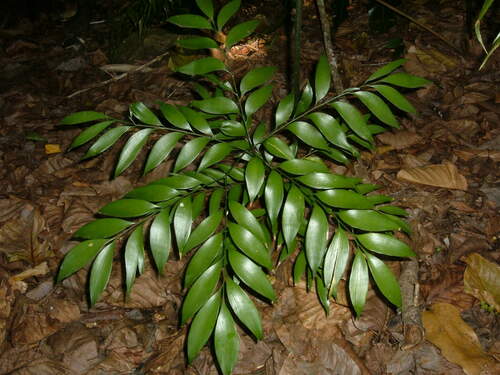
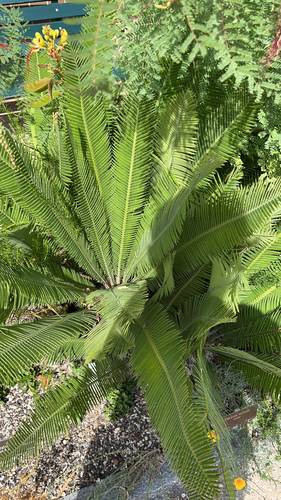
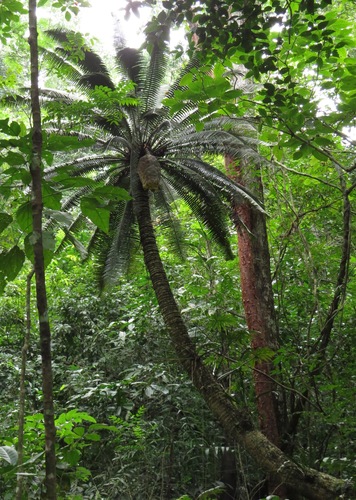
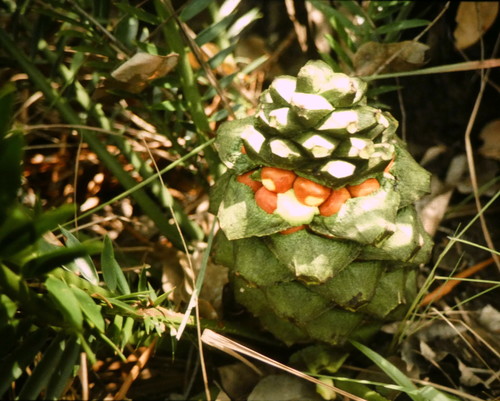
It has an underground stem 18-28 cm across. There are 2-7 leaves in a crown. They are 35-65 cm long. There are 60-90 pinnae or divisions. The male cones are 14-19 cm long by 4.5-5.5 cm across. There are spines up to 1 cm long. The female cones are 10-15 cm long by 6-8 cm wide. The spines can be up to 2.5 cm long. The seeds are oval and 2.5-3.1 cm long by 2.2-2.6 cm wide.
Wikipedia
Source ↗Macrozamia humilis is a species of plant in the family Zamiaceae. It is endemic to Inverell in New South Wales, Australia. Its natural habitat is on granite soils in temperate shrubby woodland forests.
Notes
It is a rare species.
Names & Synonyms
Munbuwa
References (1)
- McKerney, M. & White, H., 2011, Bush Tucker, Boomerangs & Bandages. Border River-Gwyder Catchment Management Authority p 203