Lonicera maackii
(Rupr.) Maxim.

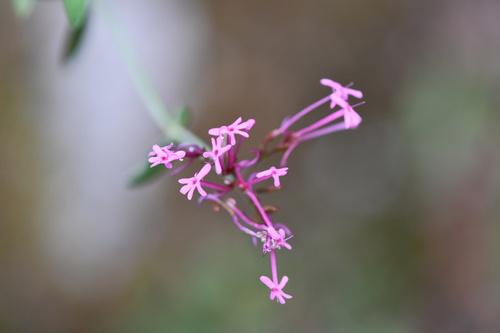
(c) Andrew Conboy, some rights reserved (CC BY), uploaded by Andrew Conboy

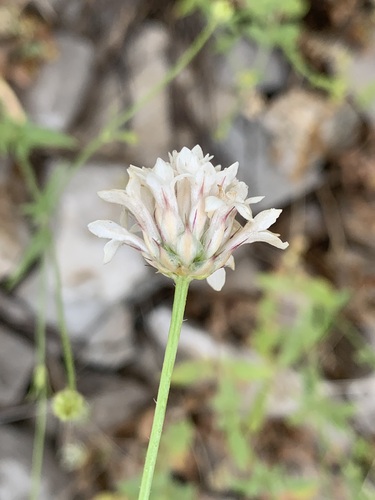
(c) Theo Witsell, some rights reserved (CC BY-NC), uploaded by Theo Witsell

(c) Plant Image Library, some rights reserved (CC BY-SA)
What to Eat
Edible parts: Flowers
The flowers are eaten.
Where to Find It
It is a temperate plant. It grows in forest and scrub between 100-1,800 m above sea level in China. In Sichuan and Yunnan.
Asia, Central Asia, China, Japan, Korea, North America, Russia, Slovenia, Tajikistan, Tibet,
How to Identify
A shrub. It loses its leaves during the year. It grows 6 m tall. The trunk is 10 cm across. The branches are hollow and hairy. The leaves are 3-8 cm long by 2-4 cm wide. The flowers are in pairs in the axils of leaves. They have a scent. They are purplish but become yellow.
Medicinal Uses
L. maackii produces various secondary metabolites to deter insect herbivory. Cipollini et al. found seasonal variation in the levels of chlorogenic acid, apigenin, apigenin-7-glucoside, luteolin and luteolin-7-glucoside, and confirm their deterrent effect.
Wikipedia
Source ↗Lonicera maackii, the Amur honeysuckle, is a species of honeysuckle in the family Caprifoliaceae that is native to temperate eastern Asia; specifically in northern and western China south to Yunnan, Mongolia, Primorsky Krai in southeastern Siberia, Korea, and, albeit rare there, central and northern Honshū, Japan. Lonicera maackii is a listed endangered species in Japan. It has escaped from cultivation and naturalized in New Zealand and the eastern United States; in the woodlands of the U.S. it is a significant invasive species.
Names & Synonyms
Maackovo kosteničevje
References (2)
- http://www.botanic-gardens-ljubljana.com/en/plants
- Liu, Yi-tao, & Long, Chun-Lin, 2002, Studies on Edible Flowers Consumed by Ethnic Groups in Yunnan. Acta Botanica Yunnanica. 24(1):41-56