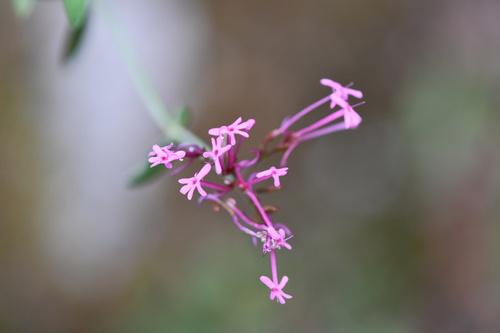
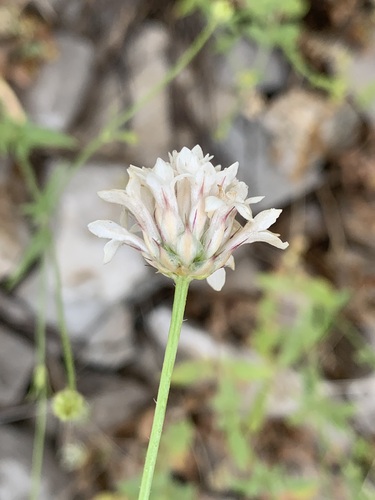
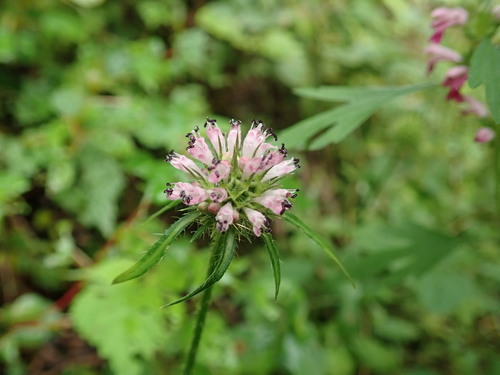
Dipsacus inermis
Wall.
Spineless Teasel
CaprifoliaceaeLeaves

iNaturalist · cc-by-nc
(c) Subash Jeyan, some rights reserved (CC BY-NC), uploaded by Subash Jeyan
(c) Subash Jeyan, some rights reserved (CC BY-NC), uploaded by Subash Jeyan
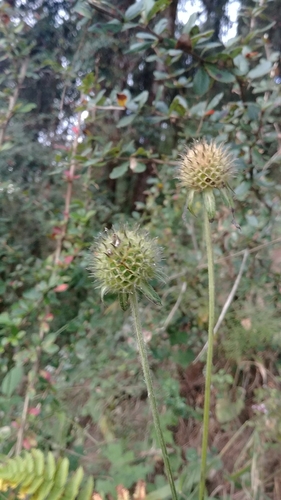
iNaturalist · cc-by-nc
(c) Andrew Babson, some rights reserved (CC BY-NC), uploaded by Andrew Babson
(c) Andrew Babson, some rights reserved (CC BY-NC), uploaded by Andrew Babson
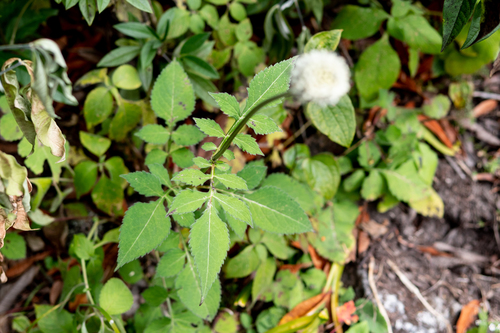
iNaturalist · cc-by-nc
(c) Yaling Lin, some rights reserved (CC BY-NC), uploaded by Yaling Lin
(c) Yaling Lin, some rights reserved (CC BY-NC), uploaded by Yaling Lin
What to Eat
Edible parts: Leaves
Young shoots are cooked and eaten, often stewed with pork, and are also dried and preserved for winter use.
Where to Find It
It is a temperate plant. In Pakistan it grows between 1,600-3,500 m altitude. In Yunnan.
Afghanistan, Asia, Bhutan, China, Himalayas, India, Myanmar, Nepal, Northeastern India, NW India, Pakistan, SE Asia,
Countries: United Arab Emirates, Afghanistan, Armenia, Azerbaijan, Bangladesh, Bahrain, Brunei, Bhutan, China, Georgia, Indonesia, Israel, India, Iraq, Iran, Jordan, Japan, Kyrgyzstan, Cambodia, North Korea, South Korea, Kuwait, Kazakhstan, Laos, Lebanon, Sri Lanka, Myanmar, Mongolia, Maldives, Malaysia, Nepal, Oman, Philippines, Pakistan, Qatar, Saudi Arabia, Singapore, Syria, Thailand, Tajikistan, Timor-Leste, Turkmenistan, Turkey, Taiwan, Uzbekistan, Vietnam, Yemen
How to Identify
A prickly herb. It grows from 30 cm to 3 m tall. Dipsacus inermis var. mitis is smaller than Dipsacus inermis. The leaves are alternate. The leaves on the stem have lobes. The flowers heads are many. The flowers are funnel shaped and white or yellow. The fruits are one seeded.
Notes
Also put in the family Dipsacaceae.
Names & Synonyms
Upplehak, Wapal hath, Wupal hak
Dipsacus mitis D. Donand several others
References (8)
- Dobriyal, M. J. R. & Dobriyal, R., 2014, Non Wood Forest Produce an Option for Ethnic Food and Nutritional Security in India. Int. J. of Usuf. Mngt. 15(1):17-37
- Flora of Pakistan www.eFloras.org (As Dipsacus inermis var. mitis)
- Geng, Y., et al, 2016, Traditional knowledge and its transmission of wild edibles used by the Naxi in Baidi Village, northwest Yunnan province. Journal of Ethnobiology and Ethnomedicine. 12:10 (As Dipsacus asper Wall. ex DC.)
- Khan, M. & Hussain, S., 2014, Diversity of wild edible plants and flowering phenology of district Poonch (J & K) in the northwest Himalaya. Indian Journal of Sci, Res. 9(1): 032-038
- Kishor, A., et al, 2018, Wild Food Plants of Himachal Pradesh: A Review. Plant Archives Vol. 18 No.2 pp. 2737-2751
- Luo, B., et al, 2019, Wild edible plants collected by Hani from terraced rice paddy agroecosystem in Honghe Prefecture, Yunnan, China. Journal of Ethnobiology and Ethnomedicine 15:56 (As Dipsacus asperoides)
- Plants for a Future database, The Field, Penpol, Lostwithiel, Cornwall, PL22 0NG, UK. http://www.scs.leeds.ac.uk/pfaf/ (As Dipsacus inermis var. mitis)
- Wild edible plants of Himachal Pradesh