Saussurea leucoma
Diels
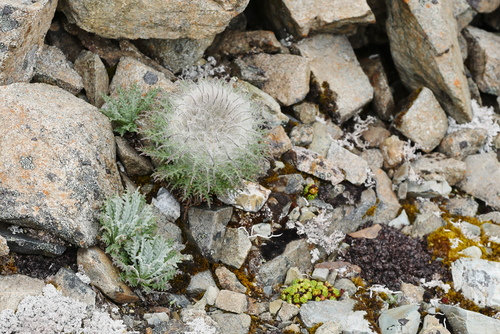
iNaturalist · cc-by-nc
(c) @断肠人在刷牙/郑海磊, some rights reserved (CC BY-NC), uploaded by @断肠人在刷牙/郑海磊
(c) @断肠人在刷牙/郑海磊, some rights reserved (CC BY-NC), uploaded by @断肠人在刷牙/郑海磊
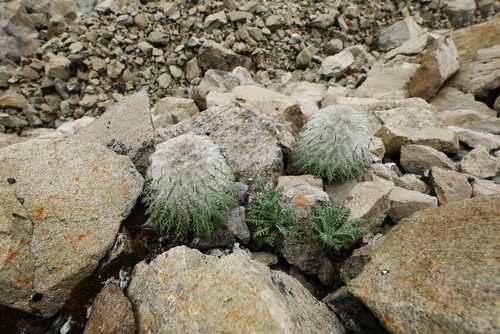
iNaturalist · cc-by-nc
(c) @断肠人在刷牙/郑海磊, some rights reserved (CC BY-NC), uploaded by @断肠人在刷牙/郑海磊
(c) @断肠人在刷牙/郑海磊, some rights reserved (CC BY-NC), uploaded by @断肠人在刷牙/郑海磊
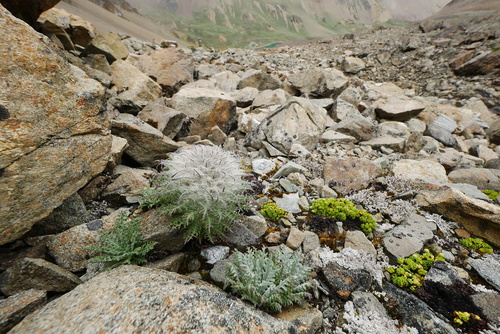
iNaturalist · cc-by-nc
(c) @断肠人在刷牙/郑海磊, some rights reserved (CC BY-NC), uploaded by @断肠人在刷牙/郑海磊
(c) @断肠人在刷牙/郑海磊, some rights reserved (CC BY-NC), uploaded by @断肠人在刷牙/郑海磊
What to Eat
Edible parts: Flowers, Leaves
The plant is eaten as a vegetable, with the flowers and leaves being edible portions.
Where to Find It
It is a temperate plant. It grows on alpine scree slopes between 3,200-5,300 m above sea level in Tibet. In Sichuan and Yunnan.
Asia, China, Tibet,
Countries: United Arab Emirates, Afghanistan, Armenia, Azerbaijan, Bangladesh, Bahrain, Brunei, Bhutan, China, Georgia, Indonesia, Israel, India, Iraq, Iran, Jordan, Japan, Kyrgyzstan, Cambodia, North Korea, South Korea, Kuwait, Kazakhstan, Laos, Lebanon, Sri Lanka, Myanmar, Mongolia, Maldives, Malaysia, Nepal, Oman, Philippines, Pakistan, Qatar, Saudi Arabia, Singapore, Syria, Thailand, Tajikistan, Timor-Leste, Turkmenistan, Turkey, Taiwan, Uzbekistan, Vietnam, Yemen
How to Identify
A herb. It grows 10-18 cm tall. It keeps growing from year to year. It has a fattened rootstock 2 cm across. A single stem arises from this and is hidden by leaves. The leaves are narrowly oval and 3-5 cm long by 1-3 cm wide. It is divided along the stalk. There are 5-10 pairs of narrow lobes. The leaves are greyish white underneath. There are several flower heads in a group.
References (2)
- Liu, Yi-tao, & Long, Chun-Lin, 2002, Studies on Edible Flowers Consumed by Ethnic Groups in Yunnan. Acta Botanica Yunnanica. 24(1):41-56
- Zhang, L., et al, 2016, Ethnobotanical study of traditional edible plants used by the Naxi people during droughts. Journal of Ethnobiology and Ethnomedicine. 12:39