Cirsium lipskyi
Petrak
iNaturalist · cc-by-nc
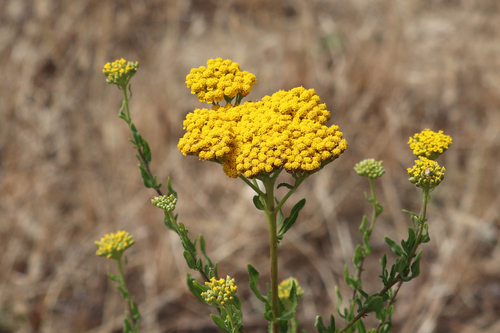
(c) Benoît Segerer, some rights reserved (CC BY-NC), uploaded by Benoît Segerer
(c) Benoît Segerer, some rights reserved (CC BY-NC), uploaded by Benoît Segerer

iNaturalist · cc-by-nc
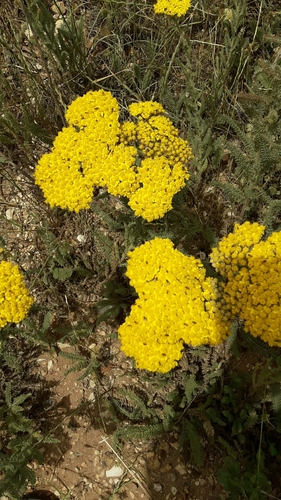
(c) Богданович Светлана, some rights reserved (CC BY-NC)
(c) Богданович Светлана, some rights reserved (CC BY-NC)

iNaturalist · cc-by-nc
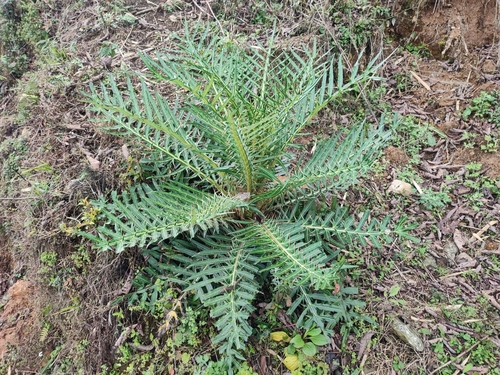
(c) Богданович Светлана, some rights reserved (CC BY-NC)
(c) Богданович Светлана, some rights reserved (CC BY-NC)
What to Eat
Edible parts: Leaves, Seeds, Flowers
The young shoots and flowers are edible.
Where to Find It
It is a subtropical plant. It grows up to 1,800 m above sea level in Northeastern India.
Asia, Himalayas, India, Northeastern India,
Countries: United Arab Emirates, Afghanistan, Armenia, Azerbaijan, Bangladesh, Bahrain, Brunei, Bhutan, China, Georgia, Indonesia, Israel, India, Iraq, Iran, Jordan, Japan, Kyrgyzstan, Cambodia, North Korea, South Korea, Kuwait, Kazakhstan, Laos, Lebanon, Sri Lanka, Myanmar, Mongolia, Maldives, Malaysia, Nepal, Oman, Philippines, Pakistan, Qatar, Saudi Arabia, Singapore, Syria, Thailand, Tajikistan, Timor-Leste, Turkmenistan, Turkey, Taiwan, Uzbekistan, Vietnam, Yemen
How to Identify
A herb. It is a thistle. The stem has a cottony coating. The leaves are 6-15 cm long. The flowers are in crowded heads. The seeds are oval and 4 angled.
Notes
There are about 150-250 Cirsium species. They grow in temperate regions.
Names & Synonyms
Soh-chiia, Soh-shiah, Tailobeo
Cnicus griffithii Hk.f.
References (7)
- Ambasta, S.P. (Ed.), 2000, The Useful Plants of India. CSIR India. p 126
- Plants for a Future database, The Field, Penpol, Lostwithiel, Cornwall, PL22 0NG, UK. http://www.scs.leeds.ac.uk/pfaf/
- Sawian, J. T., et al, 2007, Wild edible plants of Meghalaya, North-east India. Natural Product Radiance Vol. 6(5): p 414 (lepskyi)
- Singh, H.B., Arora R.K.,1978, Wild edible Plants of India. Indian Council of Agricultural Research, New Delhi. p 21, 81
- Singh, V. B., et al, (Ed.) Horticulture for Sustainable Income and Environmental Protection. Vol. 1 p 220
- Thothathri, K., & Pal, G.D., 1987, Further Contribution to the Ethnobotany of Subansiri District, Aranchal Pradesh. J. Econ. Tax. Bot. Vol. 10 No. 1 pp 149-157 (As Cnicus griffithii)
- Wild edible plants of Himachal Pradesh