Lactuca tatarica
C. A. Mey.
Larkspur lettuce

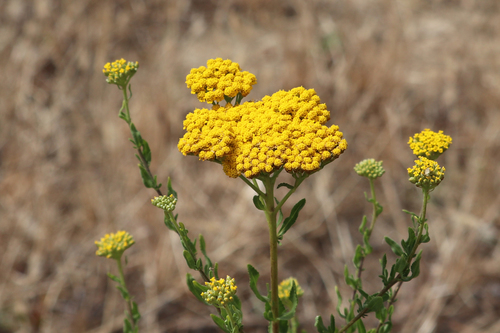
(c) Степан Гребнев, some rights reserved (CC BY-NC), uploaded by Степан Гребнев

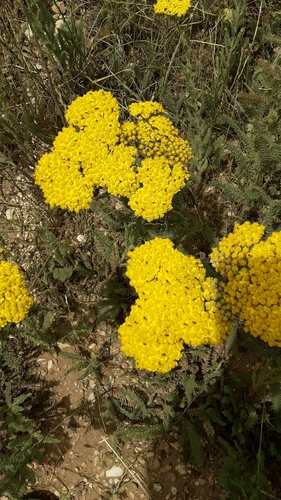
(c) Anthony Mendoza, some rights reserved (CC BY-NC-SA)

(c) lilmars, some rights reserved (CC BY-NC)
What to Eat
Edible parts: Leaves
The leaves are used as a vegetable.
Where to Find It
It is a temperate plant. It grows in wetlands. In the Himalayas it grows between 3,000-4,500 m above sea level.
Asia, Central Asia, China, Himalayas, India, Mongolia, North America, Tajikistan,
How to Identify
A herb. It grows 15-60 cm tall. It has a taproot and keeps growing from year to year. The stems are erect and branch near the top. The leaves are mainly near the base. The leaves are 6-19 cm long by 206 cm wide and they have coarse teeth. The flowers are purplish-blue.
Wikipedia
Source ↗Lactuca tatarica, known as blue lettuce, is a Eurasian flowering plant in the tribe Cichorieae within the family Asteraceae. It is widespread across much of Europe and Asia. Lactuca tatarica is a herb up to 60 cm (2 feet) tall with a large taproot. Most of the leaves are near the base of the plant and are larger than leaves higher up the stem. Each flower head has about 20 blue or purple (rarely white) ray flowers and no disc flowers. Some authors have placed the North American species Lactuca pulchella as a subspecies or variety of a broader concept of Lactuca tatarica, while others consider L. tatarica to occur only in Europe and Asia. Lactuca tatarica (with L. pulchella and others) is commonly separated into the genus Mulgedium, as Mulgedium tatarica.
Names & Synonyms
Makucai
References (4)
- Jia, X., et al, 2022, Ethnobotany of wild edible plants in multiethnic areas of the Gansu–Ningxia–Inner Mongolia junction zone. Journal of Ethnobiology and Ethnomedicine 18:53 (As Mulgedium tataricum)
- Kermath, B. M., et al, 2014, Food Plants in the Americas: A survey of the domesticated, cultivated and wild plants used for Human food in North, Central and South America and the Caribbean. On line draft. p 468 (As var. pulchella)
- Sharma, L. et al, 2018, Diversity, distribution pattern, endemism and indigenous uses of wild edible plants in Cold Desert Biosphere Reserve of Indian Trans Himalaya. Indian Journal of Traditional Knowledge. Vol 17(1) January 2018 pp 122-131
- Zhang, Y., et al, 2014, Diversity of wetland plants used traditionally in China: a literature review. Journal of Ethnobiology and Ethnomedicine. 10:72