Borrichia arborescens
(L.) DC.
Sea oxeye, Seaside oxeye
(c) Helen A. Czech, some rights reserved (CC BY-NC), uploaded by Helen A. Czech

(c) Sam Fraser-Smith, some rights reserved (CC BY)

(c) Jennifer Rycenga, some rights reserved (CC BY-NC), uploaded by Jennifer Rycenga
What to Eat
Edible parts: Leaves
The leaves are apparently eaten in salads or as a potherb. The above record uses the common name of 'Jamaican Samphire' for the plant, together with the botanical name B. Frutescens. However, B. Frutescens is not native to Jamaica, whilst this closely related species is. It is quite possible that the record refers to both species, or even the hybrid between them.
Where to Find It
It is a tropical plant. It is salt tolerant.
Anguilla, Cayman Islands, Dominican Republic, Mexico, North America, Turks & Caicos, USA, West Indies,
How to Identify
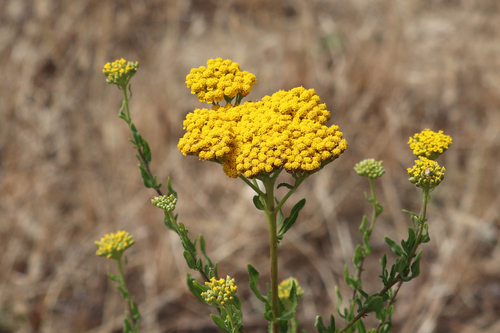
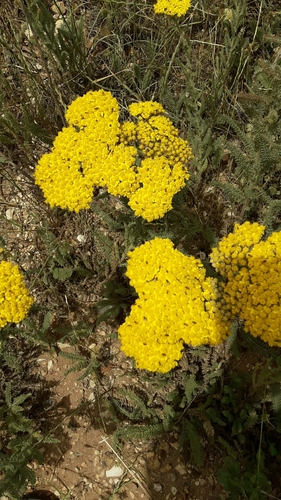
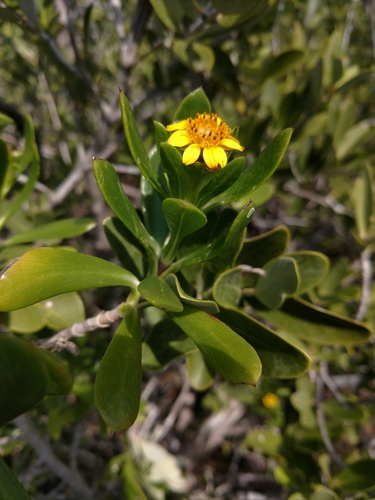
A herb. It grows as a ground cover. The leaves are greyish and covered with hairs. The flower petals are yellow.
How to Grow
A plant of subtropical to tropical zones, always found by the coast. Requires a sunny position. Plants are tolerant of saline soils, both acid and alkaline conditions and extended inundation. Established plants are fairly drought tolerant. A fairly slow-growing plant.
Propagation: Seed - Cuttings Division
Medicinal Uses
The leaves of the plant are used as a medicinal tea.
Other Uses
The dense growth of this plant makes it suitable for use as a low hedge or ground cover, especially near the sea and in saline soils. It is quite tolerant of trimming.
Wikipedia
Source ↗Borrichia arborescens is a species of flowering plant in the family Asteraceae known by the common name tree seaside tansy. It is native to the Yucatán Peninsula, Cuba, Jamaica, Bahamas, Cayman Islands, Hispaniola, Puerto Rico, Bermuda, the Florida Keys, and other islands in the region. It is found on rocky and sandy coasts, in both beaches and marshes. Borrichia arborescens produces yellow flower heads in late spring and summer. Despite its common name, it is only a shrub reaching heights of 5 feet (150 cm). Hybrids with Borrichia frutescens are known where the two species come into contact.
Names & Synonyms
References (1)
- Kermath, B. M., et al, 2014, Food Plants in the Americas: A survey of the domesticated, cultivated and wild plants used for Human food in North, Central and South America and the Caribbean. On line draft. p 139