Jaltomata biflora
(Ruiz & Pav.) Benitez
Sand tomato
SolanaceaeFruit

wikimedia · cc0
Wikimedia Commons - Hipólito Ruiz López (1754-1815) , José Antonio Pavón y Jiménez (1754-1844)
Wikimedia Commons - Hipólito Ruiz López (1754-1815) , José Antonio Pavón y Jiménez (1754-1844)

gbif · cc-by-nc
Field Museum of Natural History - Botany Department | NSF/Mellon - GPI
Field Museum of Natural History - Botany Department | NSF/Mellon - GPI
What to Eat
Edible parts: Fruit
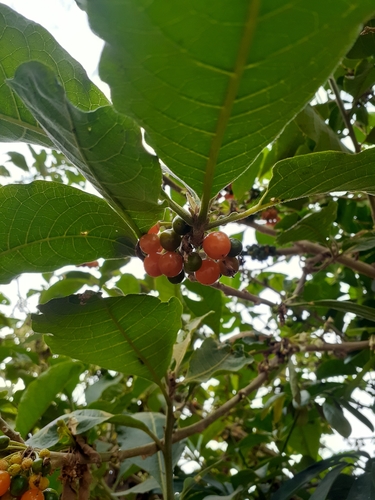
The small yellow berries are eaten, particularly by children.
Where to Find It
It is a tropical plant. It grows in the central highlands of Peru.
Peru, South America,
How to Identify
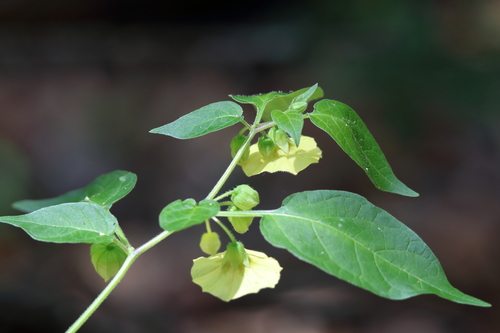
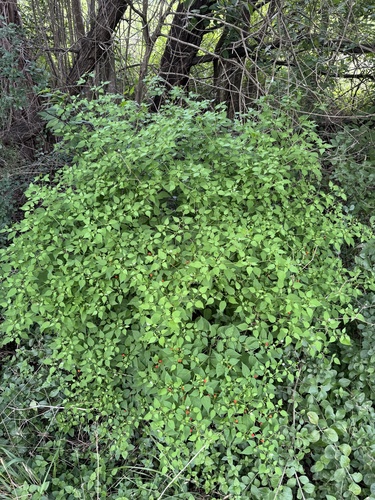
A herb or shrub. The leaves are oval and 10 cm long by 6-7 cm wide. The edges are wavy. The flowers occur on single stalks and groups or 2 or 3 in the axils of the leaves. The fruit is a small yellow berry.
Other Information
The fruit are especially eaten by children.
Names & Synonyms
Capuli de campo, Capuli silvestre, Tomate cimarron, Tomatillo cimarron
Saracha biflora Ruiz & Pav.Witheringia biflora (Ruiz & Pav.) Miers
References (2)
- Kermath, B. M., et al, 2014, Food Plants in the Americas: A survey of the domesticated, cultivated and wild plants used for Human food in North, Central and South America and the Caribbean. On line draft. p 453
- Macbride, J. F., 1937, Flora of Peru. Vol. 8, Part 6 No. 2