Physalis walteri
Nutt.

(c) Pete Corradino, some rights reserved (CC BY-NC)

(c) Pete Corradino, some rights reserved (CC BY-NC)

(c) Matthew Herron, some rights reserved (CC BY-NC)
What to Eat
Edible parts: Fruit
The fruit are eaten.
Where to Find It
It is a tropical plant.
North America, USA,
How to Identify
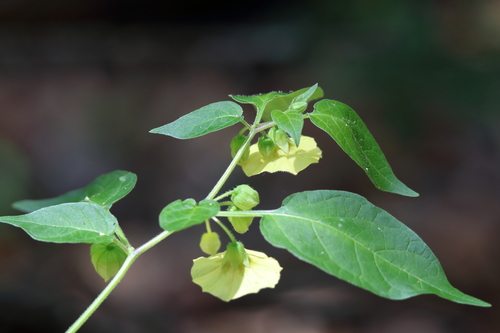
An herbaceous tropical plant in the nightshade family (Solanaceae) with yellow fruits.
Wikipedia
Source ↗Physalis walteri, commonly known as Walter's groundcherry or dune groundcherry, is a species of flowering plant. Its native distribution is Alabama, Florida, Georgia and Virginia in the United States as well as Northeast Mexico. Its habitat is pinelands and open coastal areas. It is a perennial herb that grows to a height of around 2 feet with yellow flowers that bloom from May to September. It grows from deep and stout roots with stems that are a mix of erect and ground spreading densely covered with very small hairs. The leaves are 3 to 13 cm long and 1.5 to 5 cm wide. It is named after Thomas Walter a botanist born in Britain who moved to Charleston, South Carolina in the 18th century.
References (1)
- Kermath, B. M., et al, 2014, Food Plants in the Americas: A survey of the domesticated, cultivated and wild plants used for Human food in North, Central and South America and the Caribbean. On line draft. p 653