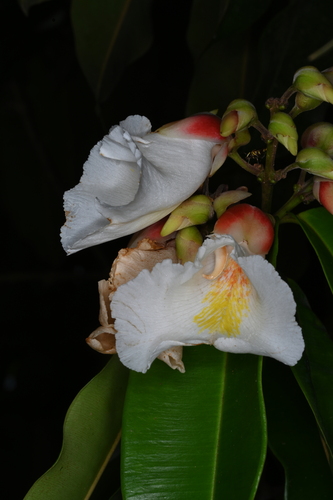
Qualea parviflora
Mart.

(c) Mauricio Mercadante, some rights reserved (CC BY-NC-SA)
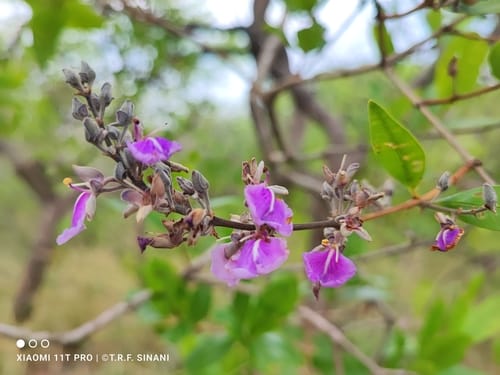
(c) Thomaz Ricardo Favreto Sinani, some rights reserved (CC BY)
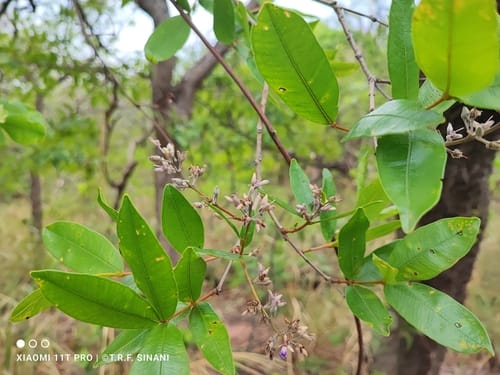
(c) Thomaz Ricardo Favreto Sinani, some rights reserved (CC BY)
What to Eat
Edible parts: Fruit
The fruit is eaten.
Where to Find It
It is a tropical plant. It grows along the edge of water
Amazon, Bolivia, Brazil, South America,
How to Identify
A tropical tree found along the edges of water, grown in cultivation. It belongs to the Vochysiaceae family.
How to Grow
Prefers a sunny position. Succeeds in most soils if they are well-drained. Established plants are drought tolerant. Newly planted young trees grow away slowly, scarcely reaching 150cm in the first two years.
Propagation: Seed - it has a short viability and so is best sown as soon as it is ripe. Plants are intolerant of root disturbance, so sow the seed in individual containers and place in light shade. Germination rates are usually lower than 20%, with the seed sprouting in 25 - 50 days. Seedlings grow slowly, but should be ready to plant out within 10 - 11 months.
Other Uses
The bark is a rich source of tannins. The wood is light, soft, easy to cut and work with, with moderate mechanical properties but of low durability in the soil. It is used for making canoes, toys and boxes.
Wikipedia
Source ↗Qualea parviflora, known as pau-terra in Portuguese, is a deciduous tree indigenous to Bolivia, Brazil, and Paraguay. The tree favors dry climates like the tropical savanna of the cerrado.
Other Information
It is a cultivated plant.
Names & Synonyms
Kre kre, Pau-terra, Pi ka tykre
References (2)
- Kermath, B. M., et al, 2014, Food Plants in the Americas: A survey of the domesticated, cultivated and wild plants used for Human food in North, Central and South America and the Caribbean. On line draft. p 731
- Poset, D. A., 2002, Kayapo Ethnoecology and Culture. Routledge