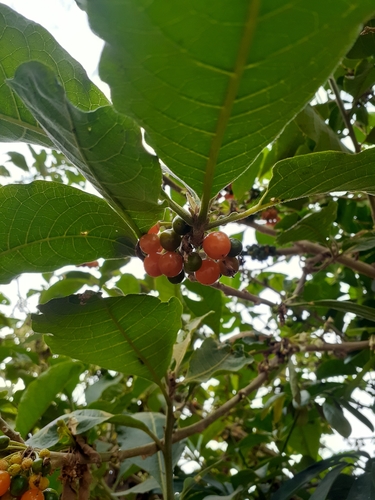
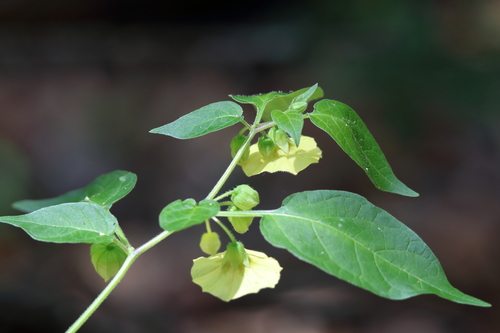
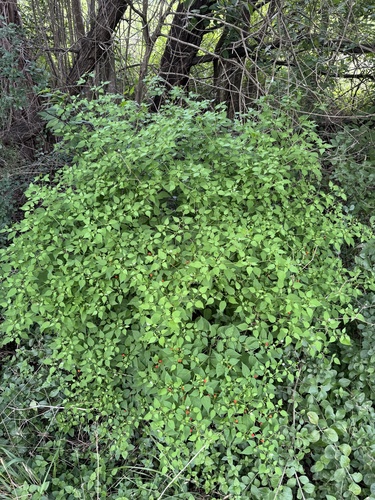
Solanum crinitum
Lam.
(c) augustinbussac, some rights reserved (CC BY-NC)

(c) B. Phalan, some rights reserved (CC BY), uploaded by B. Phalan

(c) Wagner Nogueira, some rights reserved (CC BY-NC), uploaded by Wagner Nogueira
What to Eat
Edible parts: Fruit
The fruit is edible.
Known Hazards
Where to Find It
It is a tropical plant.
Amazon, Asia, Bolivia, Brazil, Gyuana, Myanmar, SE Asia, South America, Venezuela,
How to Identify
An herb in the Solanaceae family found in tropical regions.
How to Grow
Succeeds in full sun, preferring a soil of a loamy nature. Grows well on nutrient-depleted soils. The plant responds well to coppicing and can survive forest fires by resprouting from the roots.
Propagation: Seed - sow in trays in a nursery. Prick out the seedlings into individual pots when they are large enough to handle and grow them on fast. Plant them out when 10cm or more tall. Cuttings of half-ripe wood. Very easy, the cuttings root within a couple of weeks.
Medicinal Uses
The plant (part not specified) is used in Brazil to treat a range of conditions, though it is mainly indicated in the treatment of diabetes. The grated bark has an emollient and resolvent effect when rubbed locally on swellings or tumors The fruits and leaves are boiled, and the water used as a medicament for 'bush yaws', or for treating sores. The pulp of the fruit is used for treating persistent sores The roots are boiled and the water drunk as an anti-malarial. The roots are boiled and the water used as an antibacterial and as an antiseptic (mouthwash), and for treating toothache. The plant (part not specified) is used for easing toothache. The fruits contain alkaloids and flavonoids, which showed cytotoxic activity.
Other Uses
The plant is very spiny and is often found in abundance in open and secondary vegetation. Within its native range, it has potential for use as a pioneer species, its spiny nature helping to keep some of the herbivores away as the trees establish themselves.
Wikipedia
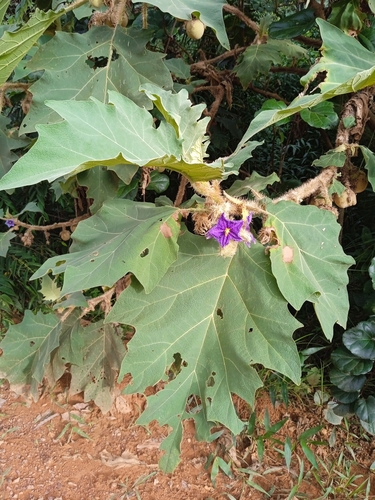
Source ↗Solanum crinitum, syn. Solanum macranthum, common name giant star potato tree, is a small tropical tree belonging to the family Solanaceae, growing to 12 m (39 ft) tall, native to the northeastern half of South America. Its flowers continue to grow bigger even after they open, doubling in size, and eventually becoming 5 cm (2.0 in) wide. Simultaneously with this, the flowers also change color, opening purple and becoming white. It is very short-lived for a tree-sized plant, being full-grown at age four, and often dead by its fifth year. If pollinated, the flowers produce a round, orange fruit about 5 cm (2.0 in) diameter. The 5- to 7-lobed leaves are about 40 cm (16 in) long and about half as wide.
References (1)
- Kermath, B. M., et al, 2014, Food Plants in the Americas: A survey of the domesticated, cultivated and wild plants used for Human food in North, Central and South America and the Caribbean. On line draft. p 816