Solanum diploconos
(Mart.) Bohs
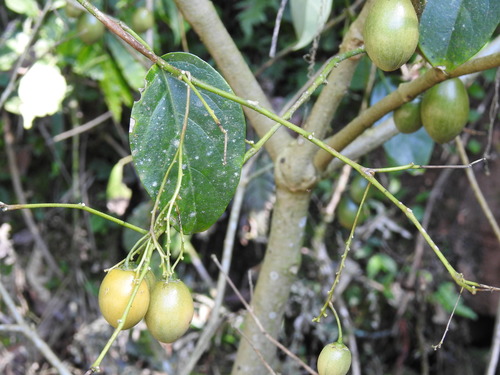
(c) Marcelo Schmidt Roberti, some rights reserved (CC BY-NC), uploaded by Marcelo Schmidt Roberti
(c) fernandotorres1978, some rights reserved (CC BY-NC)
What to Eat
Edible parts: Fruit
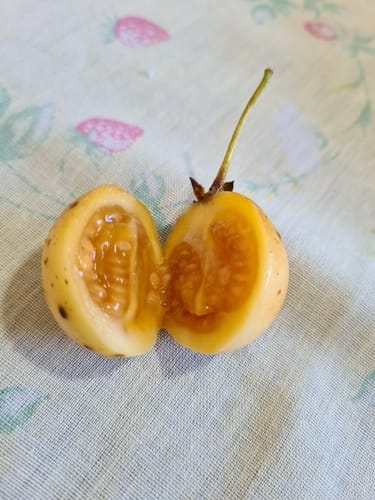
Fruit - raw or cooked. The small orange fruit is somewhat acid, the fruit is juicy and resembles a tree tomato in flavour. It is more like a guava, but not very exciting when eaten out of hand. The dried fruit loses its leatheriness and has a pleasant, sour taste similar to dried tamarinds. The yellow to orange, ellipsoidal fruits are 2 - 6cm long and 2 - 3cm in diameter.
Known Hazards
Where to Find It
It is a tropical plant. In Brazil it grows between 50-1,000 m above sea level.
Argentina, Brazil*, New Zealand, Paraguay, South America,
How to Identify
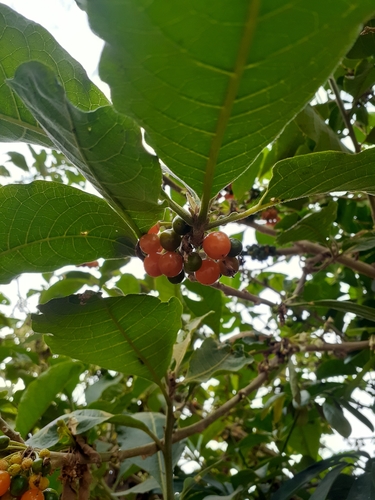
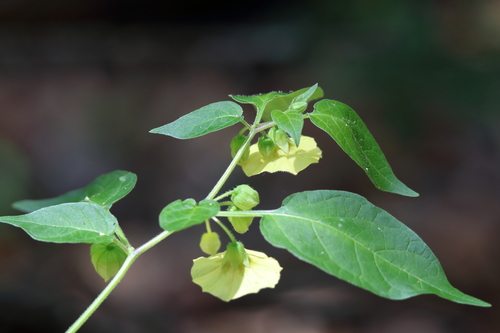
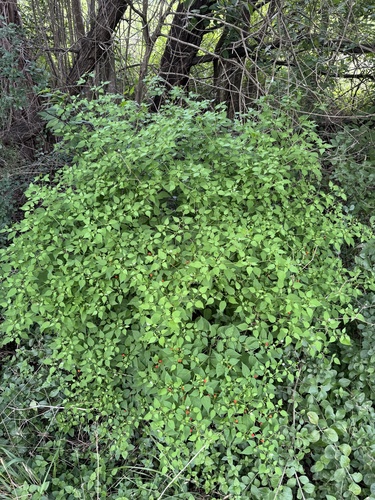
A shrub. It grows 4 m tall. The leaves are 4-11 cm long. The fruit is orange.
How to Grow
A plant of the subtropics to tropics. Plants fruit best with cool temperatures in the growing season. Succeeds in a sunny position in any well-drained soil. Prefers a light fertile soil. Dislikes drought. Plants are very prone to wind damage. A very fast growing plant, it starts to fruit within two years from seed and reaches peak production in 3 - 4 years. Trees are, however, short-lived and start to degenerate after about 8 years. Plants are probably insensitive to day-length. This species has a greater tolerance to powdery mildew than the tree tomato and a smaller more robust stature. Plants have a shallow spreading root system and resent surface hoeing, they are best given a good mulch. Plants usually ripe their fruit over a period of time, though pruning methods can be used to produce a peak time of fruiting. The leaves have a pungent smell. Plants are subject to attacks by red spider mites.
Propagation: Seed - usually germinates within 4 weeks at 15°c, within 2 weeks at 25°c. When they are large enough to handle, prick the seedlings out into individual pots and grow them on until large enough to plant out. Cuttings of greenwood.
Other Information
It is being tried in New Zealand as a potential commercial crop.
Names & Synonyms
Baga-de-bugre, Baga-de-veado, Guava tamarillo
References (5)
- Alimenticias - FloraSBS
- Brack, P., et al, 2020, Frutas nativas do Rio Grande do Sul, Brasil: riqueza e potencial alimentício. Native fruits of Rio Grande do Sul, Brazil: richness and potential as food. Rodriguésia 71: e03102018
- Kermath, B. M., et al, 2014, Food Plants in the Americas: A survey of the domesticated, cultivated and wild plants used for Human food in North, Central and South America and the Caribbean. On line draft. p 817
- World list of threatened species. p 518
- www.colecionandofrutas.org