Centaurea benedicta
(L.) L.
Blessed thistle, Holy Thistle, Sacred Thistle

(c) zebedeugalinha, some rights reserved (CC BY)

(c) zebedeugalinha, some rights reserved (CC BY)

(c) zebedeugalinha, some rights reserved (CC BY)
What to Eat
Edible parts: Leaves, Flower heads, Roots, Flavouring
The aerial parts are cooked as a stew, the roots can be boiled as a potherb, and the plant is used for flavouring including drinks.
Known Hazards
Where to Find It
It is a temperate plant. It grows on cultivated and waste land. It will grow on most soils. It is resistant to drought and frost.
Afghanistan, Africa, Argentina, Asia, Australia, Balkans, Brazil, Britain, Canada, Caucasus, Central Asia, Chile, Czech, Europe*, France, Germany, Iran, Iraq, Italy, Kurdistan, Macedonia, Mediterranean*, Middle East, North Africa, North America, Romania, Russia, Slovakia, South Africa, Southern Africa, South America, Spain, Syria, Tajikistan, Turkey, Türkiye, Uruguay,
How to Identify
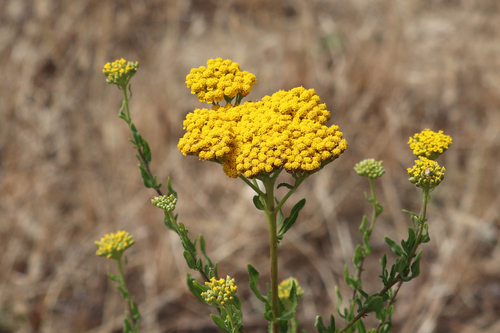
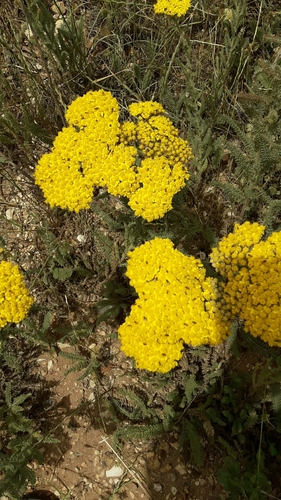
A medium sized annual thistle. It is softly hairy. The stems are usually only branched at the base. They are reddish-purple. The leaves are alternate and oblong. They are pale green. The veins underneath and prominent and white. The leaves at the base are often in a ring. They are divided into lobes along the stalk. These lower leaves have stalks. The upper leaves are smaller and partly clasp the stem. There are tips at the spine. The flower heads are yellow and pale green. They are 25-40 mm long. They occur singly. The florets are smaller, tube shaped and surrounded by a ruff of small upper leaves.
How to Grow
Plants are grown from seed.
Medicinal Uses
Blessed thistle is used in folk remedies as a galactagogue with other herbs to increase breast milk supply, although there is no scientific evidence that such use is effective. Although the leaves are unpalatable with a bitter taste, blessed thistle is used as a flavoring in alcoholic beverages, and is considered a safe ingredient for food uses. As a member of the ragweed family, blessed thistle may cause allergic reactions in susceptible people, and use of large amounts may cause stomach cramps, nausea and vomiting.
Wikipedia
Source ↗Centaurea benedicta, known by the common names St. Benedict's thistle, blessed thistle, holy thistle, spotted thistle or blessed knapweed, is an annual thistle-like plant in the family Asteraceae, native to Mediterranean Europe and western and Central Asia, ranging from Portugal and Spain to southeastern Europe, Ukraine and southern European Russia, Saudi Arabia, Xinjiang, and Pakistan. It is known in other parts of the world, including parts of North America, as an introduced species and often a noxious weed.
Other Information
It was formerly cultivated.
Notes
It is used in medicine. There is only one Cnicus species.
Names & Synonyms
Acı dürlek, Cardo bendito, Cardo santo, Cristo pobre, Diken, Diken otu, Tulu diken
References (18)
- Blamey, M and Grey-Wilson, C., 2005, Wild flowers of the Mediterranean. A & C Black London. p 458 (As Cnicus benedictus)
- Bodkin, F., 1991, Encyclopedia Botanica. Cornstalk publishing, p 268 (As Cnicus benedictus)
- Bremness, L., 1994, Herbs. Collins Eyewitness Handbooks. Harper Collins. p 242 (As Cnicus benedictus)
- Brown, D., 2002, The Royal Horticultural Society encyclopedia of Herbs and their uses. DK Books. p 174 (As Cnicus benedictus)
- Ertug, F, Yenen Bitkiler. Resimli Türkiye Florası -I- Flora of Turkey - Ethnobotany supplement (As Cnicus benedictus)
- Facciola, S., 1998, Cornucopia 2: a Source Book of Edible Plants. Kampong Publications, p 37 (As Cnicus benedictus)
- Hermandez Bermejo, J.E., and Leon, J. (Eds.), 1994, Neglected Crops. 1492 from a different perspective. FAO Plant Production and Protection Series No 26. FAO, Rome. p 263 (As Carduus benedictus)
- Kayabasi, N. P., et al, 2018, Wild edible plants and their traditional use in the human nutrition in Manyas (Turkey). Indian Journal of Traditional Knowledge. Vol. 17(2), April 2018, pp 299-306 (As Cnicus benedictus)
- MacKinnon, A., et al, 2009, Edible & Medicinal Plants of Canada. Lone Pine. p 341 (As Cnicus benedictus)
- Malezas Comestibles del Cono Sur, INTA, 2009, Buernos Aires (As Cnicus benedictus)
- Özdemir, E. and Kültür, S., 2017, Wild Edible Plants of Savaştepe District (Balıkesir, Turkey), Marmara Pharm J 21/3: 578-589 (As Cnicus benedictus)
- Plants for a Future database, The Field, Penpol, Lostwithiel, Cornwall, PL22 0NG, UK. http://www.scs.leeds.ac.uk/pfaf/ (As Cnicus benedictus)
- Seidemann J., 2005, World Spice Plants. Economic Usage, Botany, Taxonomy. Springer. p 112 (As Cnicus benedictus)
- Sp. pl. 2:826. 1753 (As Cnicus benedictus)
- Tanaka, (As Cnicus benedictus)
- Uphof, (As Cnicus benedictus)
- World Checklist of Useful Plant Species 2020. Royal Botanic Gardens, Kew
- Zeven, A. C. & de West, J. M. J., 1982, Dictionary of cultivated plants and their regions of diversity. Wageningen. p 105