Cocos nucifera
L.
Coconut

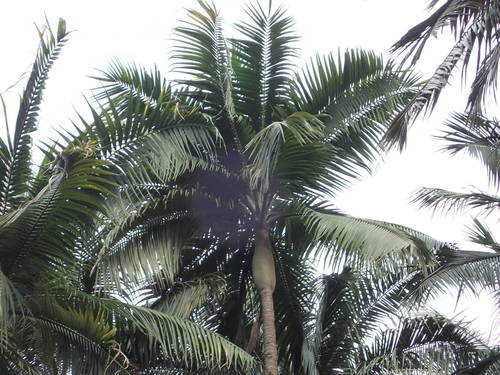
(c) Douglas Goldman, some rights reserved (CC BY-SA), uploaded by Douglas Goldman

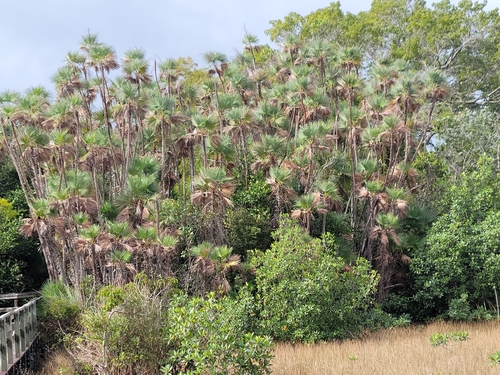
(c) Caitlyn, some rights reserved (CC BY-NC), uploaded by Caitlyn

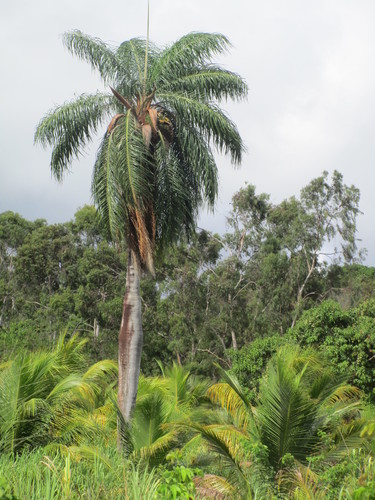
(c) Santiago Mailhos, some rights reserved (CC BY-NC), uploaded by Santiago Mailhos
What to Eat
Edible parts: Nuts, Sap, Cabbage, Nuts milk, Apple, Palm heart, Flowers
The coconut is an exceptionally versatile food plant. The seed can be eaten raw or used in a wide range of cooked dishes, and is often dried and shredded as a flavouring in cakes, curries, and similar preparations. Coconut milk or cream, made by pressing freshly grated seed mixed with water, is a traditional ingredient in many African and Asian foods and bakery products. The flesh inside a half-ripe seed is gelatinous and clear, eaten as a delicacy raw or cooked. An edible oil extracted from the seed is widely used in cooking and in making margarines, shortening, filled milk, ice cream, and confectionery. It is traditionally extracted by grating the kernel, macerating it with water, and boiling the mixture so the oil floats to the surface and can be skimmed off, though most commercial oil is obtained by pressing the kernel. The liquid inside unripe fruits makes a refreshing drink that remains cool even in hot tropical conditions. The inflorescence can be cooked and eaten as a vegetable. A sugary sap obtained by tapping or cutting the stalks of young flower bunches can be fermented into an alcoholic beverage. The apical bud is edible raw, though harvesting it kills the trunk as the palm cannot produce side branches. The roots can be roasted and used as a coffee substitute. The pith of the stem is made into a bread, added to soups, or pickled.
Where to Find It
A tropical plant. Mainly in coastal areas but occasionally up to 1000 m in the tropics. In Fiji coconut palms rarely fruit above 400 m altitude. Temperatures of 27°-32°C are best with a daily range of 5-7°C. They need a minimum temperature of over 18°C to bear fruit. They need over 1000 mm of rain/year preferably 1500 mm. Soils need to be well drained. It requires plenty of sunlight. Sunlight of 1,800 hours per year gives good growth. It is salt tolerant. It can tolerate soils with pH between 5-8. In Nepal plants grow to 500 m altitude. Coconuts are normally confined to within 26° of the equator. It suits hardiness zones 12. In Yunnan.
Africa, Amazon, American Samoa, Andamans, Anguilla, Antigua and Barbuda, Argentina, Asia, Australia, Bangladesh, Barbados, Belize, Benin, Bermuda, Bolivia, Bougainville, Brazil, British Indian Ocean Terr., BIOT, Brunei, Burkina Faso, Cambodia, Cameroon, Cape Verde, Caribbean, Caroline Islands, Central Africa, Central America, Chad, Chile, China, Chuuk, Cocos Island, Colombia, Congo DR, Cook Islands, Costa Rica, Côte d'Ivoire, Cuba, Dominica, Dominican Republic, East Africa, East Timor, Easter Island, Ecuador, Fiji, French Guiana, French Polynesia, FSM, Gambia, Ghana, Grenada, Guam, Guianas, Guinea, Guinée, Guyana, Haiti, Hawaii, Himalayas, India, Indochina, Indonesia, Ivory Coast, Jamaica, Kenya, Kiribati, Laos, Liberia, Madagascar, Malawi, Malaysia, Maldives, Mali, Mariana Islands, Marquesas, Marshall Islands, Mauritania, Mauritius, Mayotte, Mexico, Micronesia, Mozambique, Myanmar, Nauru, Nepal, New Caledonia, Nicaragua, Niger, Nigeria, Nuie, North America, Northeastern India, Pacific*, Pakistan, Palau, Papua New Guinea, PNG, Paraguay, Peru, Philippines, Pohnpei, Rotuma, Sahel, Samoa, Sao Tome and Principe, SE Asia, Senegal, Seychelles, Sierra Leone, Singapore, Solomon Islands, Somalia, South Africa, Southern Africa, South America, Sri Lanka, St Helena, St. Kitts and Nevis, St Lucia, St. Vincent and Grenadines, Suriname, Tahiti, Taiwan, Tanzania, Thailand, Timor-Leste, Tobago, Togo, Tokelau, Tonga, Torres Strait, Trinidad, Turks & Caicos, Tuvalu, Uganda, United Arab Emirates, UAE, USA, Uruguay, Vanuatu, Venezuela, Vietnam, Wallis & Futuna, West Africa, West Indies, West Timor, Yap, Zambia, Zimbabwe,
How to Identify
A palm with an unbranched trunk. The trunk has ring-like leaf scars along it. At the base it is swollen and surrounded by a mass of roots. They grow to about 25 m tall. Dwarf varieties have been produced. The fronds are 2-6 m long. They are divided along the stalk into strap shaped leaflets. The leaflets are 60-90 cm long. They are narrow and tapering. Clusters of large fruit develop beneath the fronds. Male and female flowers are separate on the one stalk. Female flowers are near the base. Flowers are cream. The flowers are covered by boat shaped bracts. About 10-12 fruit/stalk is a good crop. Leaves are up to 5 m long. Fruit can be 25 cm across. The fruit are fibrous. The hard shell inside is filled with coconut milk and the white copra layer.
Nutrition Score: 48/100
| Part | Moisture | kJ | kcal | Protein | Vit A | Vit C | Iron | Zinc |
|---|---|---|---|---|---|---|---|---|
| flesh dried | 12.2 | 2429 | 581 | 6.6 | — | — | — | — |
| Sap | 10.3 | 1421 | 340 | — | — | — | — | — |
| milk | 84.9 | 1004 | 240 | 3.7 | — | 8 | 1.3 | 0.4 |
| apple | 84 | 310 | 74 | 1.3 | 0 | 5 | 0.7 | — |
| flesh | 80.9 | 119 | 28 | 1.1 | — | — | 0.2 | 0.2 |
How to Grow
Plants succeed in moist tropical climates where temperatures never fall below 10c, the average annual rainfall is 1,500mm or more and the driest month has 25mm or more rain. The coconut palm thrives in a wide range of soils, from coarse sand to clay, so long as the soils have adequate drainage and aeration. Requires a well-drained soil with a high water table. Plants grow well in full sun, even when small. Plants can tolerate at least some maritime exposure with salt spray and somewhat saline soil conditions. Coconut palms are halophytic and tolerate salt in the soil well. Plants are intolerant of drought. Coconut can grow in soils with a wide range of pH but grows best at pH 5.5 - 7. Coconut palm is one of the most widely grown tree crops in the tropical countries. Its growth characteristics are ideal for small production and also for combining with other crops. The crown morphology and the relatively wide spacing facilitate the planting of a wide spectrum of field crops in coconut plantations. It has therefore been intercropped with cereals (cassava, sweet potatoes, yams) or fruits (bananas, passion fruit, pineapples and ground nuts) in many countries. Very occasionally a small pearl-like concretion, or 'coconut pearl', is found in the cavity of the nut. Generally about the size of a canary's egg or even that of a cherry, they are white or bluish white in colour with a pearl-like lustre and harder in texture than a pearl. Made almost entirely of a form of lime or calcium carbonate, they are greatly prized and often used in jewellery. The tall varieties reproduce by cross-pollination. Male flowers open first, producing pollen for about 2 weeks. Female flowers are not usually receptive until about 3 weeks after the opening of the inflorescence, making cross-pollination the usual pattern. Reproduction in dwarf varieties is generally through self-pollination. Female flowers are receptive about a week after the male flowers open, both ending at about the same time. Tall palms tend to be slow maturing, flowering 6 - 10 years after planting and with a life-span of 80 - 100 years. Dwarf palms begin bearing in their third year and have a productive life of 30 - 35(-40) years. The trees flower and fruit all year round. A new inflorescence is produced every month, whilst the fruit takes a year to mature.
Propagation: Fresh seed germinates readily at 27–30°c. The seed has no dormancy and growth of the embryo and seedling is continuous; germination may begin while the fruits are still attached to the palm. For propagation, nuts are collected from selected mother palms or special seed gardens. Tissue culture is a popular method of vegetative propagation for producing large numbers of plants.
Medicinal Uses
The coconut is widely used in traditional medicine across many regions. The seed oil is cytotoxic, emetic, emollient, hypotensive, and purgative. It is rubbed onto stiff joints and used to treat rheumatism and back pain, and applied as an ointment to keep skin smooth and soft. Mixed with turmeric, it is used to treat sick newborn infants and women who have just given birth. To reposition a baby from a breech to a normal position in the womb, the abdomen is massaged with coconut oil. Coconut milk is diuretic and is used to treat fish poisoning. Juice from a green coconut is given to women experiencing difficult pregnancies, and fruit juice is taken to treat kidney problems. The root is used to treat stomach-ache and blood in the urine; boiled together with Ruellia tuberosa root, it is used for bladder ailments and as an aphrodisiac. In Fiji, weakness after childbirth is treated with liquid extracted from the stem. Juice from the midrib at the lower base of the leaf is used to treat maternal postpartum illness. In New Guinea, parts of the plant are used to treat sores and scabies. A poultice made from the apical bud is applied externally to treat ulcers. The plant is said to have vermicide properties. The dry, spongy kernel is used to stop haemorrhaging. In the Solomon Islands, parts of the plant are used to treat diarrhoea and dysentery.
Other Uses
The fibre around the seeds is widely used in making peat-free composts as a substitute for peat. Burnt husks produce a potash used to fertilize the trees, and the husks also serve as a mulch for moisture conservation and weed suppression in the dry season. An oil from the seed, which contains fatty alcohol and glycerine, is used in making soaps, detergents, cosmetics, candles, and pharmaceuticals, and to a lesser extent as a lubricant. The oil can also substitute for diesel in electric generating plants and motor vehicles, though this is only economical when other fuel prices are high. Leaves are woven into roofing and thatching material for hut walls, and into mats and baskets. Leaflet midribs are used as brooms, and the root may be used as a toothbrush. The fibrous husk material, known as coir, yields three types of fibre: mat or yarn fibre used in making mats, bristle fibre used for brush making, and mattress fibre used in upholstery and mattress stuffing. Coir can also be made into ropes and cordage. The hard woody shell around the seed is fashioned into cups, bowls, buttons, combs, bangles, and musical instruments. Coconut-shell flour, ground from clean mature shells, is used as a filler in the thermoplastic industry and as an abrasive for cleaning machinery. The shell produces a high-quality charcoal that burns with intense heat and has high absorbency; it has been used in gas masks and can be further processed into activated carbon for water purification, crystalline sugar preparation, and gold purification. The outer portion of the trunk provides a widely used tropical timber that is red-brown with a coarse texture and straight to entangled grain. It is hard and heavy but not very durable, seasons slowly with a slight risk of checking and a high risk of distortion, and once dry is moderately stable. It has a high blunting effect on tools, so stellite-tipped or tungsten-carbide tools are recommended; nailing and screwing require pre-boring; gluing is satisfactory. The timber is used for structural house frameworks, load-bearing elements such as frames, floors, and trusses, poles, high-quality furniture, and parquet flooring.
Wikipedia
Source ↗An evergreen tree reaching 25 m (82 ft) tall and 7 m (23 ft) wide, growing at a medium rate. Hardy to UK zone 10. Wind-pollinated and self-fertile, attracting wildlife. Adapts to light sandy, medium loamy, and heavy clay soils, preferring good drainage but tolerating poor nutrition. Grows in mildly acidic, neutral, and basic soils, as well as very acidic, very alkaline, and saline conditions. Requires full sun, prefers moist soil, and tolerates drought.
Production
Early germinating nuts, give early production in the field. They can commence production after 6-8 years. The best yields are often produced between 12 and 60 years of age. Trees can live for 100 years. Palms can produce 15-100 nuts per year. Fruit take about 1 year to be mature. Tapping the flower stalk can give 1 kg sap/day for 6 months. For palm hearts plants are put at a close spacing of about 2 m and are ready to harvest in 2 years.
Other Information
A common and popular snack food and supplement in all coastal areas of Papua New Guinea and all tropical coastal places. It is cultivated.
Notes
There is now only one Cocos species.
Names & Synonyms
Alupwa, Coco, Coco-da-bahia, Cocotero, Dab, Dafo, Dhivehi ruh, Doo'ng, Dua, Ehi, Faluma, Ha'ari, Iru, Joz narjl, Joz al-hind, Kelapa, Kobbarichettu, Kogo, Kokosnoot, Kul, Lu, Maprao, Mnazi, Mosara, Naarajiin, Naral, Narel, Nariel, Narikal, Narikel, Narikela, Narikelam, Narikelamu, Nariyal, Ngolo, Ni, Nih, Nio, Niu, Niyog, Nizok, Nkoko, Nohara, Nu, Nui, Nuu, Ohi, Ohn, Pol, Purumatingurrupuwa, Te ni, Tengu, Tenkai, Tenkaya, Tennaimaram, Thenga, Thenna, Urub
References (151)
- Abbiw, D.K., 1990, Useful Plants of Ghana. West African uses of wild and cultivated plants. Intermediate Technology Publications and the Royal Botanic Gardens, Kew. p 41
- Ali, A. M. S., 2005, Homegardens in Smallholder Farming Systems: Examples from Bangladesh. Human Ecology, Vol. 33, No. 2 pp. 245-270
- Ambasta, S.P. (Ed.), 2000, The Useful Plants of India. CSIR India. p 134
- Anderson, E. F., 1993, Plants and people of the Golden Triangle. Dioscorides Press. p 207
- Awasthi, A.K., 1991, Ethnobotanical studies of the Negrito Islanders of Andaman Islands, India - The Great Andamanese. Economic Botany 45(2) pp274-280
- Bajpai, O., et al, 2015, Tree species of the Himalayan Terai region of Uttar Pradesh, India: a checklist. Check List 11(4): 1718
- Baker, W.J. and Dransfield, J., 2006, Field Guide to Palms of New Guinea. Kew p 64
- Balkrishna, A., et al, 2022, Indigenous Uses of Plants among Forest-dependent Communities of Seijosa, Arunachal Pradesh. International Journal of Economic Plants 2022, 9(1):064-080
- Bianchini, F., Corbetta, F., and Pistoia, M., 1975, Fruits of the Earth. Cassell. p 230
- Blench, R., 2004, Fruits and Arboriculture in the Indo-Pacific Region. Indo-Pacific Prehistory Association Bulletin 24. (Taipei Papers Volume 2) p 36
- Blomberry, A. & Rodd, T., 1982, Palms. An informative practical guide. Angus & Robertson. p 85
- Bodkin, F., 1991, Encyclopedia Botanica. Cornstalk publishing, p 269
- Bole, P.V., & Yaghani, Y., 1985, Field Guide to the Common Trees of India. OUP p 29
- Bodner, C. C. and Gereau, R. E., 1988, A Contribution to Bontoc Ethnobotany. Economic Botany, 43(2): 307-369
- Bourret, D., 1981, Bonnes-Plantes de Nouvelle-Caledonie et des Loyaute. ORSTOM. p 33
- Bradacs, G., 2008, Ethnobotanical Survey and Biological Screening of Medicinal Plants from Vanuatu. PhD thesis Frankurt University. p 100
- Bremness, L., 1994, Herbs. Collins Eyewitness Handbooks. Harper Collins. p 49
- Brickell, C. (Ed.), 1999, The Royal Horticultural Society A-Z Encyclopedia of Garden Plants. Convent Garden Books. p 284
- Burkill, H. M., 1985, The useful plants of west tropical Africa, Vol. 4. Kew.
- Burkill, I.H., 1966, A Dictionary of the Economic Products of the Malay Peninsula. Ministry of Agriculture and Cooperatives, Kuala Lumpur, Malaysia. Vol 1 (A-H) p 603
- Cabalion, P. and Morat, P., 1983, Introduction le vegetation, la flore et aux noms vernaculaires de l'ile de Pentcoste (Vanuatu), In: Journal d'agriculture traditionnelle et de botanique appliquee JATBA Vol. 30, 3-4
- Chatterjee, A. S., 1997, Fruit Trees in Cambodian Home Gardens. Trainers' training manual. Home garden series No.3 p 5
- Chin, H.F., & Yong, H.S., 1996, Malaysian Fruits in Colour. Tropical press, Kuala Lumpur p 20
- Clarke, W.C. & Thaman, R.R., 1993, Agroforestry in the Pacific Islands: Systems for sustainability. United Nations University Press. New York. p 231
- Cobley, L.S. (rev. Steele, W.M.) 2nd Ed., 1976, An Introduction to the Botany of Tropical Crops. Longmans. p 306
- Coe, F. G. and Anderson, G. J., 1999, Ethnobotany of the Sumu (Ulwa) of Southeastern Nicaragua and Comparisons with Miskitu Plant Lore. Economic Botany Vol. 53. No. 4. pp. 363-386
- Cowie, I, 2006, A Survey of Flora and vegetation of the proposed Jaco-Tutuala-Lore National Park. Timor-Lests (East Timor) www.territorystories.nt/gov.au p 43
- Cribb, A.B. & J.W., 1976, Wild Food in Australia, Fontana. p 26, 179
- Cronin, L., 1989, The Concise Australian Flora. Reed. p 219
- Cronin, L., 2000, Australian Palms, Ferns, Cycads and Pandans. Cronin Publications. p 44
- Cruz, I. M., et al, 2015, Edible fruits and seeds in the State of Mexico. Revista Mexicana de Ciencias Agricolas. Vol. 6. Num. 2 pp 331-346
- Cundall, P., (ed.), 2004, Gardening Australia: flora: the gardener's bible. ABC Books. p 398
- D'Ambrosio, U., & Puri, R. K., 2016, Foodways in transition: food plants, diet and local perceptions of change in a Costa Rican Ngäbe community. Journal of Ethnobiology and Ethnomedicine (2016) 12:3 p 22
- Darley, J.J., 1993, Know and Enjoy Tropical Fruit. P & S Publishers. p 81
- Das, T. & Das, A. K., 2005, Inventorying plant biodiversity in homegardens: A case study in Barak Valley, Assam, North East India. CURRENT SCIENCE, VOL. 89, NO. 1, 10 JULY 2005
- Dharani, N., 2002, Field Guide to common Trees & Shrubs of East Africa. Struik. p 288
- Duarte, M. C., et al, 2022, Diversity of Useful Plants in Cabo Verde Islands: A Biogeographic and Conservation Perspective. Plants 2022, 11, 1313 p 8
- Ekman Herbarium records Haiti
- Elevitch, C.R.(ed.), 2006, Traditional Trees of the Pacific Islands: Their Culture, Environment and Use. Permanent Agriculture Resources, Holualoa, Hawaii. p 277
- Elliot, W.R., & Jones, D.L., 1984, Encyclopedia of Australian Plants suitable for cultivation. Vol 3. Lothian. p 54
- Etherington, K., & Imwold, D., (Eds), 2001, Botanica's Trees & Shrubs. The illustrated A-Z of over 8500 trees and shrubs. Random House, Australia. p 219
- Facciola, S., 1998, Cornucopia 2: a Source Book of Edible Plants. Kampong Publications, p 27
- FAO, 1995, Edible Nuts. Non Wood Forest Products 5.
- Flora of Pakistan. www.eFloras.org
- Flowerdew, B., 2000, Complete Fruit Book. Kyle Cathie Ltd., London. p 206
- Focho, D. A., et al, 2009, Ethnobotanical survey of Trees in Fundong, Northwest Region, Cameroon. Journal of Ethnobiology and Ethnomedicine, 5:17
- Fowler, D. G., 2007, Zambian Plants: Their Vernacular Names and Uses. Kew. p 64
- Franklin, J., Keppel, G., & Whistler, W., 2008, The vegetation and flora of Lakeba, Nayau and Aiwa Islands, Central Lau Group, Fiji. Micronesica 40(1/2): 169–225, 2008
- French, B.R., 1986, Food Plants of Papua New Guinea, A Compendium. Asia Pacific Science Foundation p 31
- French, B.R., 2010, Food Plants of Solomon Islands. A Compendium. Food Plants International Inc. p 272
- Furusawa, T., et al, 2014, Interaction between forest biodiversity and people's used of forest resources in Roviana, Solomon Islands: implications for biocultural conservation under socioeconomic changes. Journal of Ethnobiology and Ethnomedicine, 10:10
- Gibbons, M., 2003, A pocket guide to Palms. Chartwell Books. p 87
- Gillaumin, R., 1954, Les Plantes utiles des Nouvelles-Hebrides (fin et complement) In: Journal d'agriculture tropicale et de botanique appliquee Vol. 1, No. 10-12 pp 453-460
- Giraldi, M. & Hanazaki, N., 2014, Use of Cultivated and Harvested Edible Plants by Caiçaras—What Can Ethnobotany Add to Food Security Discussions? Human Ecology Review, Volume 20, Number 2, 2014
- Habitat Management Profile – Saibai Island Appendix C p 115
- Haynes, J., & McLaughlin, J., 2000, Edible palms and Their Uses. University of Florida Fact sheet MCDE-00-50-1 p 5
- Hearne, D.A., & Rance, S.J., 1975, Trees for Darwin and Northern Australia. AGPS, Canberra p 48
- Hedrick, U.P., 1919, (Ed.), Sturtevant's edible plants of the world. p 207
- Henderson, A., Galeano, G and Bernal, R., 1995, Field Guide to the Palms of the Americas. Princeton. p 139
- Hiddins, L., 1999, Explore Wild Australia with the Bush Tucker Man. Penguin Books/ABC Books. p 136
- Hu, Shiu-ying, 2005, Food Plants of China. The Chinese University Press. p 301
- Huxley, A. (Ed.), 1977, The Encyclopedia of the Plant Kingdom. Chartweil Books. p 47, 165
- Jacquat, C., 1990, Plants from the Markets of Thailand. D.K. Book House p 109
- Janick, J. & Paul, R. E. (Eds.), 2008, The Encyclopedia of Fruit & Nuts. CABI p 106
- Jardin, C., 1970, List of Foods Used In Africa, FAO Nutrition Information Document Series No 2.p 33, 68
- Johnson, D.V., 1998, Tropical palms. Non-wood Forest products 10. FAO Rome. p 127
- Jones, D.L., 2000, Palms of Australia 3rd edition. Reed/New Holland. p 83
- Karim, F. M. & Dakheel, A, J., 2006, Salt-tolerant plants of the United Arab Emirates. 2006. International Center for Biosaline Agriculture, Dubai, UAE.
- Katende, A.B., Birnie, A & Tengnas B., 1995, Useful Trees and Shrubs for Uganda. Identification, Propagation and Management for Agricultural and Pastoral Communities. Technical handbook No 10. Regional Soil Conservation Unit, Nairobi, Kenya. p 194
- Khan, D. & Shaukat, S.S., 2006, The Fruits of Pakistan: Diversity, Distribution, Trends of Production and Use. Int. J. Biol. Biotech., 3(3):463-499
- Kiple, K.F. & Ornelas, K.C., (eds), 2000, The Cambridge World History of Food. CUP p 1759
- Kohila, A. & Kensa, V. M., 2019, Survey of Wild Edible Plants of Dhanakarkulam Panchayath, Tirunelveli District, Tamil Nadu, India. Kong. Res. J. 6(2): 20-27, 2019
- Kumar, S. A., Manus, D. & Mallika, M., 2018, Impact of non-timber forest products on Forest and in Livelihood Economy of the People of Adjoining Areas of Jalpaiguri Forest Division, West Bengal, India. Int. J. of Life Sciences, 2018; 6 (2):365-385
- Kuo, W. H. J., (Ed.) Taiwan's Ethnobotanical Database (1900-2000), http://tk.agron.ntu.edu.tw/ethnobot/DB1.htm
- Lazarides, M. & Hince, B., 1993, Handbook of Economic Plants of Australia, CSIRO. p 62
- Lebot, V. & Sam, C., Green desert or ‘all you can eat’? How diverse and edible was the flora of Vanuatu before human introductions?. Terra australis 52 p 409
- Lepofsky, D., 1992, Arboriculture in the Mussau Islands, Bismarck Archipelago. Economic Botany, Vol 46, No. 2, pp. 192-211
- Liefting, A., et al, Samoan plant names. http://en.wikipedia.org
- Llamas, K.A., 2003, Tropical Flowering Plants. Timber Press. p 100
- Lord, E.E., & Willis, J.H., 1999, Shrubs and Trees for Australian gardens. Lothian. p 94
- Lorenzi, H., 2002, Brazilian Trees. A Guide to the Identification and Cultivation of Brazilian Native Trees. Vol. 01 Nova Odessa, SP, Instituto Plantarum p 293
- Lorenzi, H., Bacher, L., Lacerda, M. & Sartori, S., 2006, Brazilian Fruits & Cultivated Exotics. Sao Paulo, Instituto Plantarum de Estuados da Flora Ltda. p 77
- Mahony, D., 1991, Trees of Somalia. A Field Guide for Development Workers. Oxfam Research Paper 3. p 9
- Manandhar, N.P., 2002, Plants and People of Nepal. Timber Press. Portland, Oregon. p 163
- Marcia, M. J., et al, 2011, Palm Uses in Northwestern South America: A Quantitative Review. Bot. Rev. (2011) 77:462-570
- Martin, F.W. & Ruberte, R.M., 1979, Edible Leaves of the Tropics. Antillian College Press, Mayaguez, Puerto Rico. p 210
- Martin, F. W., et al, 1987, Perennial Edible Fruits of the Tropics. USDA Handbook 642 p 47
- Martin, M.A., 1971, Introduction L'Ethnobotanique du Cambodge. Centre National de la Recherche Scientifique. Paris.
- Massal, E. and Barrau, J., 1973, Food Plants of the South Sea Islands. SPC Technical Paper No 94. Nounea, New Caledonia. p 28-30
- Menninger, E.A., 1977, Edible Nuts of the World. Horticultural Books. Florida p 131
- Mulherin, J., 1994, Spices and natural flavourings. Tiger Books, London. p 113
- Mutie, F. M., et al, 2023, Important Medicinal and Food Taxa (Orders and Families) in Kenya, Based on Three Quantitative Approaches. Plants 2023, 12, 1145
- Nathan, A., & Wong Y Chee, 1987, A Guide to Fruits and Seeds, Singapore Science Centre. p 26
- Norrington, L., & Campbell, C., 2001, Tropical Food Gardens. Bloomings Books. p 100
- Ochse, J. J. et al, 1931, Vegetables of the Dutch East Indies. Asher reprint. p 560
- Omawale, 1973, Guyana's edible plants. Guyana University, Georgetown p 15
- Peekel, P.G., 1984, (Translation E.E.Henty), Flora of the Bismarck Archipelago for Naturalists, Division of Botany, Lae, PNG. p 65, 64
- Phon, P., 2000, Plants used in Cambodia. © Pauline Dy Phon, Phnom Penh, Cambodia. p 165
- Plants of Haiti Smithsonian Institute http://botany.si.edu
- Purseglove, J.W., 1972, Tropical Crops. Monocotyledons. Longmans p 440
- Rajapaksha, U., 1998, Traditional Food Plants in Sri Lanka. HARTI, Sri Lanka. p 363
- Rashid, H. E., 1977, Geography of Bangladesh. Westview. p 328
- Riffle, R.L. & Craft, P., 2003, An Encyclopedia of Cultivated Palms. Timber Press. p 310
- Roa, J. A. G. & Boada, D. S. G., 2018, Fundación para el Fortalecimiento de la Fruticultura y Plantas Alimenticias no Convencionales en Colombia.
- Rosero-Toro, et al, 2018, Cultural significance of the flora of a tropical dry forest in the Doche vereda (Villavieja, Huila, Colombia). Journal of Ethnobiology and Ethnomedicine (2018) 14:22 p 11
- Ruiters-Welcome, A. K., 2019, Food plants of southern Africa. Ph.D. thesis. Univ. of Johannesburg p 29
- Sahni, K.C., 2000, The Book of Indian Trees. Bombay Natural History Society. Oxford. p 185
- Schuler, S., (Ed.), 1977, Simon & Schuster's Guide to Trees. Simon & Schuster. No. 51
- Segura, S. et al, 2018, The edible fruit species in Mexico. Genet Resour Crop Evol (2018) 65:1767–1793
- Sharma, B.B., 2005, Growing fruits and vegetables. Publications Division. Ministry of Information and broadcasting. India. p 50
- Selvam, V., 2007, Trees and shrubs of the Maldives. RAP Publication No. 2007/12 p 210
- Small, E., 2009, Top 100 Food Plants. The world's most important culinary crops. NRC Research Press. p 201
- Solomon, C., 2001, Encyclopedia of Asian Food. New Holland. p 99
- Sp. pl. 2:1188. 1753
- Staples, G.W. and Herbst, D.R., 2005, A tropical Garden Flora. Bishop Museum Press, Honolulu, Hawaii. p 620
- Sukenti, K., et al, 2016, Ethnobotanical study on local cuisine of the Sasak tribe in Lombok Island, Indonesia. Journal of Ethnic Foods. 3( 2016) 189-200 p 194
- Sujanapal, P., & Sankaran, K. V., 2016, Common Plants of Maldives. FAO & Kerala FRI, p 92
- Sukarya, D. G., (Ed.) 2013, 3,500 Plant Species of the Botanic Gardens of Indonesia. LIPI p 771
- Swaminathan, M.S., and Kochnar, S.L., 2007, An Atlas of major Flowering Trees in India. Macmillan. p 278
- Tankard, G., 1990, Tropical fruit. An Australian Guide to Growing and using exotic fruit. Viking p 107
- Tate, D., 1999, Tropical Fruit. Archipelago Press. Singapore. p 50
- Thaman, R.R., 1976, The Tongan Agricultural System, University of the South Pacific, Suva, Fiji. p 389
- Thaman, R. R., 1987, Plants of Kiribati: A listing and analysis of vernacular names. Atoll Research Bulletin No. 296
- Thaman, R. R, 2016, The flora of Tuvalu. Atoll Research Bulletin No. 611. Smithsonian Institute p 41
- Tiwi Plants and Animals. 2001, Aboriginal flora and fauna knowledge from Bathurst and Melville Islands, northern Australia. Northern Territory Botanical Bulletin; No. 24 p 40
- Topp, J. M. W., 1988, An Annotated Check List of the Flora of Diego Garcia, British Ocean Territory. Atoll Research Bulletin No. 313
- Torre, de la L., et al, 2008, Enciclopedia de las Plantas Útiles del Ecuador. Herbario QCA. Pontificia Universidad Católica del Ecuador. p 199
- USDA, ARS, National Genetic Resources Program. Germplasm Resources Information Network - (GRIN). [Online Database] National Germplasm Resources Laboratory, Beltsville, Maryland. Available: www.ars-grin.gov/cgi-bin/npgs/html/econ.pl (10 April 2000)
- Vael, L., 2015, Ethnobotanical study of the plant use in the natural landscape of two mestizo communities in the Ucayali region of the Peruvian Amazon. Universiteit Gent.
- Vander Velde, N, 2003, The Vascular Plants of Majuro Atoll, Republic of the Marshall Islands. Atoll research Bulletin. No. 503. Smithsonian Institute. p 31
- van der Vossen, H.A.M. & Chipungahelo, G.S.E., 2007. Cocos nucifera L. [Internet] Record from Protabase. van der Vossen, H.A.M. & Mkamilo, G.S. (Editors). PROTA (Plant Resources of Tropical Africa), Wageningen, Netherlands. < http://database.prota.org/search.htm>. Accessed 15 October 2009.
- van Wyk, B., 2005, Food Plants of the World. An illustrated guide. Timber press. p 146
- van Wyk, Be, & Gericke, N., 2007, People's plants. A Guide to Useful Plants of Southern Africa. Briza. p 38
- Vickery, M.L. and Vickery, B., 1979, Plant Products of Tropical Africa, Macmillan. p 28
- Walter, A. & Lebot, V., 2007, Gardens of Oceania. ACIAR Monograph No. 122. p 137
- Watling, D., 2005, Palms of the Fiji Islands. Environmental Consultants (Fiji) Ltd. p 150
- Welcome, A. K. & Van Wyk, B.-E., 2019, An inventory and analysis of the food plants of southern Africa. South African Journal of Botany 122 (2019) 136–179
- Whistler, W. A., 1988, Ethnobotany of Tokelau: The Plants, Their Tokelau Names, and Their Uses. Economic Botany 42(2): 155-176
- Whitehead, R.A., 1979, Coconut, in Simmonds, N.W., (ed), Crop Plant Evolution. Longmans. London. p 221
- Wickens, G.E., 1995, Edible Nuts. FAO Non-wood forest products. FAO, Rome. p 39, 165
- Wiersema, J. H. & Leon, B., 2013, World Economic Plants. A Standard Reference CRC Press. 2nd Ed. p 189
- Williams, C.N., Chew, W.Y., and Rajaratnam, J.A., 1989, Tree and Field Crops of the Wetter Regions of the Tropics. Longman, p 188
- Williamson, J., 2005, Useful Plants of Malawi. 3rd. Edition. Mdadzi Book Trust. p 72
- Wong, M., 2006, Edible Plants for Hawai'i Landscapes. College of Tropical Agriculture and Human Resources. Univ. of Hawai'i
- World Checklist of Useful Plant Species 2020. Royal Botanic Gardens, Kew
- www.worldagroforestrycentre.org/sea/products/afdbases/af/asp/SpeciesInfo.asp?SpID=545
- Yuncker, T.G., 1959, Plants of Tonga, Bernice P. Bishop Museum, Hawaii, Bulletin 220. p 74
- Zaldivar, M. E., et al, 2002, Species Diversity of Edible Plants Grown in Homegardens of Chibehan Amerindians from Costa Rica. Human Ecology, Vol. 30, No. 3, pp. 301-316
- Zeven, A. C. & de West, J. M. J., 1982, Dictionary of cultivated plants and their regions of diversity. Wageningen. p 78
- Zizka, G., 1991, Flowering Plants of Easter Island. Palmarum Hortus Francofurtensis
- Zuchowski W., 2007, Tropical Plants of Costa Rica. A Zona Tropical Publication, Comstock Publishing. p 384