Solanum abutiloides
(Griseb.) Bitter & Lillo
Dwarf tamarillo

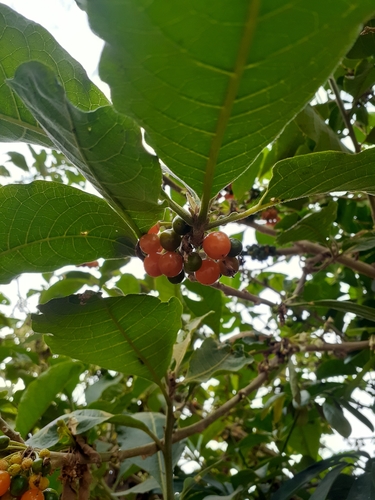
(c) Theodore, some rights reserved (CC BY-NC), uploaded by Theodore

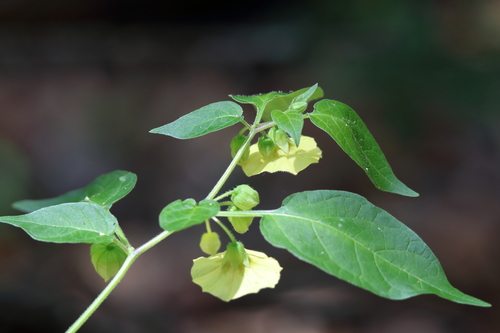
(c) Theodore, some rights reserved (CC BY-NC), uploaded by Theodore
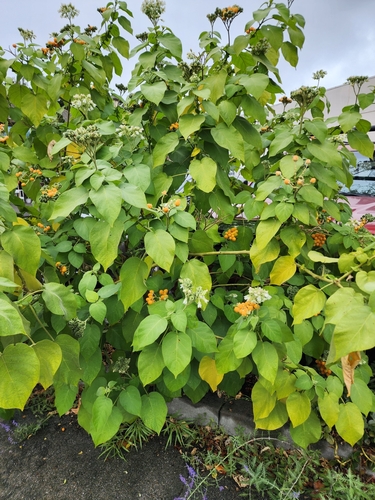
(c) Rupert Clayton, some rights reserved (CC BY), uploaded by Rupert Clayton
What to Eat
Edible parts: Fruit
The fruits are edible, though Solanum abutiloides is rare in cultivation, and plants have not been bred for quality of flavor. Therefore, the fruit can often have an unpredictable or unpleasant flavor, and Solanum abutiloides is most often cultivated as an ornamental plant, as the clusters of ripe fruit are very decorative. Similar to Solanaceae, pests like aphids, spider mites, and white flies are attracted to the trees.
Where to Find It
It is a tropical plant.
Bolivia, Brazil, South America,
How to Identify
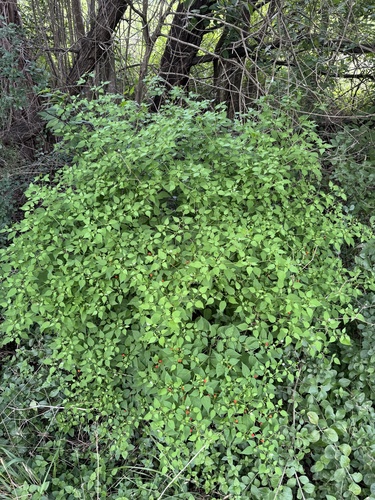
A shrub. It grows 1-4 m tall. The leaves are large and furry. The flowers are white. The fruit are small and slightly furry. They are orange when ripe.
Wikipedia
Source ↗Solanum abutiloides is a species of plant in the family Solanaceae. It is endemic to Argentina and Bolivia, and thrives as a weedy plant in rocky land, on stream banks, and scrub land between 900–3,600 metres (3,000–11,800 ft) in elevation. It is also known as dwarf tamarillo, due to superficial similarities with Solanum betaceum. Both plants are noted for very rapid growth from seed and very strongly fragrant foliage. Solanum abutiloides is also sometimes known by the archaic name Cyphomandra abutiloides. Solanum abutiloides quickly matures into a shrub or small tree up to 9 m (30 ft) tall, though usually far smaller. Small flowers form on branches throughout the plant, and individual clusters of flowers can contain as many as 60 blooms. Blooms are followed by fruits - a small oblong berry that ripens to a yellow-orange color. The berries are around 1 cm (0.39 in) (or slightly larger) in diameter. When unripe, the berries are mildly toxic (as are tamarillos), though they are edible upon ripening.
Names & Synonyms
Jurubeba twelve, Sweet jurubeba
References (2)
- www.colecionandofrutas.org (As Solanum abutifolium)
- Unusual and Exotic Fruit and Nut Plants From Around the World. seedman.com