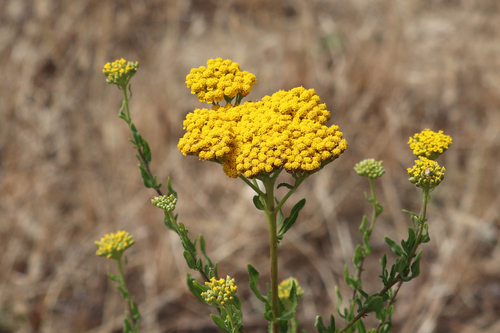
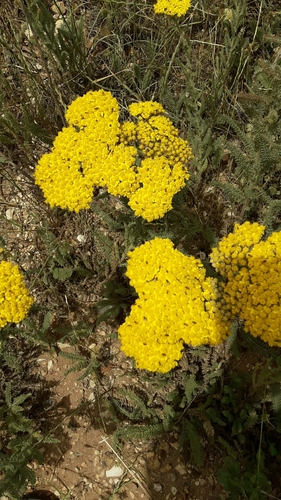
Caesulia axillaris
Roxb.
AsteraceaeLeaves

iNaturalist · cc0
no rights reserved, uploaded by S.MORE
no rights reserved, uploaded by S.MORE
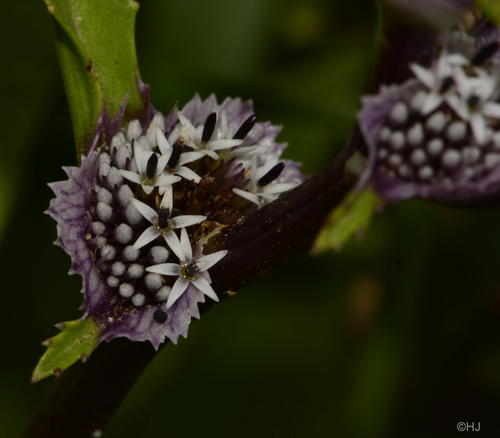
iNaturalist · cc-by-nc-nd
(c) Hiral Jain, some rights reserved (CC BY-NC-ND), uploaded by Hiral Jain
(c) Hiral Jain, some rights reserved (CC BY-NC-ND), uploaded by Hiral Jain
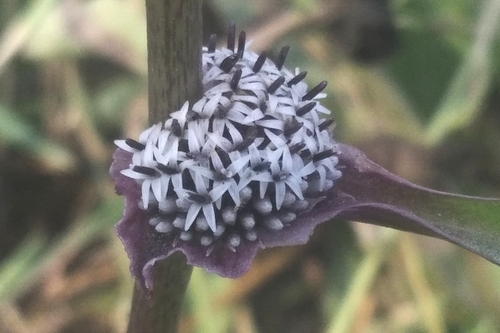
iNaturalist · cc-by-nc
(c) Aniruddha Singhamahapatra, some rights reserved (CC BY-NC)
(c) Aniruddha Singhamahapatra, some rights reserved (CC BY-NC)
What to Eat
Edible parts: Leaves
The young leaves are eaten as a vegetable.
Where to Find It
It is a tropical plant. It grows in marshy places.
Asia, India,
Countries: United Arab Emirates, Afghanistan, Armenia, Azerbaijan, Bangladesh, Bahrain, Brunei, Bhutan, China, Georgia, Indonesia, Israel, India, Iraq, Iran, Jordan, Japan, Kyrgyzstan, Cambodia, North Korea, South Korea, Kuwait, Kazakhstan, Laos, Lebanon, Sri Lanka, Myanmar, Mongolia, Maldives, Malaysia, Nepal, Oman, Philippines, Pakistan, Qatar, Saudi Arabia, Singapore, Syria, Thailand, Tajikistan, Timor-Leste, Turkmenistan, Turkey, Taiwan, Uzbekistan, Vietnam, Yemen
How to Identify
A tropical herb in the daisy family found in marshy places. The young leaves are used as a vegetable in traditional practice.
Names & Synonyms
Bondala, Jamjuria, Muchri
References (3)
- Ekka, N. S. & Ekka, A., 2016, Wild Edible plants Used by Tribals of North-east Chhattisgarh (Part-I), India. Research Journal of Recent Sciences. Vol. 5(ISC-2015), 127-131 (2016)
- Kuvar, S. D. & Shinde, R. D., 2019, Wild Edible Plants used by Kokni Tribe of Nasik District, Maharashtra. Journal of Global Biosciences. Volume 8, Number 2, 2019, pp. 5936-5945
- Misra, S., 2020, Survey of edible plants for human consumption in south Odisha, India. Journal of Emerging Technologies and Innovative Research (JETIR) Vol. 7, Issue 12 p 278