Celtis caudata
Planch.
CannabaceaeFruit
iNaturalist · cc-by
(c) Daniel A. Monsalve Ortiz, some rights reserved (CC BY), uploaded by Daniel A. Monsalve Ortiz
(c) Daniel A. Monsalve Ortiz, some rights reserved (CC BY), uploaded by Daniel A. Monsalve Ortiz

iNaturalist · cc-by-nc-sa
(c) Reinaldo Aguilar, some rights reserved (CC BY-NC-SA)
(c) Reinaldo Aguilar, some rights reserved (CC BY-NC-SA)

iNaturalist · cc-by-nc-sa
(c) Reinaldo Aguilar, some rights reserved (CC BY-NC-SA)
(c) Reinaldo Aguilar, some rights reserved (CC BY-NC-SA)
What to Eat
Edible parts: Fruit
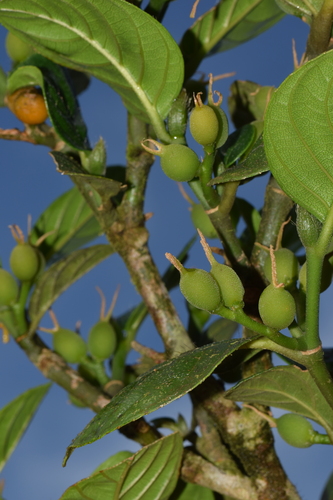
The fruit is eaten.
Where to Find It
It is a tropical plant.
Central America, Costa Rica, El Salvador, Mexico, Nicaragua,
Countries: Belize, Costa Rica, Guatemala, Honduras, Mexico, Nicaragua, Panama, El Salvador
How to Identify
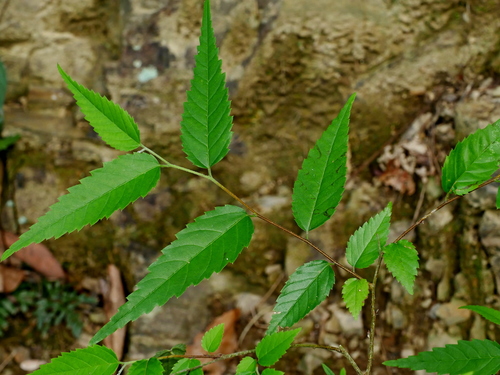
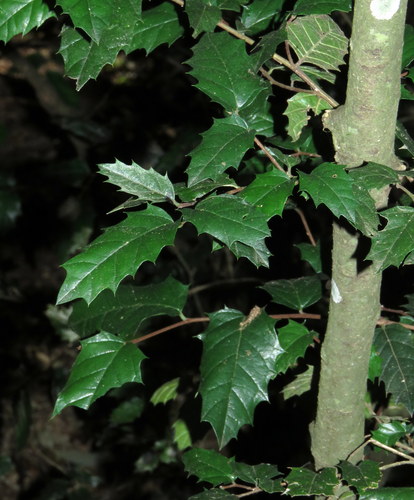
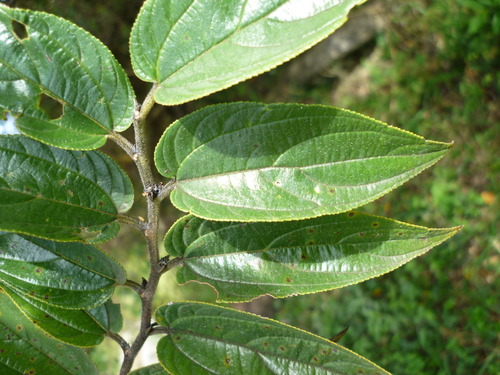
A tree. It can grow 35 m tall. The leaves are 5-11 cm long by 2-5 cm wide. There are several flowers in a group. The fruit are round and 9-10 mm long and wide.
Names & Synonyms
Carboncillo, Malintze, Moralillo, Palo blanco
Celtis littoralis Liebm.Celtis riparia Liebm.
References (5)
- Cruz, I. M., et al, 2015, Edible fruits and seeds in the State of Mexico. Revista Mexicana de Ciencias Agricolas. Vol. 6. Num. 2 pp 331-346
- Piedra-Malagón, E. M. et al, 2022, Edible native plants of the Gulf of Mexico Province. Biodiversity Data Journal 10: e80565 p 16
- Rangel-Landa, S., et al, 2017, Sociocultural and ecological factors influencing management of edible and non-edible plants: the case of Ixcatlan, Mexico. Journal of Ethnobiology and Ethnomedicine. 13:59
- Segura, S., et al, 2018, The edible fruit species in Mexico. Genet Resour Crop Evol (2018) 65:1767–1793
- World Checklist of Useful Plant Species 2020. Royal Botanic Gardens, Kew