Nardostachys jatamansi
(D. Don) DC.
Spikenard
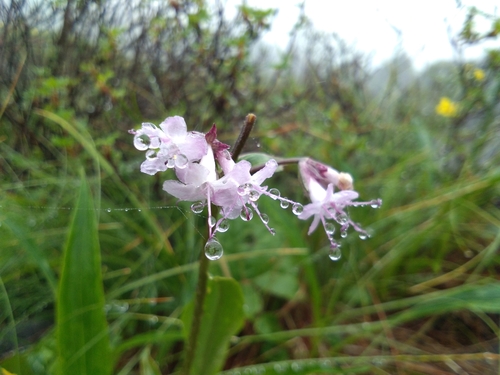
iNaturalist · cc-by-nc
(c) Suman Poudel, some rights reserved (CC BY-NC), uploaded by Suman Poudel
(c) Suman Poudel, some rights reserved (CC BY-NC), uploaded by Suman Poudel
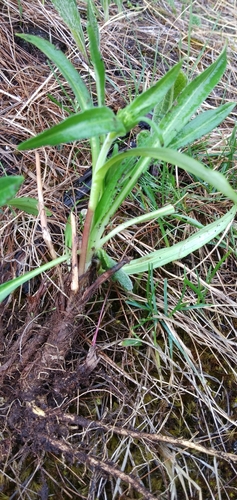
iNaturalist · cc-by-nc
(c) Suman Poudel, some rights reserved (CC BY-NC), uploaded by Suman Poudel
(c) Suman Poudel, some rights reserved (CC BY-NC), uploaded by Suman Poudel
iNaturalist · cc-by-nc
(c) Haijie Lu, some rights reserved (CC BY-NC), uploaded by Haijie Lu
(c) Haijie Lu, some rights reserved (CC BY-NC), uploaded by Haijie Lu
What to Eat
Edible parts: Shoot - spice, Root - masticatory
The young shoots are used as a spice, and the rhizome is chewed with betel nut.
Where to Find It
It is a subtropical plant. It grows between 3,000-5,000 m above sea level.
Asia, Bhutan, China, Himalayas, India, Nepal, Northeastern India, Sikkim, Tibet
Countries: United Arab Emirates, Afghanistan, Armenia, Azerbaijan, Bangladesh, Bahrain, Brunei, Bhutan, China, Georgia, Indonesia, Israel, India, Iraq, Iran, Jordan, Japan, Kyrgyzstan, Cambodia, North Korea, South Korea, Kuwait, Kazakhstan, Laos, Lebanon, Sri Lanka, Myanmar, Mongolia, Maldives, Malaysia, Nepal, Oman, Philippines, Pakistan, Qatar, Saudi Arabia, Singapore, Syria, Thailand, Tajikistan, Timor-Leste, Turkmenistan, Turkey, Taiwan, Uzbekistan, Vietnam, Yemen
How to Identify
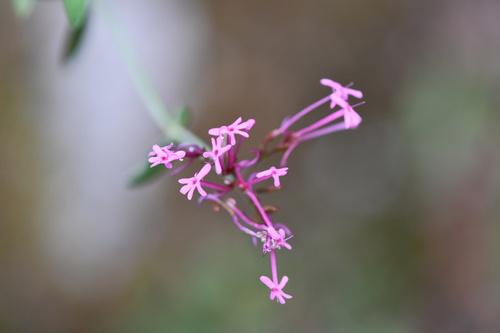
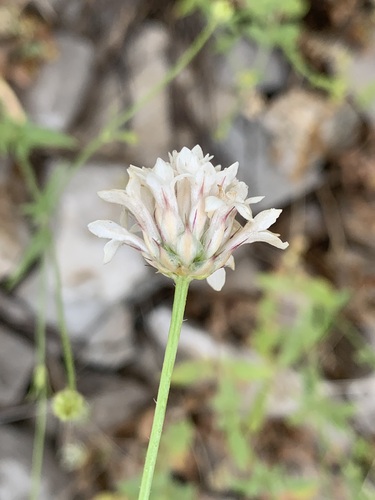
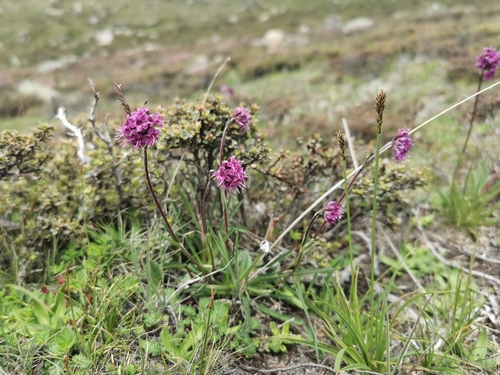
A herb. It grows 1 m tall. It has underground stems or rhizomes. The flowers are pink and bell shaped.
Medicinal Uses
Preliminary research on the chemical components of Nardostachys jatamansi indicates the plant contains: acaciin ursolic acid octacosanol kanshone A nardosinonediol nardosinone aristolen-9beta-ol oleanolic acid beta-sitosterol
Notes
It has various medicinal properties. Also put in the family Valeriaceae.
Names & Synonyms
Jatamansi, Pangpey
Fedia grandiflora Wall. ex DC.Fedia jatamansi Wall. ex DC. [Invalid]Nardostachys chinensis BatalinNardostachys grandiflora DC.Patrinia jatamansi D. DonValeriana jatamansi D. Don
References (3)
- Flora of China,
- Savita, et al, 2006, Studies on wild edible plants of ethnic people in east Sikkim. Asian J. of Bio Sci. (2006) Vol. 1 No. 2 : 117-125
- Wikipedia