Erigeron canadensis
L.
Canadian Fleabane, Butterweed

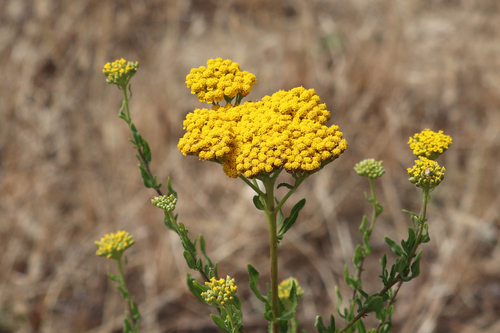
(c) Scott Morris, some rights reserved (CC BY), uploaded by Scott Morris
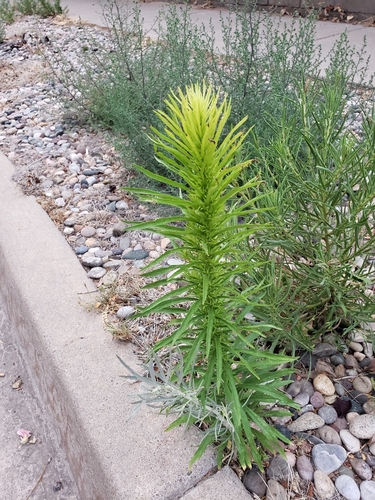
(c) El Picaro Azul, some rights reserved (CC BY-NC), uploaded by El Picaro Azul
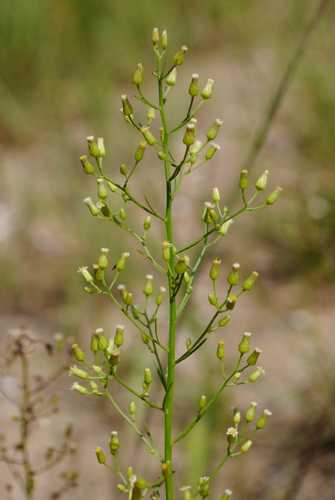
(c) Zihao Wang, some rights reserved (CC BY), uploaded by Zihao Wang
What to Eat
Edible parts: Leaves
The young seedlings are boiled and eaten, often cooked with rice, and can be dried for later use. The ground leaves are used to flavor porridge, and an essential oil from the plant is used to flavor soft drinks.
Where to Find It
It grows in warm temperate places. It can tolerate drought and frost. It does best in a light to medium soil and an open, sunny position. It grows best in damp soils and high rainfall areas. It can grow in arid places. Tasmania Herbarium. In Yunnan. In China it grows from sea level to 3,000 m above sea level. In Sichuan and Yunnan.
Afghanistan, Africa, Albania, Algeria, Angola, Asia, Australia, Bahamas, Bangladesh, Belarus, Belgium, Belize, Bolivia, Britain, British Indian Ocean Terr., BIOT, Bulgaria, Cambodia, Canada, Canary Islands, Caucasus, Central America, Central Asia, China, Colombia, Costa Rica, Czech Republic, Denmark, Dominican Republic, East Africa, Ecuador, El Salvador, Eswatini, Europe, Fiji, Finland, France, Georgia, Germany, Greece, French Guatemala, Guiana, Guianas, Haiti, Hawaii, Himalayas, Honduras, Hungary, India, Indochina, Iran, Iraq, Ireland, Italy, Jamaica, Japan, Kazakhstan, Korea, Kyrgyzstan, Lebanon, Lesotho, Libya, Mauritius, Mediterranean, Mexico, Middle East, Mongolia, Morocco, Mozambique, Myanmar, Nepal, Netherlands, Nicaragua, Niue, Norfolk Is., North America*, Northeastern India, Norway, Pacific, Pakistan, Palestine, Panama, Papua New Guinea, PNG, Peru, Philippines, Poland, Portugal, Puerto Rico, Reunion, Romania, Russia, SE Asia, Siberia, Sinai, Slovenia, South Africa, South America, Southern Africa, Spain, Suriname, Swaziland, Sweden, Switzerland, Syria, Taiwan, Tajikistan, Tasmania, Tibet, Trinidad-Tobago, Tunisia, Turkey, Türkiye, Turkmenistan, Ukraine, USA, Venezuela, Vietnam, West Indies*, Yugoslavia, Zambia, Zimbabwe,
How to Identify
An annual herb. It grows to 1 m tall and spreads to 50 cm across. The stem is erect, hairy and unbranched. The leaves are one after another along the stem and are entire. The lower leaves have leaf stalks and may have teeth around the edge. The leaves are thin and narrow. They are 5 cm long. The flowers are green or pale purple. They occur in clusters at the end of the plant. The bracts around the flower heads are free of hairs. The fruit are downy.
How to Grow
Plants are grown from seed.
Medicinal Uses
The Zuni people insert the crushed flowers of E. canadensis var. canadensis into the nostrils to cause sneezing, relieving rhinitis. The Seminole people used it for cold and cough medicine, the Iroquois people used it to help combat fevers, and the Navajo and Chippewa peoples used it for stomach pain. Other medicinal applications include use as a nervine, stimulant, and antiplasmodic.
Wikipedia
Source ↗Erigeron canadensis (synonym Conyza canadensis) is an annual plant native throughout most of North America and Central America. It is also widely naturalized in Eurasia and Australia. Common names include horseweed, Canadian horseweed, Canadian fleabane, coltstail, marestail, and butterweed. It was the first weed to have developed glyphosate resistance, reported in 2001 from Delaware.
Notes
There are about 50 Conyza species. A tea from the leaves have been used for medicine.
Names & Synonyms
Guangguangcao, Hime-mukashi-yomogi, Horse balm, Horseweed, Ingkobong, Kanadska hudoletnica, Khbos shubla, Mangch'o, Mangcho
References (38)
- Bodkin, F., 1991, Encyclopedia Botanica. Cornstalk publishing, p 395
- Brown, D., 2002, The Royal Horticultural Society encyclopedia of Herbs and their uses. DK Books. p 179
- Bull. Torrey Bot. Club 70:632. 1943 (As Conyza canadensis)
- Cooper, W. and Cooper, W., 2004, Fruits of the Australian Tropical Rainforest. Nokomis Editions, Victoria, Australia. p 80 (As Conyza canadensis)
- Curtis, W.M., 1963, The Students Flora of Tasmania Vol 2 p 314
- Facciola, S., 1998, Cornucopia 2: a Source Book of Edible Plants. Kampong Publications, p 37 (As Conyza canadensis)
- Fowler, D. G., 2007, Zambian Plants: Their Vernacular Names and Uses. Kew. p 76 (As Conyza canadensis)
- Fox, F. W. & Young, M. E. N., 1982, Food from the Veld. Delta Books. p 120 (As Conyza canadensis)
- Hani Medicine of Xishuangbanna, 1999, p 235 (As Conyza canadensis)
- Henty, E.E., 1980, Harmful Plants in Papua New Guinea. Botany Bulletin No 12. Division Botany, Lae, Papua New Guinea. p 37, Pl.12
- https://www.fireflyforest.com/flowers/category/edible-plants/ Edible Plants – Southeastern Arizona Wildflowers and Plants (As Conyza canadensis)
- Hussey, B.M.J., Keighery, G.J., Cousens, R.D., Dodd, J., Lloyd, S.G., 1997, Western Weeds. A guide to the weeds of Western Australia. Plant Protection Society of Western Australia. p 94 (As Conyza canadensis)
- Hwang, H., et al, 2013, A Study on the Flora of 15 Islands in the Western Sea of Jeollanamdo Province, Korea. Journal of Asia-Pacific Biodiversity Vol. 6, No. 2 281-310 (As Conyza canadensis)
- Hwang, HS, et al, 2014, Distribution characteristics of plant in the Ungseokbong Mountain, Gyeongsangnam-do, Korea. Journal of Asia-Pacific Biodiversity. 7(2014) e164-e178 (As Conyza canadensis)
- Kang, Y., et al, 2012, Wild food plants and wild edible fungi in two valleys on the Qinling Mountains (Shaanxi, central China) Journal of Ethnobiology and Ethnomedicine; 9:26 (As Conyza canadensis)
- Kermath, B. M., et al, 2014, Food Plants in the Americas: A survey of the domesticated, cultivated and wild plants used for Human food in North, Central and South America and the Caribbean. On line draft. p 258 (As Conyza canadensis)
- Kew Plants of the World Online
- Kim, H. & Song, M., 2013, Ethnobotanical analysis for traditional knowledge of wild edible plants in North Jeolla Province (Korea). Genetic. Resour. Crop Evol. (2013) 60:1571-1585 (As Conyza canadensis)
- Kiple, K.F. & Ornelas, K.C., (eds), 2000, The Cambridge World History of Food. CUP p 1787
- Lamp, C & Collet F., 1989, Field Guide to Weeds in Australia. Inkata Press. p 84 (As Conyza canadensis)
- Lazarides, M. & Hince, B., 1993, Handbook of Economic Plants of Australia, CSIRO. p 64 (As Conyza canadensis)
- Long, C., 2005, Swaziland's Flora - siSwati names and Uses http://www.sntc.org.sz/flora/ (As Conyza canadensis)
- Luczaj, L. et al, 2017, Comfrey and Buttercup Eaters: Wild Vegetables of the Imereti Region in Western Georgia, Caucasus. Economic Botany, 71(2), 2017, pp. 188–193
- MacKinnon, A., et al, 2009, Edible & Medicinal Plants of Canada. Lone Pine. p 345 (As Conyza canadensis)
- Mot So Rau Dai an Duoc O Vietnam. Wild edible Vegetables. Ha Noi 1994, p 86 (As Erigeron canadensis)
- Paczkowska, G. & Chapman, A.R., 2000, The Western Australian Flora. A Descriptive Catalogue. Western Australian Herbarium. p 160 (As Conyza canadensis)
- Pemberton, R. W. & Lee, N. S., 1996, Wild Food Plants in South Korea: Market Presence, New Crops, and Exports to the United States. Economic Botany, Vol. 50, No. 1, pp. 57-70 (As Erigeron prob. canadensis)
- Plants for a Future database, The Field, Penpol, Lostwithiel, Cornwall, PL22 0NG, UK. http://www.scs.leeds.ac.uk/pfaf/ (As Conyza canadensis)
- Plowes, N. J. & Taylor, F. W., 1997, The Processing of Indigenous Fruits and other Wildfoods of Southern Africa. in Smartt, L. & Haq. (Eds) Domestication, Production and Utilization of New Crops. ICUC p 189 (As Conyza canadensis)
- Royal Botanic Gardens, Kew (1999). Survey of Economic Plants for Arid and Semi-Arid Lands (SEPASAL) database. Published on the Internet; http://www.rbgkew.org.uk/ceb/sepasal/internet [Accessed 11th April 2011] (As Conyza canadensis)
- Ruiters-Welcome, A. K., 2019, Food plants of southern Africa. Ph.D. thesis. Univ. of Johannesburg p 33
- Taram, M., et al, 2018, Wild Food Plant Resources of Komkar Adi Tribe of Upper Siang District in Arunachal Pradesh, India. Bulletin of Arunachal Forest Research, Vol. 33(2), 27-35
- Tasmanian Herbarium Vascular Plants list p 6 (As Conyza canadensis)
- Topp, J. M. W., 1988, An Annotated Check List of the Flora of Diego Garcia, British Ocean Territory. Atoll Research Bulletin No. 313 (As Conyza canadensis)
- Welcome, A. K. & Van Wyk, B.-E., 2019, An inventory and analysis of the food plants of southern Africa. South African Journal of Botany 122 (2019) 136–179 (As Conyza canadensis)
- World Checklist of Useful Plant Species 2020. Royal Botanic Gardens, Kew
- Wujisguleng, W., & Khasbagen. K., 2010, An integrated assessment of wild vegetable resources in Inner Mongolian Autonomous Region, China. Journal of Ethnobiology and Ethnomedicine 6:34 (As Conyza canadensis)
- www.ediblewildfood.com (As Conyza canadensis)