Laggera crispata
(Vahl) Hepper & J. R. I. Wood
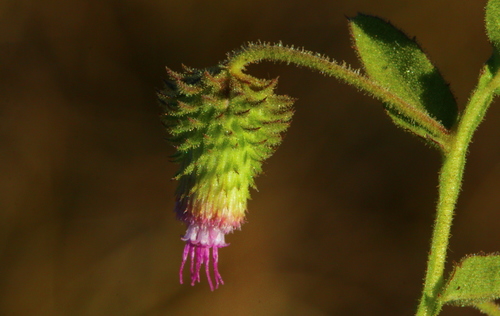
(c) tjeerd, some rights reserved (CC BY-NC), uploaded by tjeerd

(c) heikev, some rights reserved (CC BY-NC)

(c) heikev, some rights reserved (CC BY-NC)
What to Eat
Edible parts: Part near the ground
The part near the ground is edible.
Where to Find It
It is a tropical plant.
Africa, Mozambique,
How to Identify
A tropical herb in the Asteraceae family with an edible underground portion.
How to Grow
A strongly aromatic plant.
Medicinal Uses
The paste of the leaves is employed in the treatment of inflammation and swelling by the inhabitants in northeast region of India and it is also said to have antihelminthic properties. In Chinese traditional system, it is used as a medicine to cure angina, bronchitis, influenza, and malaria. It is also applied externally for treating scabies, burns, snakebites, injuries, fractures, contusions, and strains. Aerial parts of the plant have been used as an antiinflammatory, antibacterial, and antileukaemia. Because of diverse chemical components and biological activities, recently much attention has been given to the genus Laggera in various countries. The essential oil contains a wide range of compounds, the most prominent of which are 2,5-dimethoxy-p-cymene (43.2%); 10-epi-gamma-eudesmol (19.7%); Juniper camphor (4.8%); alpha-humulene (3.8%); 7-epi-alpha-eudesmol (3.6%); caryophyllene (3.5%); caryophyllene oxide (2.8%); dihydroagarofuran (2.6%); and alpha-muurolol (1.7%). In trials, the essential oil has shown moderate to good activity against gran-positive bacteria, and has also shown activity to some gram-negative bacteria..
Names & Synonyms
Nhabise
References (1)
- Bruschi, P., et al, 2014, Traditional use of plants in a rural community of Mozambique and possible links with Miombo degradation and harvesting sustainability. Journal of Ethnobiology and Ethnomedicine. 2014, 10:59 (As Blumea crispata)