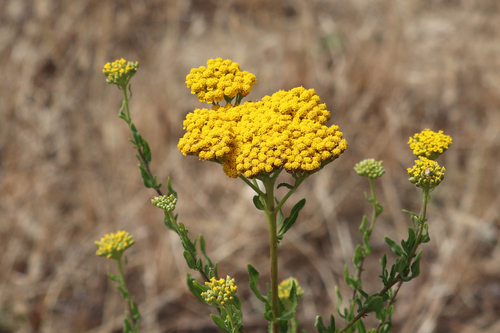
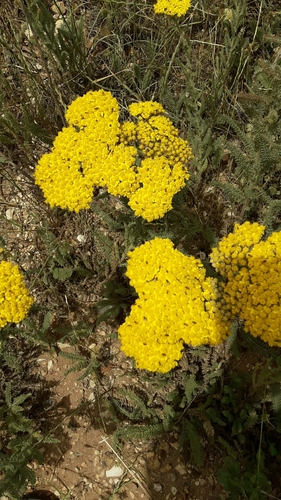
Echinops ritro
L.

(c) Vadim Prokhorov, some rights reserved (CC BY-NC), uploaded by Vadim Prokhorov
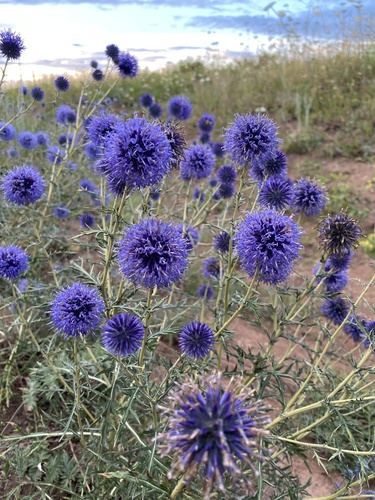
(c) Irina_Oriolus, some rights reserved (CC BY-NC)
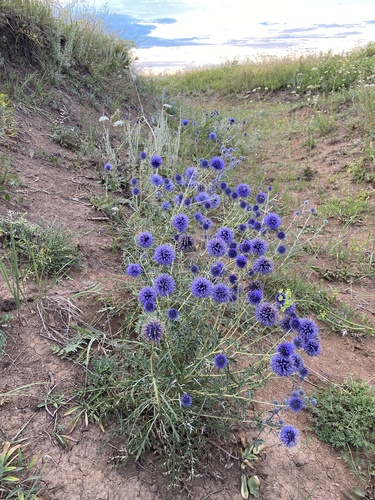
(c) Irina_Oriolus, some rights reserved (CC BY-NC)
What to Eat
Edible parts: Stem
No edible uses are known for this plant.
Where to Find It
It is a temperate plant.
Asia, Central Asia, Europe, Kazakhstan, Mongolia, Turkey, Türkiye,
How to Identify
Perennial growing 0.5 m tall at a fast rate. Hardy to UK zone 3. Flowers June to August. Hermaphrodite, insect-pollinated. Tolerates light sandy, medium loamy, and heavy clay soils, prefers well-drained conditions, and can grow in nutrient-poor soil. Grows in mildly acid to basic soils. Requires full sun. Adaptable to dry or moist soil and tolerates drought.
How to Grow
Succeeds in a sunny position in any well drained soil of low or medium fertility. Established plants are drought tolerant. There are a number of named varieties, selected for their ornamental value. The flowers are often used for dried flower displays. If all the flowers are removed early in the season, the plant will often produce a second flush of bloom later in the summer.
Propagation: Sow seed in early spring in a cold frame; germination typically occurs in 3–9 weeks at 25°C. Once seedlings are large enough to handle, prick them out into individual pots and plant out during summer. Seed can also be sown in an outdoor seedbed in mid spring and transplanted to its permanent position in late summer or autumn. Propagation is also possible by division in autumn or by root cuttings taken in winter.
Medicinal Uses
The root is both anti-inflammatory and galactogogue. It is used medicinally to treat breast abscesses with inflammation, mastitis, insufficient milk production in nursing mothers, and breast distension.
Other Uses
No other uses are known for this plant.
Wikipedia
Source ↗Echinops ritro, the southern globe thistle, is a species of flowering plant in the family Asteraceae, native to southern and eastern Europe, from Spain east to Turkey, Ukraine, and Belarus, and western and central Asia east to Mongolia. The species is sparingly naturalised in scattered locations in Canada and the United States.
Names & Synonyms
Cirpma kenger
References (1)
- Gunes, S. et al, 2018, Survey of wild food plants for human consumption in Karaisali (Adana-Turkey). Indian Journal of Traditional Knowledge. Vol. 17(2), April 2018, pp 290-298