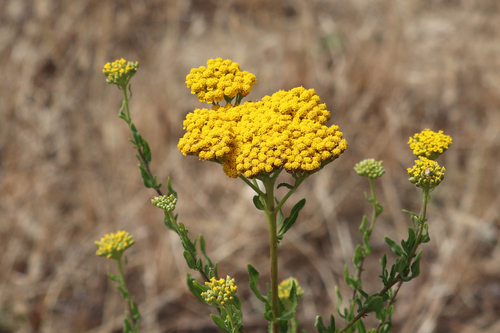
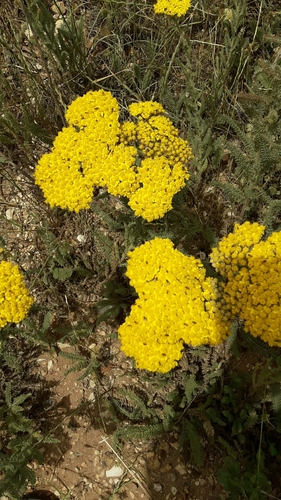
Podospermum laciniatum
(L.) DC

iNaturalist · cc-by-nc
(c) Věra Kafková, some rights reserved (CC BY-NC)
(c) Věra Kafková, some rights reserved (CC BY-NC)

iNaturalist · cc-by-nc
(c) Věra Kafková, some rights reserved (CC BY-NC)
(c) Věra Kafková, some rights reserved (CC BY-NC)

iNaturalist · cc-by-nc
(c) Věra Kafková, some rights reserved (CC BY-NC)
(c) Věra Kafková, some rights reserved (CC BY-NC)
What to Eat
Edible parts: Leaves, Leaf stalk, Roots
The leaves and leaf stalks are eaten raw in salads or fried. Roots are also edible.
Where to Find It
It is a temperate plant.
Armenia, Caucasus, Europe, Italy, Luxembourg, Mediterranean, Sicily, Turkey, Türkiye,
Countries: Andorra, Albania, Austria, Bosnia & Herzegovina, Belgium, Bulgaria, Belarus, Switzerland, Cyprus, Czechia, Germany, Denmark, Algeria, Estonia, Egypt, Spain, Finland, France, United Kingdom, Greece, Croatia, Hungary, Ireland, Israel, Iceland, Italy, Lebanon, Liechtenstein, Lithuania, Luxembourg, Latvia, Libya, Morocco, Monaco, Moldova, Montenegro, North Macedonia, Malta, Netherlands, Norway, Poland, Portugal, Romania, Serbia, Russia, Sweden, Slovenia, Slovakia, San Marino, Syria, Tunisia, Turkey, Ukraine
How to Identify
A temperate herb in the Asteraceae family that is sold in local markets. The leaves, leaf stalks, and roots are edible.
Other Information
It is sold in local markets.
Names & Synonyms
Sermnotuk, Sind, Yelmik
Arachnospermum laciniatum (L.) F. W. SchmidtPodospermum angustissimum Schurand others
References (3)
- Cakir, E. A., 2017, Traditional knowledge of wild edible plants of Iğdır Province (East Anatolia, Turkey). Acta Soc Bot Pol. 2017;86(4):3568
- Nanagulyan, S., et al, 2020, Wild plants and fungi sold in the markets of Yerevan (Armenia). Journal of Ethnobiology and Ethnomedicine 16:26
- Pasta, S., et al, 2020, An Updated Checklist of the Sicilian Native Edible Plants: Preserving the Traditional Ecological Knowledge of Century-Old Agro-Pastoral Landscapes. Frontiers in Plant Science. Volume 11|Article 388