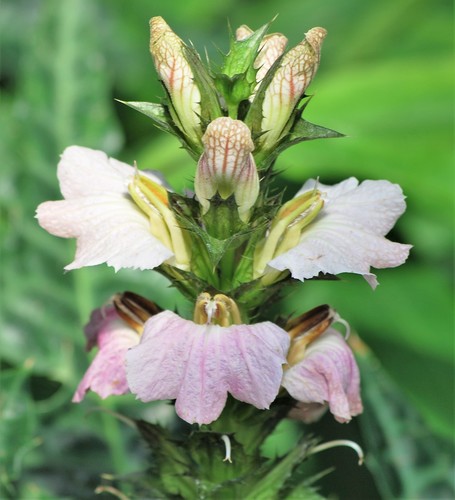
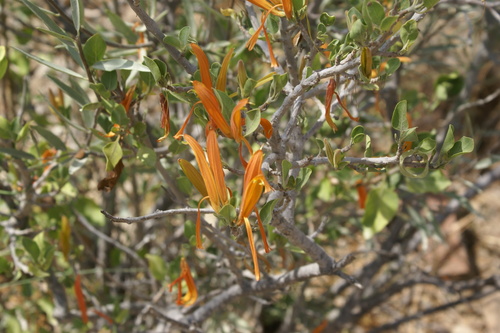
Anisotes trisulcus
(Forssk.) Nees
AcanthaceaeFlowers
iNaturalist · cc-by-nc
(c) Ray Brown, some rights reserved (CC BY-NC), uploaded by Ray Brown
(c) Ray Brown, some rights reserved (CC BY-NC), uploaded by Ray Brown

iNaturalist · cc-by-nc
(c) JP, some rights reserved (CC BY-NC)
(c) JP, some rights reserved (CC BY-NC)

iNaturalist · cc-by-nc
(c) JP, some rights reserved (CC BY-NC)
(c) JP, some rights reserved (CC BY-NC)
What to Eat
Edible parts: Flower nectar
The nectar is used to make a drink.
Where to Find It
It is a tropical plant.
Africa, East Africa, Ethiopia, Middle East, Somalia, Yemen,
Countries: United Arab Emirates, Angola, Burkina Faso, Bahrain, Burundi, Benin, Botswana, Congo (DRC), Central African Republic, Congo (Republic), Cote d'Ivoire, Cameroon, Cape Verde, Djibouti, Algeria, Egypt, Eritrea, Ethiopia, Gabon, Ghana, Gambia, Guinea, Equatorial Guinea, Guinea-Bissau, Israel, Iraq, Iran, Jordan, Kenya, Comoros, Kuwait, Lebanon, Liberia, Lesotho, Libya, Morocco, Madagascar, Mali, Mauritania, Mauritius, Malawi, Mozambique, Namibia, Niger, Nigeria, Oman, Qatar, Rwanda, Saudi Arabia, Seychelles, Sudan, Sierra Leone, Senegal, Somalia, South Sudan, Sao Tome & Principe, Syria, Eswatini, Chad, Togo, Tunisia, Tanzania, Uganda, Yemen, South Africa, Zambia, Zimbabwe
How to Identify
A tropical shrub in the Acanthaceae family. The flower nectar is used traditionally.
Names & Synonyms
Masis, Mirdhis, Mudhadh, Sheri
Anisotes trisulcus subsp. webi-schebeliensis BadenAnisotes velutinus LindauCalasias bracteata Raf.Dianthera trisulca Forssk.
Justicia biflora Lam.Justicia trisulca Vah.
References (2)
- Al-Fatimi, M. A., Wild Edible Plants Traditionally Collected and Used in Southern Yemen. Research Square. University of Aden.
- Omer, M., 2011, Diversity of Woody Species, Local Knowledge and Management Practices in Different Land Use Systems of Awbare Wereda, Jig-Jiga Zone of Somali Region, Ethiopia. M. Sc. thesis Addis Abba University p 47