Galatella linosyris
(L.) Rchb.f.

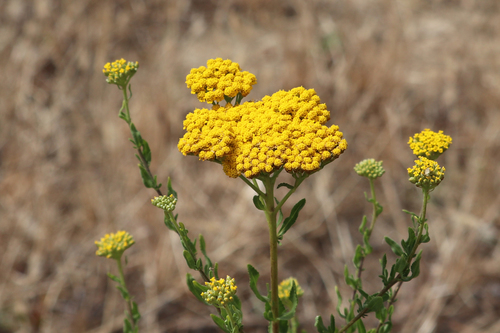
(c) HermannFalkner/sokol, some rights reserved (CC BY-NC-SA)

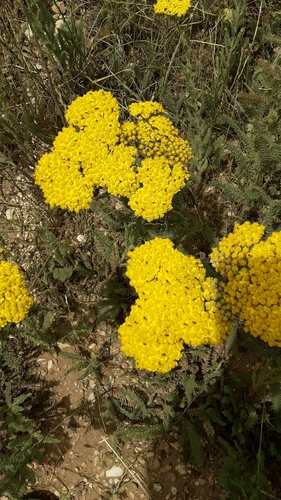
(c) Sebastian J. Dunkl, some rights reserved (CC BY-NC), uploaded by Sebastian J. Dunkl

(c) Sebastian J. Dunkl, some rights reserved (CC BY-NC), uploaded by Sebastian J. Dunkl
What to Eat
Edible parts: Leaves
The young leaves are boiled in mixtures.
Where to Find It
It is a Mediterranean climate plant.
Europe, Italy, Mediterranean,
How to Identify
An herb of the Asteraceae family found in Mediterranean climate regions.
Wikipedia
Source ↗Galatella linosyris (also called goldilocks aster, and often known by the synonyms Aster linosyris and Crinitaria linosyris) is a species of perennial plant from family Asteraceae found in Eastern, Central and Southern Europe. It can also be found in Great Britain, the southern part of Scandinavia and in Asia Minor. The flowers are yellow coloured. The species have stems up to 10–50 centimetres (3.9–19.7 in), with leaves that are lanceolate. The plant does not have ray flowers, only disk florets. It blooms from July to September. The fruits are achenes. The species is under protection in the Czech Republic.
Names & Synonyms
Lattarule
References (1)
- Biscotti, N. et al, 2018, The traditional food use of wild vegetables in Apulia (Italy) in the light of Italian ethnobotanical literature. Italian Botanist 5:1-24