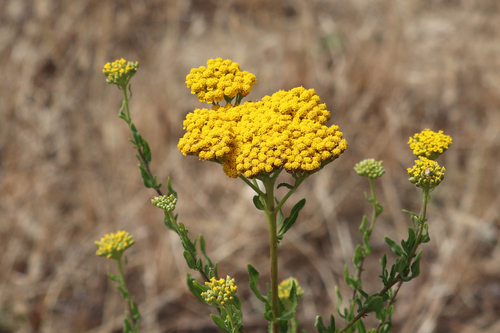
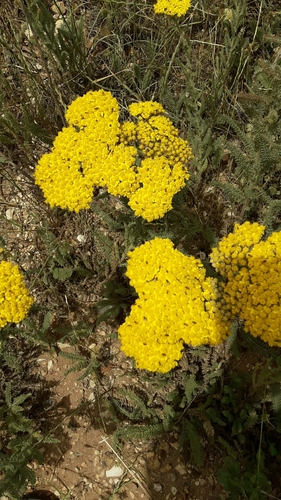
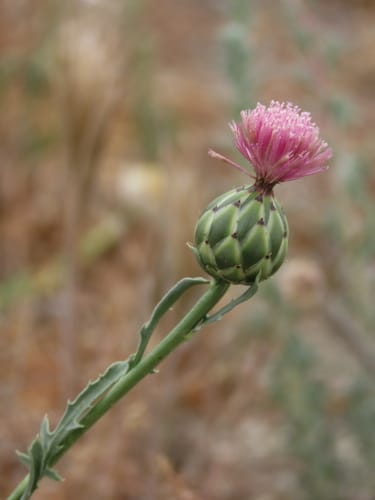
Mantisalca duriaei
(Spach) Briq. & Cavill.
AsteraceaeLeaves

iNaturalist · cc-by-nc
(c) Shiqi Zhou, some rights reserved (CC BY-NC), uploaded by Shiqi Zhou
(c) Shiqi Zhou, some rights reserved (CC BY-NC), uploaded by Shiqi Zhou
iNaturalist · cc-by-nc
(c) Víctor González García, some rights reserved (CC BY-NC)
(c) Víctor González García, some rights reserved (CC BY-NC)

iNaturalist · cc-by-nc
(c) Ángel Fernández Cancio, some rights reserved (CC BY-NC)
(c) Ángel Fernández Cancio, some rights reserved (CC BY-NC)
What to Eat
Edible parts: Leaves
The leaves are eaten.
Where to Find It
It is a Mediterranean climate plant.
Europe, Italy, Mediterranean,
Countries: Andorra, Albania, Austria, Bosnia & Herzegovina, Belgium, Bulgaria, Belarus, Switzerland, Cyprus, Czechia, Germany, Denmark, Algeria, Estonia, Egypt, Spain, Finland, France, United Kingdom, Greece, Croatia, Hungary, Ireland, Israel, Iceland, Italy, Lebanon, Liechtenstein, Lithuania, Luxembourg, Latvia, Libya, Morocco, Monaco, Moldova, Montenegro, North Macedonia, Malta, Netherlands, Norway, Poland, Portugal, Romania, Serbia, Russia, Sweden, Slovenia, Slovakia, San Marino, Syria, Tunisia, Turkey, Ukraine
How to Identify
An herb in the Asteraceae family found in Mediterranean climate regions.
Names & Synonyms
Ciunna della regina
Centaurea duriaei (Spach) Rouyand others
References (1)
- Biscotti, N. et al, 2018, The traditional food use of wild vegetables in Apulia (Italy) in the light of Italian ethnobotanical literature. Italian Botanist 5:1-24