Lonicera spinosa
(Jacquem. ex Decne) Walp.
CaprifoliaceaeFruit
iNaturalist · cc-by-nc
(c) Jennifer Chandler, some rights reserved (CC BY-NC), uploaded by Jennifer Chandler
(c) Jennifer Chandler, some rights reserved (CC BY-NC), uploaded by Jennifer Chandler
iNaturalist · cc-by
(c) Sagnik Dutta Roy, some rights reserved (CC BY)
(c) Sagnik Dutta Roy, some rights reserved (CC BY)
What to Eat
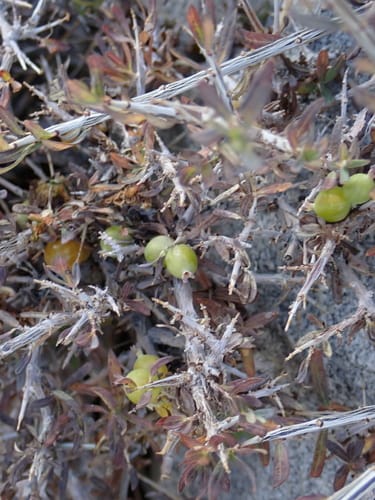
Edible parts: Fruit
The fruit are eaten raw.
Where to Find It
It is a temperate plant. In the Himalayas it grows between 3,600-4,600 m above sea level.
Afghanistan, Asia, Bhutan, Himalayas, India, Nepal, Pakistan, Sikkim, Tibet,
Countries: United Arab Emirates, Afghanistan, Armenia, Azerbaijan, Bangladesh, Bahrain, Brunei, Bhutan, China, Georgia, Indonesia, Israel, India, Iraq, Iran, Jordan, Japan, Kyrgyzstan, Cambodia, North Korea, South Korea, Kuwait, Kazakhstan, Laos, Lebanon, Sri Lanka, Myanmar, Mongolia, Maldives, Malaysia, Nepal, Oman, Philippines, Pakistan, Qatar, Saudi Arabia, Singapore, Syria, Thailand, Tajikistan, Timor-Leste, Turkmenistan, Turkey, Taiwan, Uzbekistan, Vietnam, Yemen
How to Identify
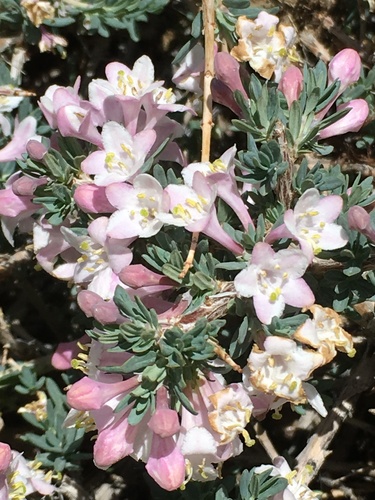
A low shrub. It grows 1 m tall. It forms large mats. The small branches can have a spiny point. The leaves are narrow and oblong. They are 0.8-1 cm long by 0.1-0.2 cm wide. The edges are curved inwards. The flowers are pale pink. They are in clusters without stalks.
Names & Synonyms
Amnyea, Khyi shing
Lonicera linearis Royle ex Hook.f. & ThomsonXylosteum spinosum Jacquem. ex Decne.
References (1)
- Ghimire, S. K., et al, 2008, Non-Timber Forest Products of Nepal Himalaya. WWF Nepal p 39