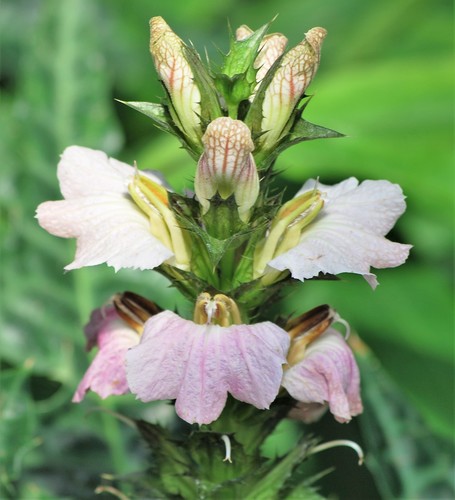
Phlogacanthus pubinervius
T. Anderson
AcanthaceaeFlowers
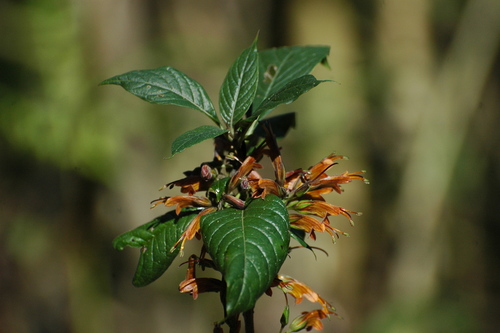
iNaturalist · cc-by-nc-sa
(c) Phuentsho, some rights reserved (CC BY-NC-SA), uploaded by Phuentsho
(c) Phuentsho, some rights reserved (CC BY-NC-SA), uploaded by Phuentsho
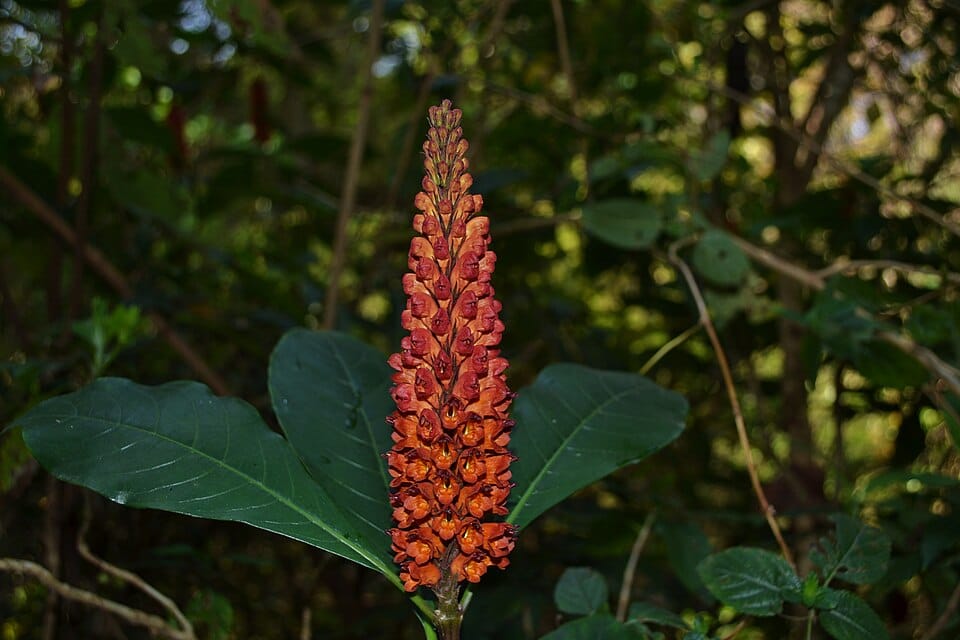
wikimedia · cc-by-sa
Wikimedia Commons - Delonix
Wikimedia Commons - Delonix
What to Eat
Edible parts: Flowers
The flowers are cooked with meat.
Where to Find It
It is a subtropical plant. In Sikkim it grows between 200-1,700 m above sea level.
Asia, China, India, Northeastern India, Sikkim,
Countries: United Arab Emirates, Afghanistan, Armenia, Azerbaijan, Bangladesh, Bahrain, Brunei, Bhutan, China, Georgia, Indonesia, Israel, India, Iraq, Iran, Jordan, Japan, Kyrgyzstan, Cambodia, North Korea, South Korea, Kuwait, Kazakhstan, Laos, Lebanon, Sri Lanka, Myanmar, Mongolia, Maldives, Malaysia, Nepal, Oman, Philippines, Pakistan, Qatar, Saudi Arabia, Singapore, Syria, Thailand, Tajikistan, Timor-Leste, Turkmenistan, Turkey, Taiwan, Uzbekistan, Vietnam, Yemen
How to Identify
A shrub or small tree. It grows 5 m tall. It has many branches. The leaves are narrowly oblong and 8-18 cm long by 3.5-5 cm wide. The flowers are in the axils of the leaves with 1-4 flowers in a group.
Medicinal Uses
The flowers are used partly as a medicine.
Names & Synonyms
Titay, Va te zu
Lonicera meneli H. Lev.
References (1)
- Khodram,S. D., et al, 2019, Local knowledge of edible flowers used in Mizoram. Indian Journal of Traditional Knowledge Vol 18(40 pp 715-723