Anacyclus maroccanus
(Ball) Ball

gbif · cc0
Conveyor Belt
Conveyor Belt

gbif · cc-by
Moscow State University (copyright is managed by Dr. Alexey P. Seregin)
Moscow State University (copyright is managed by Dr. Alexey P. Seregin)

gbif · cc-by
Meise Botanic Garden
Meise Botanic Garden
What to Eat
Edible parts: Leaves, Flowers
The leaves are mixed with other greens to make vegetable dishes, and the flowers are cooked as a garnish for traditional bread.
Where to Find It
It is a Mediterranean climate plant.
Africa, Mediterranean, Morocco, North Africa,
Countries: Albania, Angola, Bosnia & Herzegovina, Burkina Faso, Burundi, Benin, Botswana, Congo (DRC), Central African Republic, Congo (Republic), Cote d'Ivoire, Cameroon, Cape Verde, Cyprus, Djibouti, Algeria, Egypt, Eritrea, Spain, Ethiopia, France, Gabon, Ghana, Gambia, Guinea, Equatorial Guinea, Greece, Guinea-Bissau, Croatia, Israel, Italy, Kenya, Comoros, Lebanon, Liberia, Lesotho, Libya, Morocco, Monaco, Montenegro, Madagascar, Mali, Mauritania, Malta, Mauritius, Malawi, Mozambique, Namibia, Niger, Nigeria, Rwanda, Seychelles, Sudan, Slovenia, Sierra Leone, Senegal, Somalia, South Sudan, Sao Tome & Principe, Syria, Eswatini, Chad, Togo, Tunisia, Turkey, Tanzania, Uganda, South Africa, Zambia, Zimbabwe
How to Identify
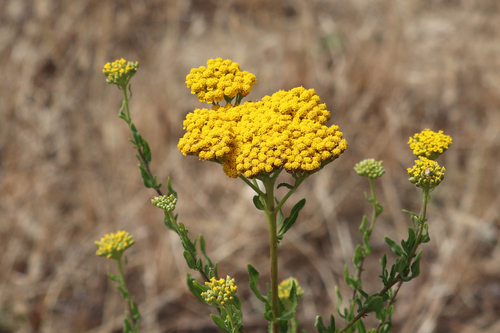
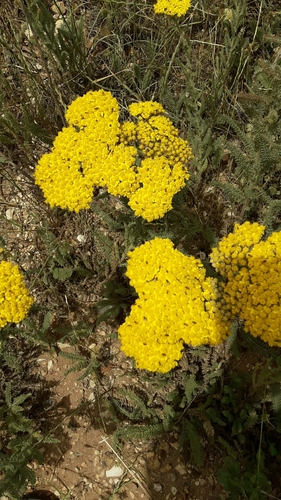
An herbaceous plant in the Asteraceae family adapted to Mediterranean climates, with edible leaves and flowers.
Names & Synonyms
Rebyana
References (1)
- Tbatou, M, et al, 2016, Wild Edible Plants traditionally used in the countryside of El Jadida, Coastal Area in the Center of Morocco. Life Sciences Leaflets 75:28-48