Lonicera etrusca
G. Santi
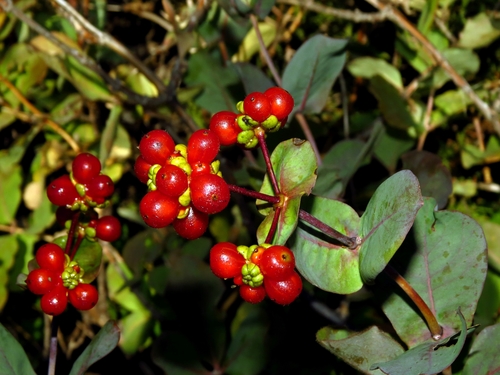
iNaturalist · cc-by-nc
(c) eugenezakharov, some rights reserved (CC BY-NC), uploaded by eugenezakharov
(c) eugenezakharov, some rights reserved (CC BY-NC), uploaded by eugenezakharov
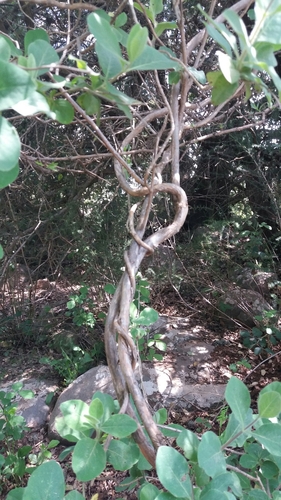
iNaturalist · cc-by-nc
(c) greenfeldarom, some rights reserved (CC BY-NC)
(c) greenfeldarom, some rights reserved (CC BY-NC)
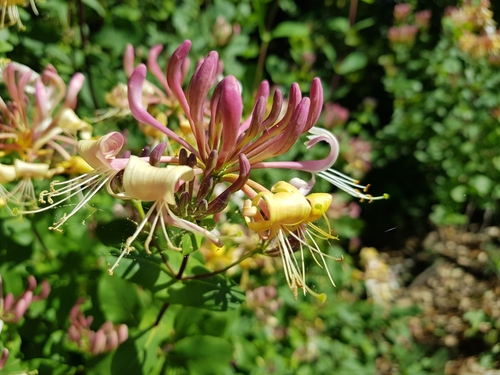
iNaturalist · cc-by-nc
(c) Roger Vila, some rights reserved (CC BY-NC), uploaded by Roger Vila
(c) Roger Vila, some rights reserved (CC BY-NC), uploaded by Roger Vila
What to Eat
Edible parts: Flowers
The flowers are edible.
Known Hazards
Where to Find It
It is a Mediterranean plant.
Central Asia, Europe, Jordan, Mediterranean, Middle East, Spain, Tajikistan,
Countries: Andorra, United Arab Emirates, Albania, Austria, Bosnia & Herzegovina, Belgium, Bulgaria, Bahrain, Belarus, Switzerland, Cyprus, Czechia, Germany, Denmark, Algeria, Estonia, Egypt, Spain, Finland, France, United Kingdom, Greece, Croatia, Hungary, Ireland, Israel, Iraq, Iran, Iceland, Italy, Jordan, Kyrgyzstan, Kuwait, Kazakhstan, Lebanon, Liechtenstein, Lithuania, Luxembourg, Latvia, Libya, Morocco, Monaco, Moldova, Montenegro, North Macedonia, Malta, Netherlands, Norway, Oman, Poland, Portugal, Qatar, Romania, Serbia, Russia, Saudi Arabia, Sweden, Slovenia, Slovakia, San Marino, Syria, Tajikistan, Turkmenistan, Tunisia, Turkey, Ukraine, Uzbekistan, Yemen
How to Identify
A shrub in the Caprifoliaceae family found in Mediterranean regions.
Wikipedia
Source ↗Lonicera etrusca is a species of honeysuckle known by the common name Etruscan honeysuckle. It is native to Southern Europe, Western Asia and North Africa and it is known elsewhere, including the Pacific Northwest of North America, as an introduced species where it has escaped cultivation. It is kept in gardens as an ornamental plant.
Names & Synonyms
A;bhar, Madreselva
Caprifolium cyrenaicum KuntzeLonicera dimorpha Tauschand others
References (2)
- Blanco-Salas, J., et al, 2019, Wild Plants Potentially Used in Human Food in the Protected Area “Sierra Grande de Hornachos” of Extremadura (Spain). Sustainability 2019, 11, 456
- Oran, S. A. S., 2015, Selected Wild Aromatic Plants in Jordan. International Journal of Medicinal Plants. Photon 108 (2015) 686-699