Crepis foetida
L.

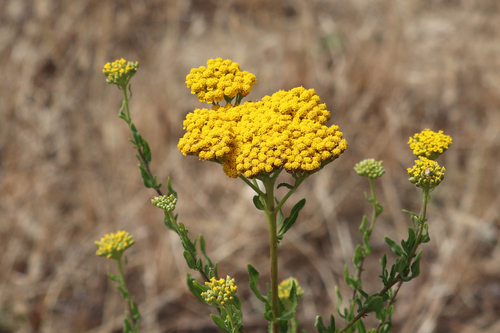
(c) Богданович Светлана, some rights reserved (CC BY-NC)

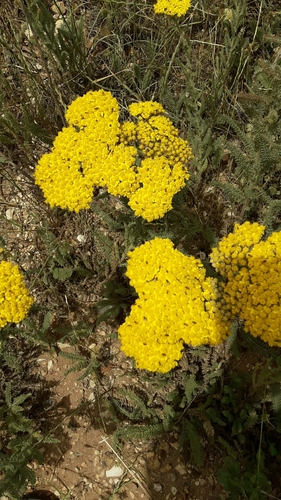
(c) Alexander Baransky, some rights reserved (CC BY-NC), uploaded by Alexander Baransky
What to Eat
Edible parts: Leaves
The leaves are eaten.
Where to Find It
It is a temperate plant.
Europe, North America, Spain, Switzerland,
How to Identify
A herb. It grows 10-50 cm tall. There are leaves at the base and along the stem.
Wikipedia
Source ↗Crepis foetida is a European species of flowering plant in the family Asteraceae with the common name stinking hawksbeard. It is widespread across much of Europe and Siberia, as well as being sparingly naturalized in scattered locations in the United States and Australia. Crepis foetida is an annual, biennial, or perennial herb up to 50 cm (20 inches) tall. One plant can produce as many as 10 flower heads, each with 100 or more yellow ray florets but no disc florets. Subspecies Crepis foetida subsp. foetida Crepis foetida subsp. glandulosa (C.Presl) Arcang. Crepis foetida subsp. rhoeadifolia (M.Bieb.) Čelak.
Names & Synonyms
Crepide fetide, Radicchiella selvatica
References (1)
- Blanco-Salas, J., et al, 2019, Wild Plants Potentially Used in Human Food in the Protected Area “Sierra Grande de Hornachos” of Extremadura (Spain). Sustainability 2019, 11, 456