Crepis sancta
(L.) Babcok
Sacred hawksbeard

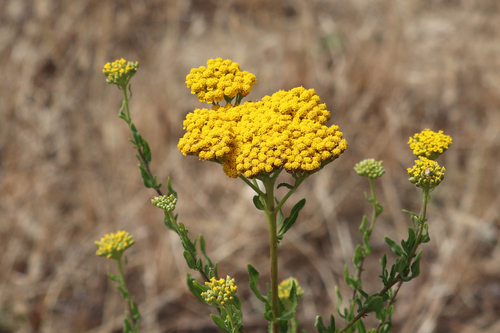
(c) Bernard DUPONT, some rights reserved (CC BY-NC-SA)

(c) Bernard DUPONT, some rights reserved (CC BY-NC-SA)

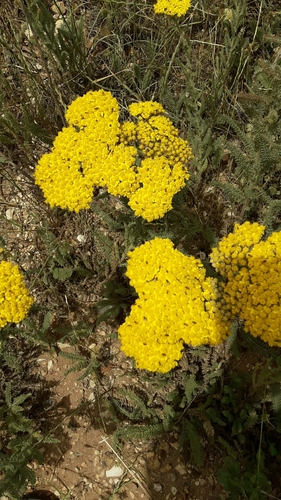
(c) Aleksandr Popov / Александр Попов, some rights reserved (CC BY-NC), uploaded by Aleksandr Popov / Александр Попов
What to Eat
Edible parts: Leaves
The leaves are eaten raw and are mild and agreeable, making them a pleasant addition to salads.
Where to Find It
It is a Mediterranean climate plant. It grows in field, grassy places and in heath.
Asia, Balkans, Bosnia, Croatia, Europe, India, Italy, Mediterranean, Turkey, Türkiye, Yugoslavia,
How to Identify
A short annual herb. The stems are branched from the base. The leaves are oblong and divided into leaflets along the stalk. There are few leaves on the stem. The flower heads are large. They are 15-20 mm long. The flower bracts are hairy. The outer bracts have a pale edge.
How to Grow
Propagation: Sow seed in situ either as soon as it is ripe in late summer or in spring.
Medicinal Uses
None known
Other Uses
None known
Wikipedia
Source ↗An annual herb with hermaphrodite flowers. Adapts to light sandy, medium loamy, and heavy clay soils with mildly acid to basic pH. Grows in semi-shade or full sun and prefers moist soil.
Names & Synonyms
Dimovac, Radicchiella, Radicchio di campo
References (9)
- Biscotti, N. et al, 2018, The traditional food use of wild vegetables in Apulia (Italy) in the light of Italian ethnobotanical literature. Italian Botanist 5:1-24
- Blamey, M and Grey-Wilson, C., 2005, Wild flowers of the Mediterranean. A & C Black London. p 465
- Ertug, F, Yenen Bitkiler. Resimli Türkiye Florası -I- Flora of Turkey - Ethnobotany supplement
- Luczaj et al, 2013, Wild vegetable mixes sold in the markets of Dalmatia (southern Croatia). Journal of Ethnobiology and Ethnomedicine. 8:2
- Luczaj, L. et al, 2013, Wild food plants used in the villages of the Lake Vrana Nature Park (northern Dalmatia, Croatia). Acta Societatis Botanicorum Poloniae, 82(4): 275-281
- Luczaj, L. et al, 2014, Wild Food Plants of Dalmatia (Croatia). in A. Pieroni, C. L. Quave (eds.), Ethnobotany and Biocultural Diversities in the Balkans, p 142
- Pieroni, A., 1999, Gathered wild food plants in the Upper Valley of the Serchio River (Garfagnana), Central Italy. Economic Botany 53(3) pp 327-341
- Plants for a Future database, The Field, Penpol, Lostwithiel, Cornwall, PL22 0NG, UK. http://www.scs.leeds.ac.uk/pfaf/
- Sansanelli, S., et al, 2014, Wild food plants traditionall consumed in the area of Bologna (Emilia Romagna region, Italy). Journal of Ethnobiology and Ethnomedicine 10:69