Dimorphotheca cuneata
(Thunb.) DC.
White bietou
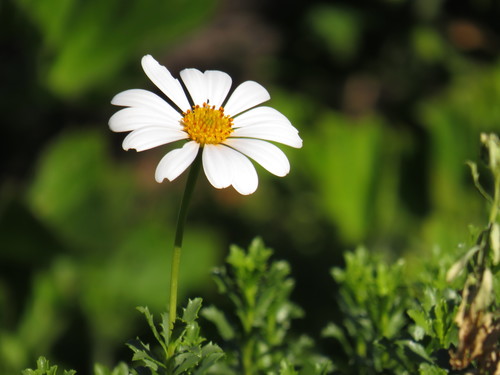
(c) Jeremy Gilmore, some rights reserved (CC BY), uploaded by Jeremy Gilmore
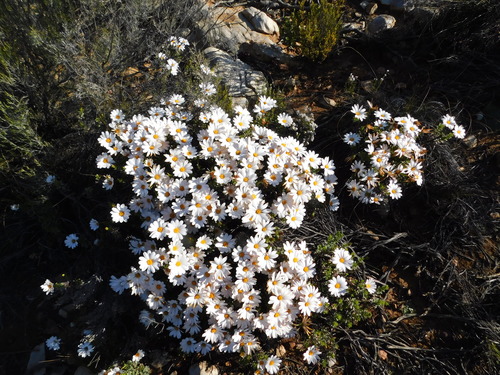
(c) Rebecca Ryen-Stols, some rights reserved (CC BY-SA)
Where to Find It
It is a tropical plant.
Africa, South Africa,
How to Identify
A small shrub. It grows 1 m tall. The leaves are alternate and without stalks. The leaves are wedge shaped at the base to narrowly oval. They are 10-20 mm long. The flowers are on short stalks and occur singly. They are white to yellow.
Wikipedia
Source ↗Dimorphotheca cuneata, the rain flower or white bietou, is a plant species native to the Cape Provinces and Free State of South Africa (Fynbos, Succulent Karoo, Nama Karoo, etc.). as well as the Botswana and Namibia. It is also widely grown as an ornamental and reportedly sparingly naturalized in Gila County in the US State of Arizona. Dimorphotheca cuneata is a subshrub that, in its natural habitat, will grow to be 100 cm (40 inches) tall. Cultivated specimens may measure 150 cm (60 inches). Leaves are long and narrow, with a few large teeth on the edges, giving off a strong scent when crushed. Wild flower heads have white ray florets and yellow disc florets, but this can vary in garden cultivars.
Names & Synonyms
References (1)
- World Checklist of Useful Plant Species 2020. Royal Botanic Gardens, Kew