Strobocalyx arborea
Sch.Bip.
Tree vernonia
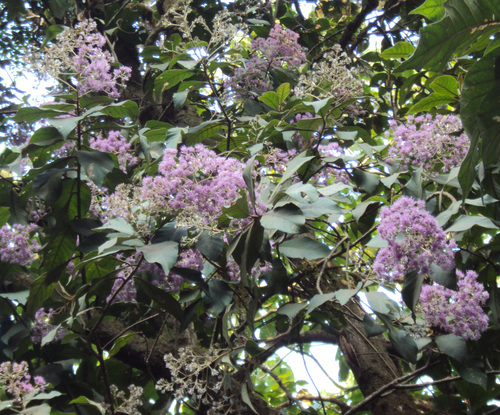
(c) Vinayaraj, some rights reserved (CC BY-SA)
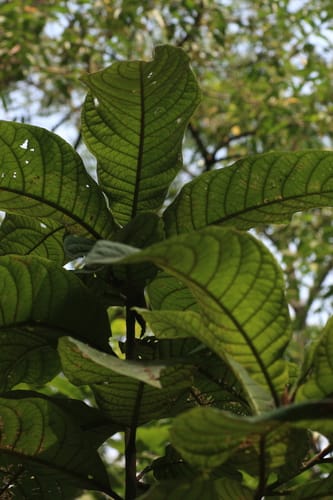
(c) madhavan a.p, some rights reserved (CC BY)
What to Eat
Edible parts: Leaves - medicine.
The leaves are used medicinally.
Where to Find It
It is a subtropical plant.
Asia, China, India, Indonesia, SE Asia, Thailand,
How to Identify
A tree. It grows 15 m tall or taller. The trunk can be 40 cm across. The leaves are arranged in spirals at the ends of the branches. The fruit is dry and has one seed. The flower heads are pink or purple.
Wikipedia
Source ↗Strobocalyx arborea, formerly widely known by the synonym Vernonia arborea, is a species of mid-level rainforest tree in the Composite, or Daisy family Asteraceae, that is found from the Western Ghats of India and Sri Lanka, east to the East Indies and New Guinea. This tree, and Brachylaena, are contenders for the tallest of all composite trees ("daisy trees"); plants on Sumatra (formerly distinguished as V. a. var. pilifera; locally called Maremboeng) reaching a height of 36 m (118 ft), and plants from Java (formerly distinguished as V. a. var. javanica; locally called Semboeng Kebo) can be almost as tall, to 34 m (112 ft), and at up to 104 cm (41 in) trunk diameter, is the most massive of all composites. Its leaves contain a useful fungicide. The leaves are alternate, ovate (but often asymmetrical), 8–25 cm long and 3–10 cm broad, with a leathery texture.
Names & Synonyms
References (1)
- World Checklist of Useful Plant Species 2020. Royal Botanic Gardens, Kew