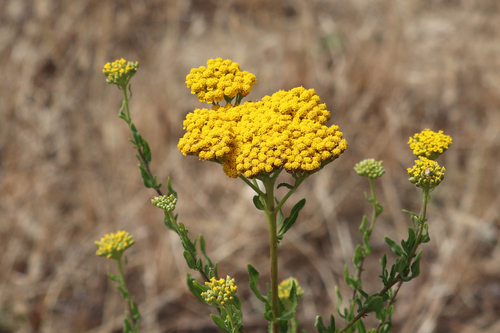
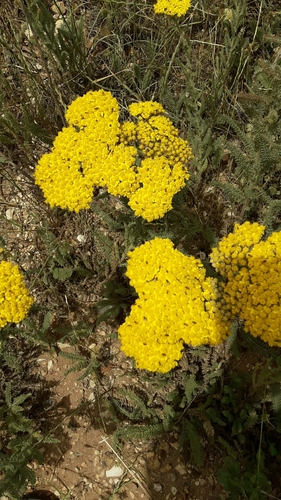
Athrixia heterophylla
(Thunb.) Less.
iNaturalist · cc-by-nc
(c) Felix Riegel, some rights reserved (CC BY-NC), uploaded by Felix Riegel
(c) Felix Riegel, some rights reserved (CC BY-NC), uploaded by Felix Riegel
iNaturalist · cc0
no rights reserved, uploaded by Di Turner
no rights reserved, uploaded by Di Turner

iNaturalist · cc-by-sa
(c) Dave U, some rights reserved (CC BY-SA), uploaded by Dave U
(c) Dave U, some rights reserved (CC BY-SA), uploaded by Dave U
What to Eat
Edible parts: Leaves - tea
The leaves are dried and used to make tea drinks.
Where to Find It
It is a subtropical plant.
Africa, South Africa, Southern Africa,
Countries: Angola, Burkina Faso, Burundi, Benin, Botswana, Congo (DRC), Central African Republic, Congo (Republic), Cote d'Ivoire, Cameroon, Cape Verde, Djibouti, Algeria, Egypt, Eritrea, Ethiopia, Gabon, Ghana, Gambia, Guinea, Equatorial Guinea, Guinea-Bissau, Kenya, Comoros, Liberia, Lesotho, Libya, Morocco, Madagascar, Mali, Mauritania, Mauritius, Malawi, Mozambique, Namibia, Niger, Nigeria, Rwanda, Seychelles, Sudan, Sierra Leone, Senegal, Somalia, South Sudan, Sao Tome & Principe, Eswatini, Chad, Togo, Tunisia, Tanzania, Uganda, South Africa, Zambia, Zimbabwe
How to Identify
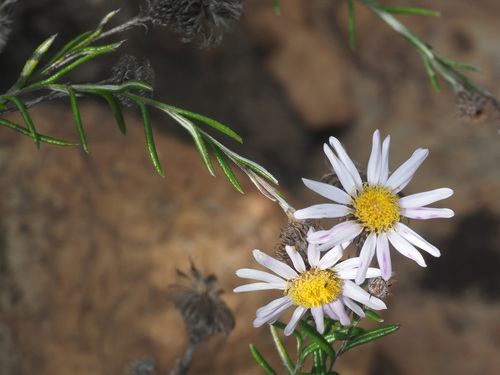
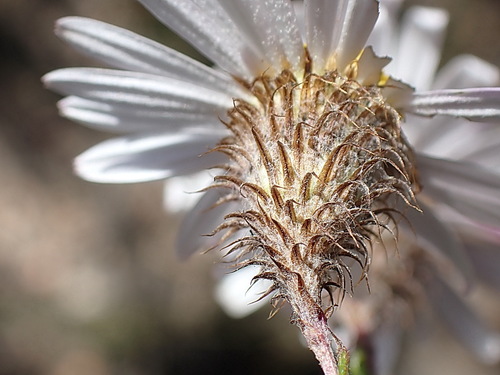
A small shrub. It has a woody rootstock. It grows 45 cm tall. The leaves are narrowly oval. They are felted underneath and has some teeth along the edge. The flower heads are pink or red.
Names & Synonyms
Aster heterophylla Thunb.
References (2)
- Ruiters-Welcome, A. K., 2019, Food plants of southern Africa. Ph.D. thesis. Univ. of Johannesburg p 33
- Welcome, A. K. & Van Wyk, B.-E., 2019, An inventory and analysis of the food plants of southern Africa. South African Journal of Botany 122 (2019) 136–179