Celtis gomphophylla
Baker

(c) Geoff Nichols, some rights reserved (CC BY-NC), uploaded by Geoff Nichols

(c) Geoff Nichols, some rights reserved (CC BY-NC), uploaded by Geoff Nichols
What to Eat
Edible parts: Fruit
The fruit are eaten as a snack.
Known Hazards
Where to Find It
It is a subtropical plant. In South Africa it grows between 700-1,400 m above sea level.
Africa, Angola, Congo DR, Malawi, Mozambique, Nigeria, South Africa, Southern Africa, Zambia, Zimbabwe,
How to Identify
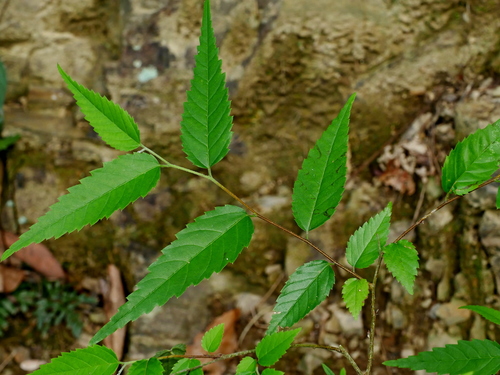
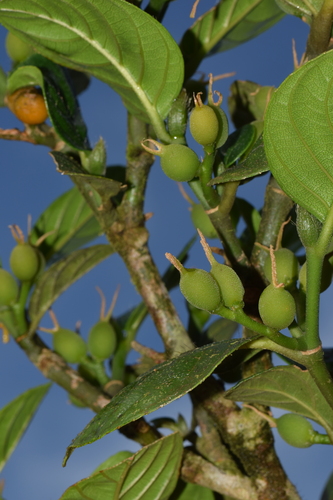
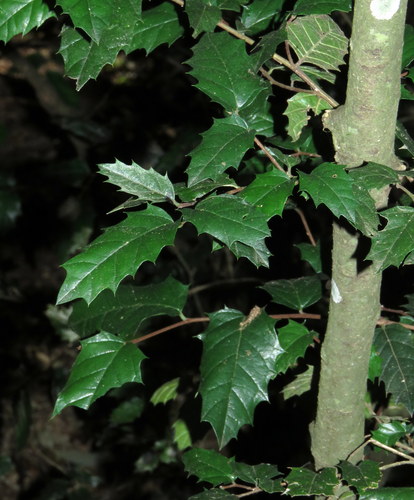
A tree. It grows up to 30 m tall or taller. It loses its leaves during the year. The trunk is fluted or has buttresses. The bark is smooth and light grey. The leaves are 6-16 cm long by 2-5 cm wide. The base is rounded and they taper to the tip. The fruit are dark yellow and 4-6 mm long by 3-5 mm wide.
How to Grow
A plant of the tropics and subtropics, where it can be found at elevations up to 1,750 metres. In western Kenya it is locally dominant in rainforest in areas with a mean annual rainfall of 1,400 - 1,900mm. The tree grows rapidly in full sunlight, but growth is poor or stops completely under shaded conditions.
Propagation: Seed - best sown as soon as it is ripe, it germinates readily without pre-treatment. After cleaning and drying the seed can be stored for up to 2 months in sealed containers.
Medicinal Uses
A leaf decoction is used for the treatment of cardiovascular disorders. A root decoction is used to treat fever and menstrual pains. In trials, leaf extracts have shown a vaso-relaxant effect.
Other Uses
The wood and bark have a bad smell and are used as insect and snake repellents in houses. The heartwood is whitish, turning slightly darker upon exposure; it is not distinctly demarcated from the sapwood. The grain is usually interlocked; texture moderately fine; the wood has a persistent unpleasant smell when green or when rewetted. The wood is medium-weight; softer and less strong than that of the other Celtis spp; generally of low durability, being susceptible to attack by fungi and Lyctus, but reported to be moderately durable in DR Congo and southern Africa. It seasons slowly, with a high risk of checking and distortion; once dry it is moderately stable in service. It saws and works well with both machine and hand tools, but cutting edges should be kept sharp. A reduced cutting angle of 15° is recommended when machining quarter-sawn stock to prevent tearing along the grain. The wood holds nails and screws moderately well, but has a tendency to split; pre-boring is therefore advised; boring and mortising should be done with strong support; gluing properties are good; steam bending properties moderate; it does not turn well. The wood is commonly used for light construction, light flooring, joinery, furniture, cabinet work, canoes, ladders, sporting goods, agricultural implements, tool handles and matches. It is suitable for ship building, vehicle bodies, hardboard and particle board. The wood is also used as firewood and for charcoal production. Planted as a shade tree for crops and to improve soil conditions. The tree seems to be useful for forest restoration and possibly also for planting in agroforestry systems.
Wikipedia
Source ↗Celtis gomphophylla is a species of flowering plant native to sub-Saharan Africa, Madagascar, and the Comoros.
Names & Synonyms
References (2)
- Ruiters-Welcome, A. K., 2019, Food plants of southern Africa. Ph.D. thesis. Univ. of Johannesburg p 105
- Welcome, A. K. & Van Wyk, B.-E., 2019, An inventory and analysis of the food plants of southern Africa. South African Journal of Botany 122 (2019) 136–179