Encephalartos horridus
(Jacq,) Lehm.

(c) brewbooks, some rights reserved (CC BY-SA)

(c) Dave U, some rights reserved (CC BY-SA)
What to Eat
Edible parts: Stem
The stems are processed to make a meal and used as yeast.
Where to Find It
It is a subtropical plant.
Africa, South Africa*, Southern Africa,
How to Identify
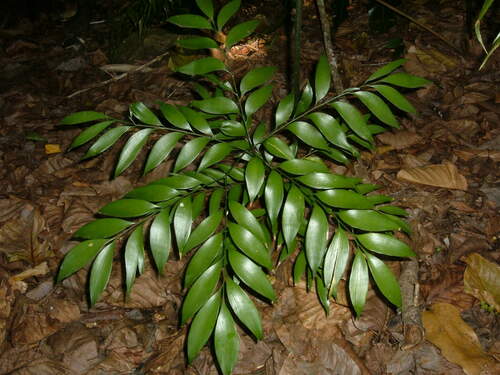
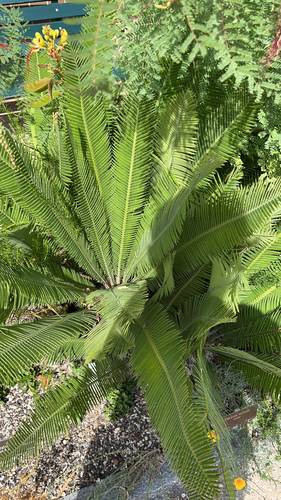
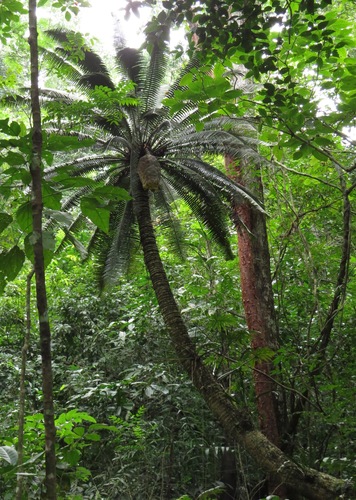
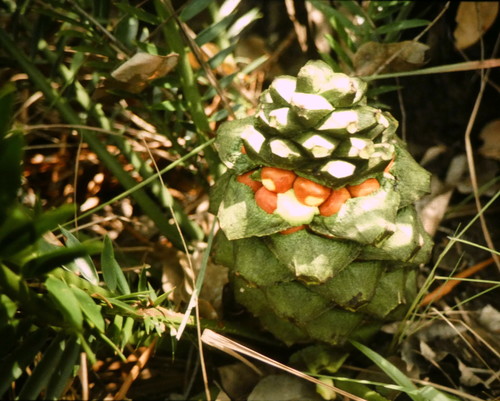
A tree with a stem mostly underground. It grows 30 cm to 1 m tall. The trunk is 20-30 cm across. The leaves are in a ring. They are up to 1 m long with a leaf stalk 13 cm long. The leaves have leaflets along the stalk. The leaflets near the base are shorter and others are 10 cm long by 2.5 cm wide. The cones occur singly on short stout stalks. Female cones are bluish-green and 40 cm long.
Wikipedia
Source ↗Encephalartos horridus, the Eastern Cape blue cycad, is a small, low-growing cycad up to 0.9 m (3.0 ft) high and 0.9 m (3.0 ft) wide. It is a native of Eastern Cape Province, South Africa, and found in arid shrublands, most commonly on ridges and slopes with shallow soils. The species is particularly known for its distinctly blue-gray leaves, although the degree of coloration can vary significantly. The species name horridus is Latin for 'bristly', after the plant's stiff, spiny leaflets.
Names & Synonyms
References (2)
- Ruiters-Welcome, A. K., 2019, Food plants of southern Africa. Ph.D. thesis. Univ. of Johannesburg p 108
- Welcome, A. K. & Van Wyk, B.-E., 2019, An inventory and analysis of the food plants of southern Africa. South African Journal of Botany 122 (2019) 136–179