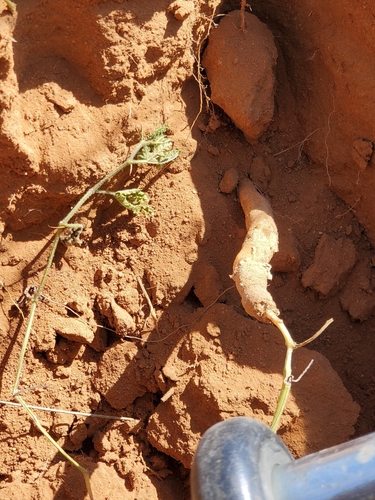
Cucurbita maxima
Duchesne ex Lam.
Pumpkin, Winter squash

(c) jackollis, some rights reserved (CC BY-NC), uploaded by jackollis
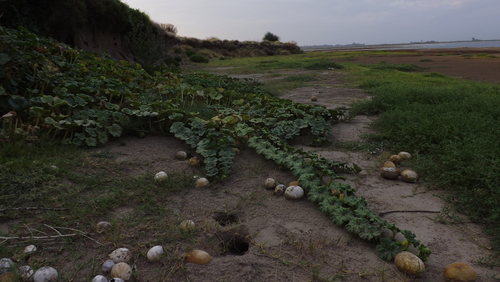
(c) Fernando E. Cuello, some rights reserved (CC BY-NC)

(c) kleme, some rights reserved (CC BY-NC)
What to Eat
Edible parts: Fruit, Leaves, Seeds, Flowers, Vegetable
The fruit is cooked and has a delicious flavour when baked, similar to sweet potato. The flesh can also be dried, ground into a powder, and used with cereals when making bread, cakes, and similar foods. Some varieties can be stored for up to 9 months. Seeds can be eaten raw or cooked; they are rich in oil with a very pleasant nutty flavour, though small and covered with a fibrous coat, making them fiddly to use. The seed can also be ground into a powder and used with cereals in bread-making. An oil is obtained from the seed. Young flowers can be eaten raw or cooked and are often dipped in batter and fried. Young leaves and stems are edible when cooked, and the leaves contain up to 5% protein.
Known Hazards
Where to Find It
A subtropical plant. They are grown throughout the tropical countries from sea level to 2400 m altitude. They need a fertile soil. C. moschata is better suited to coastal areas. They are frost sensitive but better suited to cooler areas than C. moschata. It can grow in arid places. It suits hardiness zones 8-11.
Africa, Albania, Andaman Is.,Andes, Angola, Antilles, Argentina*, Asia, Australia, Austria, Azerbaijan, Balkans, Bangladesh, Barbados, Benin, Bolivia, Bougainville, Burkina Faso, Burundi, Cambodia, Cameroon, Cape Verde, Caucasus, Central Africa, Central African Republic, CAR, Central America, Central Asia, Chad, China, Colombia, Comoros, Congo DR, Congo R, Cook Islands, Costa Rica, Côte d'Ivoire, Cuba, Czech Republic, Dominican Republic, East Africa, East Timor, Ecuador, Eritrea, Ethiopia, Europe, Fiji, Gabon, Gambia, Georgia, Ghana, Guinea, Guyana, Haiti, Hawaii, Himalayas, India, Indochina, Ivory Coast, Jamaica, Kazakhstan, Kenya, Korea, Laos, Liberia, Macedonia, Madagascar, Malawi, Mali, Mariana Islands, Marquesas, Mauritania, Mauritius, Mediterranean, Mexico, Mozambique, Myanmar, Namibia, Nauru, Nepal, New Caledonia, New Zealand, Niger, Nigeria, North America, Northeastern India, Pacific, Pakistan, Papua New Guinea, PNG, Paraguay, Peru, Philippines, Puerto Rico, Rwanda, Sahel, SE Asia, Seychelles, Senegal, Serbia, Sierra Leone, Sikkim, Slovenia, Solomon Islands, Somalia, South Africa, Southern Africa, South America, Spain, Sri Lanka, St Helena, St. Vincent and Grenadines, Sudan, Sweden, Switzerland, Tajikistan, Tanzania, Tasmania, Thailand, Timor-Leste, Togo, Trinidad-Tobago, Turkmenistan, Tuvalu, Uganda, Uruguay, USA, Uzbekistan, Vanuatu, Venezuela, Vietnam, West Africa, West Indies, West Timor, Zambia, Zimbabwe,
How to Identify
A pumpkin family plant. It is a creeping vine with tendrils. It is an annual plant. The stems are soft and round in cross section. The leaves are large and hang loose. They are dark green and kidney shaped. The edges of the leaves are entire. There are large nodes at the base of the leaf. The tendrils are fairly stout and are divided half way along their length into many branches. Male flowers are carried on long upright stalks. The 5 petals are united into a long yellow tube. The female flowers are larger than the male and are fewer in number and carried on shorter stalks. The fruit varies in size, colour and patterns on the skin. They can be round, oval or flattened, with yellow, orange or green skin. The surface can be smooth and rough and warty. The flesh is yellow and edible. The seeds are in the centre. The seeds are white or brown. They are flattened but plump and have a slanting scar at the top. The seeds are edible. (C. moschata does not have hairy stems but has fruit with a stalk thickened near where it joins the fruit.) There are a large number of cultivated varieties.
Nutrition Score: 71/100
| Part | Moisture | kJ | kcal | Protein | Vit A | Vit C | Iron | Zinc |
|---|---|---|---|---|---|---|---|---|
| Seeds - dry | 6.9 | 2264 | 542 | 24.5 | 38 | 1.9 | 14.9 | 7.5 |
| Fruit | 69.6 | 439 | 105 | 1.4 | — | — | — | — |
| Leaves | 88 | 160 | 38 | 4.9 | 260 | 28 | 2.5 | 0.9 |
| Flower | 88.7 | 107 | 26 | 1.4 | 173 | 14 | 0.8 | 0.1 |
How to Grow
Requires a rich, well-drained moisture retentive soil and a very warm, sunny and sheltered position. Prefers a pH of 5.5 to 5.9, but tolerates up to 6.8. Dry periods with a relatively low humidity favour the best growth. A frost-tender annual plant, it is widely cultivated in tropical and temperate zones for its edible fruit, there are very many named varieties differing considerably in their fruits. Most of the winter squashes derive from this species, including Hubbard, Butternut, Acorn, Argentine and Boston. Many forms require a temperature range of 20 - 27°c during the growing season, but there are some forms that tolerate cooler conditions and these succeed outdoors most years in Britain. Most cultivars are relatively insensitive to day-length. Squashes and pumpkins can be differentiated from each other by their fruit stalk, it is angular and polygonal in pumpkins but thick, soft and round in squashes. This species hybridizes readily with C. andreana but can only be crossed with other species under controlled conditions. Some modern works see C. andreana as being no more than a subspecies of this species, classifying it as C. maxima andreana (Naudin.)Filov. Grows well with sweetcorn and thornapple but dislikes potatoes.
Propagation: Sow seed in early to mid spring in a greenhouse in rich soil; germination should occur within 2 weeks. Sow 2 or 3 seeds per pot and thin to the strongest plant. Grow on quickly and plant out after the last expected frosts, providing cloche or frame protection for at least the first few weeks if growing outdoors.
Medicinal Uses
The seeds are diuretic, tonic, and vermifuge. When used as a vermifuge, the complete seed including the husk is ground into a fine flour, made into an emulsion with water, and eaten, after which a purgative must be taken to expel tapeworms or other parasites from the body. The seeds are less potent than the root of Dryopteris felix-mas for this purpose, but are safer for pregnant women, debilitated patients, and children. The oil from the seed is used as a nerve tonic. The fruit pulp is used as a soothing poultice on burns, inflammations, and boils.
Other Uses
The seed contains 34–54% of a semi-drying oil, which is used for lighting. A nourishing face mask can be made from the fruit and is effective for dry skin.
Wikipedia
Source ↗Cucurbita maxima, one of at least five species of cultivated squash, is one of the most diverse domesticated species. This species originated in South America from the wild subspecies Cucurbita maxima subsp. andreana over 4,000 years ago. Cucurbita maxima, known for modern varieties as Hubbard, Delicious, Marblehead, Boston Marrow, and Turks Turban, originated in northern Argentina near the Andes or in certain Andean valleys. Secondary centers of diversity include India, Bangladesh, Myanmar, and the southern Appalachians. Different squash types of this species were introduced into North America as early as the 16th century. By the American Revolution, the species was in cultivation by Native American tribes throughout the present-day United States. By the early 19th century, at least three varieties are known to have been commercially introduced in North America from seeds obtained from Native Americans.
Production
Fruit are ready for harvest after about 3-4 months. Seed can be saved from fruit for re-sowing but as pumpkins cross pollinate different types become mixed.
Other Information
It is a commercially cultivated vegetable. In Papua New Guinea, a widely distributed and popular vegetable especially for leaf tips.
Notes
There are 25 Cucurbita species.
Names & Synonyms
Amugita, Anamboatavo, Asusa, Baby, Bi do, Bi-ro, Buziriziri, Calabaza, Dzungu, Ebishusha, Efre, Elegede, Emyongo, Enjubi, Ensujju, Essujjo, Essunsa, Faan kwa, Gummadi, Kasogo, Imunyuru, Iyongu, Jungu, Kabeewaa, Kabewa, Kaddhu, Kaddu, Kadee, Kadimah, Kalamasa, Kedi, Kest'ana, Kicwika, Kimisebebe, Kohara, Kohora, Konokono, Kosekelenge, Kumbalakai, Kumra, Kungull Lal bhopli, Lal dudiya, Lal kumra, Laptanda, Lenge, Lu-cha, Maai, Mai, Ma-part, Mathan, Mistikumra shak, Mitha, Msuku, Muengeleka, Mungu, Muteta, Nadio, Ndiabe, Obututu, Okondo, Parangikayi, Pharsi ko munto, Poosani kolunthu, Potiron, Shwe-payon, Sitaphal, Tange, Tanje, Tap payo, Te bangketi, Timbin, Tipeti, Ukoko, Voatavo, Wavukeni, Zapallo
References (117)
- Achigan-Dako, E, et al (Eds), 2009, Catalogue of Traditional Vegetables in Benin. International Foundation for Science.
- Ambasta, S.P. (Ed.), 2000, The Useful Plants of India. CSIR India. p 149
- Anderson, E. F., 1993, Plants and people of the Golden Triangle. Dioscorides Press. p 208
- Ara, R. I. T., 2015, Leafy Vegetables in Bangladesh. Photon eBooks. p 58
- Baa-Poku, F. & Asante, I. K., 2020, Use of Neglected and Underutilized Crop Species (NUCS) in some farming communities in the Upper Afram and Upper Dayi River Basins in Ghana. International Journal of Technology and Management Research 5 (2): 48-63
- Balkrishna, A., et al, 2022, Indigenous Uses of Plants among Forest-dependent Communities of Seijosa, Arunachal Pradesh. International Journal of Economic Plants 2022, 9(1):064-080
- Beckstrom-Sternberg, Stephen M., and James A. Duke. "The Foodplant Database." http://probe.nalusda.gov:8300/cgi-bin/browse/foodplantdb.(ACEDB version 4.0 - data version July 1994)
- Bernholt, H. et al, 2009, Plant species richness and diversity in urban and peri-urban gardens of Niamey, Niger. Agroforestry Systems 77:159-179
- Bianchini, F., Corbetta, F., and Pistoia, M., 1975, Fruits of the Earth. Cassell. p 106
- Bodner, C. C. and Gereau, R. E., 1988, A Contribution to Bontoc Ethnobotany. Economic Botany, 43(2): 307-369
- Bourret, D., 1981, Bonnes-Plantes de Nouvelle-Caledonie et des Loyaute. ORSTOM. p 31
- Brouk, B., 1975, Plants Consumed by Man. Academic Press, London. p 132
- Brown, D., 2002, The Royal Horticultural Society encyclopedia of Herbs and their uses. DK Books. p 185
- Burkill, H. M., 1985, The useful plants of west tropical Africa, Vol. 1. Kew.
- Burkill, I. H., 1966, A Dictionary of the Economic Products of the Malay Peninsula. Ministry of Agriculture and Cooperatives, Kuala Lumpur, Malaysia. Vol 1 (A-H) p 708
- Bussman, R. W., et al, 2021, Unity in diversity—food plants and fungi of Sakartvelo (Republic of Georgia), Caucasus. Journal of Ethnobiology and Ethnomedicine (2021) 17:72 p 8
- Chin, H. F., 1999, Malaysian Vegetables in Colour. Tropical Press. p 47
- Ching, L. S. & Mohamed, S., 2001, Alpha-Tocopherol Content in 62 Edible Tropical Plants. J. Agric. Food Chem. 2001, 49, 3101−3105
- Cheifetz, A., (ed), 1999, 500 popular vegetables, herbs, fruits and nuts for Australian Gardeners. Random House p 58
- Chigumira Ngwerume, F. & Grubben, G.J.H., 2004. Cucurbita maxima Duchesne. [Internet] Record from Protabase. Grubben, G.J.H. & Denton, O.A. (Editors). PROTA (Plant Resources of Tropical Africa), Wageningen, Netherlands. < http://database.prota.org/search.htm>. Accessed 15 October 2009.
- Cobley, L.S. (rev. Steele, W.M.) 2nd Ed., 1976, An Introduction to the Botany of Tropical Crops. Longmans. p 134
- Cundall, P., (ed.), 2004, Gardening Australia: flora: the gardener's bible. ABC Books. p 441
- Dansi, A., et al, 2008, Traditional leafy vegetables and their use in the Benin Republic. Genet Resour Crop Evol (2008) 55:1239–1256
- Diouf, M., et al, Leafy Vegetables in Senegal. Bioversity webite
- Duarte, M. C., et al, 2022, Diversity of Useful Plants in Cabo Verde Islands: A Biogeographic and Conservation Perspective. Plants 2022, 11, 1313 p 10
- Edwards. S., et al, (Eds), 1995, Flora of Ethiopia and Eritrea. Vol.2, Part 2 Canellaceae to Euphorbiaceae. Uppsala, Sweden. p 53
- Epenhuijsen C.W. van., 1974, Growing Native vegetables in Nigeria. FAO Rome, p 63
- Essai sur l'Histoire Naturelle des Courges 7. 1786 Aug-Sep? (J. B. A. P. M. de Lamarck, Encycl. 2:151. 1786 Oct)
- Facciola, S., 1998, Cornucopia 2: a Source Book of Edible Plants. Kampong Publications, p 86
- Farooq, S., et al, 2012, Ethnobotanical Studies of the Flora of Tehsil Birmal in South Waziristan Agency, Pakistan. Pak. J. Weed Sci. Res. 18(3): 277-291
- French, B.R., 1986, Food Plants of Papua New Guinea, A Compendium. Asia Pacific Science Foundation p 102
- French, B.R., 2010, Food Plants of Solomon Islands. A Compendium. Food Plants International Inc. p 133
- Gangte, H. E., et al, 2013, Wild Edible Plants used by the Zou Tribe in Manipur, India. International Journal of Scientific and Research Publications, Volume 3, Issue 5
- Goode, P., 1989, Edible Plants of Uganda. FAO p 26
- Goode, P., 1989, Edible Plants of Uganda. FAO p 36
- Goode, P., 1989, Edible Plants of Uganda. FAO p 39
- Grubben, G. J. H. and Denton, O. A. (eds), 2004, Plant Resources of Tropical Africa 2. Vegetables. PROTA, Wageningen, Netherlands. p 263
- Guite, C., 2016, A study of wild edible plants associated with the Paite tribe of Manipur, India, International Journal of Current Research. Vol. 8, Issue, 11, pp. 40927-40932
- Hadfield, J., 2001, The A-Z of Vegetable Gardening in South Africa. Struik p 119
- Harkonen, M. & Vainio-Mattila, K., 1998, Some examples of Natural Products in the Eastern Arc Mountains. Journal of East African Natural History 87:265-278
- Hedrick, U.P., 1919, (Ed.), Sturtevant's edible plants of the world. p 235
- Hermandez Bermejo, J.E., and Leon, J. (Eds.), 1994, Neglected Crops. 1492 from a different perspective. FAO Plant Production and Protection Series No 26. FAO, Rome. p18
- Hussey, B.M.J., Keighery, G.J., Cousens, R.D., Dodd, J., Lloyd, S.G., 1997, Western Weeds. A guide to the weeds of Western Australia. Plant Protection Society of Western Australia. p 140
- Hu, Shiu-ying, 2005, Food Plants of China. The Chinese University Press. p 702
- Jardin, C., 1970, List of Foods Used In Africa, FAO Nutrition Information Document Series No 2.p 72
- Kapelle, M., et al, 2000, Useful plants within a Campesino Community in a Costa Rican Montane Cloud Forest. Mountain Research and Development, 20(2): 162-171.
- Karthi, Sathya, & Salome, 2014, Uncultivated Edible Greens from Small Millet Farms Tamil Nadu India. IDRC
- Kays, S. J., and Dias, J. C. S., 1995, Common Names of Commercially Cultivated Vegetables of the World in 15 languages. Economic Botany, Vol. 49, No. 2, pp. 115-152
- Kew Plants of the World Online
- Khodram,S. D., et al, 2019, Local knowledge of edible flowers used in Mizoram. Indian Journal of Traditional Knowledge Vol 18(40 pp 715-723
- Larkcom, J., 1991, Oriental Vegetables, John Murray, London, p 89
- Latham, P., 2004, Useful Plants of Bas-Congo province. Salvation Army & DFID p 102
- Lautenschläger, T., et al, 2018, First large-scale ethnobotanical survey in the province of Uíge, northern Angola. Journal of Ethnobiology and Ethnomedicine (2018) 14:51
- Lazarides, M. & Hince, B., 1993, Handbook of Economic Plants of Australia, CSIRO. p 70
- Macmillan, H.F. (Revised Barlow, H.S., et al) 1991, Tropical Planting and Gardening. Sixth edition. Malayan Nature Society. Kuala Lumpur. p 334
- Manandhar, N.P., 2002, Plants and People of Nepal. Timber Press. Portland, Oregon. p 179
- Martin, F.W. & Ruberte, R.M., 1979, Edible Leaves of the Tropics. Antillian College Press, Mayaguez, Puerto Rico. p 46, 189
- Medhi, P. & Borthakur, S. K., 2012, Phytoresources from North Cachur Hills of Assam -3: Edible plants sold at Hflong market. Indian Journal or Natural Products and Resources. 3(1) pp 84-109
- Miguel, E., et al, 1989, A checklist of the cultivated plants of Cuba. Kulturpflanze 37. 1989, 211-357
- Molla, A., Ethiopian Plant Names. http://www.ethiopic.com/aplants.htm
- Murtem, G. & Chaudhrey, P., 2016, An ethnobotanical note on wild edible plants of Upper Eastern Himalaya, India. Brazilian Journal of Biological Sciences, 2016, v. 3, no. 5, p. 63-81
- Mutie, F. M., et al, 2023, Important Medicinal and Food Taxa (Orders and Families) in Kenya, Based on Three Quantitative Approaches. Plants 2023, 12, 1145
- Nee, M., 1990, The Domestication of Cucurbita (Cucurbitaceae). Economic Botany, Vol. 44, No. 3, Supplement: New Perspectives on the Origin and Evolution of New World Domesticated Plants. pp. 56-68
- Norrington, L., & Campbell, C., 2001, Tropical Food Gardens. Bloomings Books. p 47
- Nyadanu, D., et al, 2015, Agro-biodiversity and challenges of on-farm conservation: the case of plant genetic resources of neglected and underutilized crop species in Ghana. Genet. Resourc. Crop Evol. 62(7):
- Omawale, 1973, Guyana's edible plants. Guyana University, Georgetown p 102
- Pascual-Mendoza, S. et al, 2021, Traditional knowledge of edible plants in an indigenous community in the Sierra Norte of Oaxaca, Mexico. Plant Biosystems - An International Journal Dealing with all Aspects of Plant Biology
- Peekel, P.G., 1984, (Translation E.E.Henty), Flora of the Bismarck Archipelago for Naturalists, Division of Botany, Lae, PNG. p 549
- Peters, C. R., O'Brien, E. M., and Drummond, R.B., 1992, Edible Wild plants of Sub-saharan Africa. Kew. p 101
- Pham-Hoang Ho, 1999, An Illustrated Flora of Vietnam. Nha Xuat Ban Tre. p 570
- Phon, P., 2000, Plants used in Cambodia. © Pauline Dy Phon, Phnom Penh, Cambodia. p 183
- Pieroni, A. et al, 2013, One century later: the folk botanical knowledge of the last remaining Albanians of the upper Reka Valley, Mount Korab, Western Macedonia. Journal of Ethnobiology and Ethnomedicine. 9:22
- Pieroni, A., 2017, Traditional uses of wild food plants, medicinal plants, and domestic remedies in Albanian, Aromanian and Macedonian villages in South-Eastern Albania. Journal of Herbal Medicine Volume 9, September 2017, Pages 81-90
- Plants for a Future, The Field, Penpol, Lostwithiel, Cornwall, PL22 0NG, UK. http://www.scs.leeds.ac.uk/pfaf/
- Plants of Haiti Smithsonian Institute http://botany.si.edu/antilles/West Indies
- Polunin, O., & Stainton, A., 2006, Flowers of the Himalaya, Oxford India Paperbacks. p 151
- Prashanth Kumar, G.M. and Shiddamallayya, N., 2015, Ethnobotanical Study of Less Known Wild Edible Plants of Hakki Pikki Tribes of Angadihalli, Hassan District, Karnataka. Journal or Medicinal Plants Studies 3(5):80-85
- Purseglove, J.W., 1968, Tropical Crops Dicotyledons, Longmans. p 119
- Rajapaksha, U., 1998, Traditional Food Plants in Sri Lanka. HARTI, Sri Lanka. p 150
- Rao, M. L. S., et al, 2014, Indigenous Plant Foods which are commonly consumed by the tribal communities in Dumbriguda Area of Visakhapatnam District, Andhra Pradesh, India. Biolife. Vol 2, Issue 3
- Razanameharizaka, J., et al, 2022, Catalogue Legumes Traditionnels de Madagascar. Université d’Antananarivo, Antananarivo (101), Madagascar. Vol. 1. p 37
- Roa, J. A. G. & Boada, D. S. G., 2018, Fundación para el Fortalecimiento de la Fruticultura y Plantas Alimenticias no Convencionales en Colombia.
- Royal Botanic Gardens, Kew (1999). Survey of Economic Plants for Arid and Semi-Arid Lands (SEPASAL) database. Published on the Internet; http://www.rbgkew.org.uk/ceb/sepasal/internet [Accessed 16th April 2011]
- Rubaihayo, E. B., Conservation and use of traditional vegetables in Uganda. Bioversity International.
- Ruiters-Welcome, A. K., 2019, Food plants of southern Africa. Ph.D. thesis. Univ. of Johannesburg p 49
- Schneider, E., 2001, Vegetables from Amaranth to Zucchini: The essential reference. HarperCollins. p 600
- Segnon, A. C. & Achigan-Dako, E. G., 2014, Comparative analysis of diversity and utilization of edible plants in arid and semi-arid areas in Benin. Journal of Ethnobiology and Ethnomedicine 2014, 10:80
- Shah, S. K., 2014, Dietary contribution of underutilized minor crops and indigenous plants collected from uncultivated lands and forests in Nepal. in Promotion of Underutilized Indigenous Food Resources for Food Security and Nutrition in Asia and Pacific. FAO. Bangkok p 64
- Shava, S., et al, 2009, Traditional food crops as a source of community resilience in Zimbabwe. International Journal of the African Renaissance 4(1)
- Sillitoe, P. 1995, An Ethnobotanical Account of the Plant Resources of the Wola Region, Southern Highlands Province, Papua New Guinea. J. Ethnobiol. 15(2): 201-235
- Singh, A. G., Panthi, M. P., & Tewari, D. D., 2012, Wild Plants Used as Vegetable in Rupandehi District of Nepal and their Ethnomedicinal Importance. J. Nat. Hist. Mus. Vol. 26, 2012, 111-125
- Small, E., 2009, Top 100 Food Plants. The world's most important culinary crops. NRC Research Press. p 449
- Stanley, T. D. & Ross, E. M., 1986, Flora of south-eastern Queensland Volume 2. Queensland Government p 113
- Staples, G.W. and Herbst, D.R., 2005, A tropical Garden Flora. Bishop Museum Press, Honolulu, Hawaii. p 266
- Tapia, M. E., The role of under-utilised plant species with regard to increased food security and improved health of poor poeople, in mountain regions. IIAP-PNUD/Peru
- Termote, C., et al, 2014, Assessing the potential of wild foods to reduce the cost of a nutritionally adequate diet: An example from eastern Baringo District, Kenya. Food and Nutrition Bulletin, vol. 35, no. 4
- Terra, G.J.A., 1973, Tropical Vegetables. Communication 54e Royal Tropical Institute, Amsterdam, p 42
- Thaman, R. R, 2016, The flora of Tuvalu. Atoll Research Bulletin No. 611. Smithsonian Institute p 81
- Tindall, H.D., & Williams, J.T., 1977, Tropical Vegetables and their Genetic Resources, International Board for Plant Genetic Resources, Rome, p 46
- Tindall, H.D., 1983, Vegetables in the tropics. Macmillan p. 162
- Torre, de la, L., et al, 2008, Enciclopedia de las Plantas Útiles del Ecuador. Herbario QCA. Pontificia Universidad Católica del Ecuador. p 298
- Tredgold, M.H., 1986, Food Plants of Zimbabwe. Mambo Press. p 5
- Tugume, P. & Nyakoojo, C., 2020, Traditional use of wild edible plants in the communities adjacent to Mabira Central Forest Reserve, Uganda. Ethnobotany Research & Applications 20:15 (2020)
- USDA, ARS, National Genetic Resources Program. Germplasm Resources Information Network - (GRIN). [Online Database] National Germplasm Resources Laboratory, Beltsville, Maryland. Available: www.ars-grin.gov/cgi-bin/npgs/html/econ.pl (10 April 2000)
- Van Sam, H. et al, 2008, Uses and Conservation of Plant Species in a National Park. A case study of Ben En, Vietnam. Economic Botany 62:574-593
- van Wyk, B., 2005, Food Plants of the World. An illustrated guide. Timber press. p 161
- Vasquez, R. and Gentry, A. H., 1989, Use and Misuse of Forest-harvested Fruits in the Iquitos Area. Conservation Biology 3(4): 350f
- Walter, A. & Lebot, V., 2007, Gardens of Oceania. ACIAR Monograph No. 122. p 195
- Walters, T. W., 1989, Historical Overview on Domesticated Plants in China with Special Emphasis on the Cucurbitaceae. Economic Botany 43(3): 297-313
- Welcome, A. K. & Van Wyk, B.-E., 2019, An inventory and analysis of the food plants of southern Africa. South African Journal of Botany 122 (2019) 136–179
- Whitaker,T.W., & Bemis,W.P., 1979, Cucurbits, in Simmonds N.W.,(ed), Crop Plant Evolution. Longmans. London. p 64
- Wickens, G.E., 1995, Edible Nuts. FAO Non-wood forest products. FAO, Rome. p 119
- Wiersema, J. H. & Leon, B., 2013, World Economic Plants. A Standard Reference CRC Press. 2nd Ed. p 217
- Williamson, J., 2005, Useful Plants of Malawi. 3rd. Edition. Mdadzi Book Trust. p 86
- Woodward, P., 2000, Asian Herbs and Vegetables. Hyland House. p 60
- World Checklist of Useful Plant Species 2020. Royal Botanic Gardens, Kew
- Zeven, A. C. & de West, J. M. J., 1982, Dictionary of cultivated plants and their regions of diversity. Wageningen. p 72