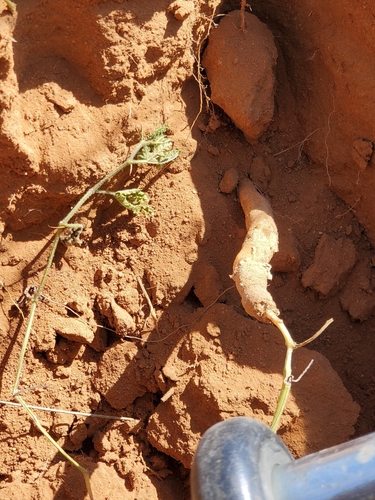
Cucurbita moschata
(Duchesne ex Lam) Duchesne ex Poir.
Pumpkin, Winter squash
(c) Надежда Уразова, some rights reserved (CC BY-NC)
(c) Надежда Уразова, some rights reserved (CC BY-NC)
(c) Надежда Уразова, some rights reserved (CC BY-NC)
What to Eat
Edible parts: Fruit, Leaves, Seeds, Vegetable, Flowers
The fruit is cooked and, in some cultivars, has a delicious flavour when baked — somewhat like sweet potato. The flesh can also be dried and ground into a powder for use in breads and similar preparations. Certain varieties store well for up to 9 months. Seeds can be eaten raw or cooked; they are rich in oil with a pleasant nutty flavour, though fiddly to use as they are small and enclosed in a fibrous coat. An edible oil is also pressed from the seeds. Leaves and young stems are cooked as a potherb or added to soups and stews. Flowers are also edible when cooked.
Known Hazards
Where to Find It
A tropical plant. It suits the wet tropics. It will thrive in humid as well as in very hot climates. A temperature of 18-30°C is best. In PNG it grows to 2,400 m above sea level. It can tolerate some shade. It can grow in soils with a pH of 5.5-6.9. In Bolivia it grows up to 2000 m altitude. It suits hardiness zones 8-11. In Yunnan.
Africa, Angola, Argentina, Asia, Australia, Balkans, Bangladesh, Benin, Bolivia, Botswana, Bougainville, Brazil, British Indian Ocean Terr., BIOT, Burkina Faso, Burundi, Cambodia, Cameroon, Cape Verde, Central Africa, Central African Republic, CAR, Central America, Central Asia, Chad, China, Colombia, Comoros, Congo, Cook Islands, Costa Rica, Côte d'Ivoire, Cuba, Dominican Republic, East Africa, East Timor, Ecuador, Equatorial-Guinea, Eritrea, Ethiopia, FSM, Fiji, Gabon, Gambia, Ghana, Guatemala, Guiana, Guianas, Guinea, Guinée, Guinea-Bissau, Guyana, Haiti, Himalayas, Honduras, India, Indochina, Indonesia, Ivory Coast, Jamaica, Kenya, Korea, Liberia, Macedonia, Madagascar, Malawi, Malaysia, Mali, Mariana Islands, Mauritania, Mauritius, Mexico, Mozambique, Myanmar, Namibia, Nicaragua, Niger, Nigeria, North America, Northeastern India, Pacific, Pakistan, Papua New Guinea, PNG, Peru, Philippines, Pohnpei, Puerto Rico, Rwanda, Sahel, SE Asia, Senegal, Seychelles, Sierra Leone, Sikkim, Solomon Islands, Somalia, South Africa, Southern Africa, South America, Sri Lanka, Suriname, Taiwan, Tajikistan, Tanzania, Tasmania, Thailand, Timor-Leste, Togo, Tokelau, Tuvalu, Uganda, Uruguay, USA, Vanuatu, Vietnam, West Africa, West Indies, Zambia, Zimbabwe,
How to Identify
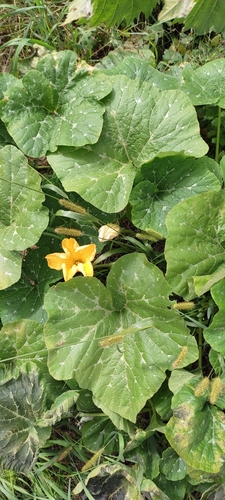
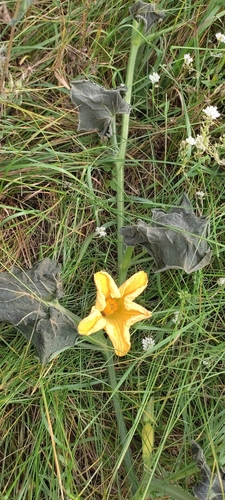
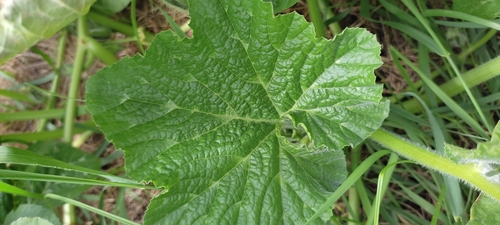
A pumpkin family plant. It is a creeping plant with long creeping stems and softly hairy but without prickly hairs. The stem are rounded or 5 angled and moderately hard. They can grow 15-20 m long. The leaves are large and shallowly lobed and divided like fingers on a hand. Occasionally the leaves have white blotches. They have rounded lobes. They are 20 cm by 30 cm. The leaf stalk is 12-30 cm long. The flowers have male and female flowers separately on the same plant. The fruit stalk is distinctly expanded there it joins the fruit. The fruit are not hard shelled and are dull in colour. The flesh is yellow. Often the flesh has fibres through it. The seeds are plump and white to brown. They separate easily from the pulp of the fruit. The edge of the seed is scalloped and irregular in outline. There are a large number of cultivated varieties.
Nutrition Score: 64/100
| Part | Moisture | kJ | kcal | Protein | Vit A | Vit C | Iron | Zinc |
|---|---|---|---|---|---|---|---|---|
| Seeds | 5.5 | 2331 | 555 | 23.4 | — | — | 2.8 | — |
| Leaves | 93.6 | 88 | 21 | 3 | 95 | 10 | 2.1 | — |
| Fruit | 95 | 35 | 13 | 0.7 | — | 14 | 0.4 | — |
How to Grow
Plants are grown from seed. Seeds can be put in a nursery and transplanted.
Propagation: Sow seed in a greenhouse in early to mid spring in rich soil; germination should occur within 2 weeks. Sow 2 or 3 seeds per pot and thin to the strongest plant. Grow on quickly and plant out after the last expected frosts, providing cloche or frame protection for at least the first few weeks if growing outdoors.
Medicinal Uses
The seeds are vermifuge and are eaten fresh or roasted to relieve abdominal cramps and distension caused by intestinal worms. Around 800 peeled seeds is considered a safe and effective treatment for tapeworm — they are ground to a fine flour, made into an emulsion with water, and eaten, after which a purge is needed to expel the tapeworms or other parasites. The boiled root is galactogogue.
Other Uses
An edible oil is obtained from the seed.
Wikipedia
Source ↗Cucurbita moschata is a species originating in the tropical Americas which is cultivated for edible flesh, flowers, greens, and seeds. It includes cultivars known in English as squash or pumpkin. Cultivars of C. moschata are generally more tolerant of hot, humid weather than squash of other domesticated species. C. moschata also exhibit a greater resistance to certain disease and insects, notably including to the squash vine borer. Commercially-made pumpkin pie mix is most often made from varieties of C. moschata.
Production
Fruit mature in 70-180 days after sowing depending on variety.
Other Information
It is a commercially cultivated vegetable. It is sold in local markets.
Notes
There are 25 Cucurbita species. It has anticancer properties.
Names & Synonyms
Abobora-redonda, Ayote, Be, Bocor, Bulung jelok, Butternut squash, Calabacin, Calabaza, Canada crookneck, Cushaw, Hobak, Hpayon, Iwa, Kabocha, Kanmble, Nhoko, Pamukeni, Pucuk labu, Pwengkin, Tap, Zapallo
References (94)
- Achigan-Dako, E, et al (Eds), 2009, Catalogue of Traditional Vegetables in Benin. International Foundation for Science.
- Ambasta, S.P. (Ed.), 2000, The Useful Plants of India. CSIR India. p 149
- Anderson, E. F., 1993, Plants and people of the Golden Triangle. Dioscorides Press. p 208
- Arellanes, Y., et al, 2013, Influence of traditional markets on plant management in the Tehuacan Valley. Journal of Ethnobiology and Ethnomedicine 9:38
- Beckstrom-Sternberg, Stephen M., and James A. Duke. "The Foodplant Database." http://probe.nalusda.gov:8300/cgi-bin/browse/foodplantdb.(ACEDB version 4.0 - data version July 1994)
- Bianchini, F., Corbetta, F., and Pistoia, M., 1975, Fruits of the Earth. Cassell. p 106
- Bourke, R. M., Altitudinal limits of 230 economic crop species in Papua New Guinea. Terra australis 32.
- Brouk, B., 1975, Plants Consumed by Man. Academic Press, London. p 132
- Burkill, H. M., 1985, The useful plants of west tropical Africa, Vol. 1. Kew.
- Burkill, I.H., 1966, A Dictionary of the Economic Products of the Malay Peninsula. Ministry of Agriculture and Cooperatives, Kuala Lumpur, Malaysia. Vol 1 (A-H) p 708
- Cheifetz, A., (ed), 1999, 500 popular vegetables, herbs, fruits and nuts for Australian Gardeners. Random House p 60
- Cobley, L.S. (rev. Steele, W.M.) 2nd Ed., 1976, An Introduction to the Botany of Tropical Crops. Longmans. p 136
- Coe, F. G. & Anderson, G. J., 1997, Ethnobotany of the Miskitu of Eastern Nicaragua. Journal of Ethnobiology 17(2): 171-214
- Cundall, P., (ed.), 2004, Gardening Australia: flora: the gardener's bible. ABC Books. p 441
- D'Ambrosio, U., & Puri, R. K., 2016, Foodways in transition: food plants, diet and local perceptions of change in a Costa Rican Ngäbe community. Journal of Ethnobiology and Ethnomedicine (2016) 12:3 p 22
- Dansi, A., et al, 2008, Traditional leafy vegetables and their use in the Benin Republic. Genet Resour Crop Evol (2008) 55:1239–1256
- Duarte, M. C., et al, 2022, Diversity of Useful Plants in Cabo Verde Islands: A Biogeographic and Conservation Perspective. Plants 2022, 11, 1313 p 10
- Edwards. S., et al, (Eds), 1995, Flora of Ethiopia and Eritrea. Vol.2, Part 2 Canellaceae to Euphorbiaceae. Uppsala, Sweden. p 53
- Ekman Herbarium records Haiti
- Essai sur l'Histoire Naturelle des Courges 7. 1786 (J. L. M. Poiret in F. Cuvier, Dict. sci. nat. 11:234. 1819)
- Estrada-Castillon, E., et al, 2014, Ethnobotany in Rayones, Nuevo Leon, Mexico. Journal of Ethnobiology and Ethnomedicine, 10:62
- Facciola, S., 1998, Cornucopia 2: a Source Book of Edible Plants. Kampong Publications, p 86
- Farfan, B., et al, 2007, Mazahua Ethnobotany and Subsistence in the Monarch Butterfly Biosphere Reserve, Mexico. Economic Botany 61(2) 2007, pp 173-191
- Flores, M. P., et al, 2007, Estudio Etnobotanico De Zapotitlan Salinas, Puebla, Acta Botanica Mexicana, Mexico. p 22
- Foo, J. T. S. (ed), 1996, A Guide to Common Vegetables. Singapore Science Foundation. p 56
- French, B.R., 1986, Food Plants of Papua New Guinea, A Compendium. Asia Pacific Science Foundation p 102
- French, B.R., 2010, Food Plants of Solomon Islands. A Compendium. Food Plants International Inc. p 134
- Furusawa, T., et al, 2014, Interaction between forest biodiversity and people's used of forest resources in Roviana, Solomon Islands: implications for biocultural conservation under socioeconomic changes. Journal of Ethnobiology and Ethnomedicine, 10:10
- Grubben, G. J. H. and Denton, O. A. (eds), 2004, Plant Resources of Tropical Africa 2. Vegetables. PROTA, Wageningen, Netherlands. p 267
- Grubben, G.J.H. & Chigumira Ngwerume, F., 2004. Cucurbita moschata Duchesne. [Internet] Record from Protabase. Grubben, G.J.H. & Denton, O.A. (Editors). PROTA (Plant Resources of Tropical Africa), Wageningen, Netherlands. < http://database.prota.org/search.htm>. Accessed 15 October 2009.
- Hadfield, J., 2001, The A-Z of Vegetable Gardening in South Africa. Struik p 119
- Harkonen, M. & Vainio-Mattila, K., 1998, Some examples of Natural Products in the Eastern Arc Mountains. Journal of East African Natural History 87:265-278
- Hedrick, U.P., 1919, (Ed.), Sturtevant's edible plants of the world. p 235
- Hermandez Bermejo, J.E., and Leon, J. (Eds.), 1994, Neglected Crops. 1492 from a different perspective. FAO Plant Production and Protection Series No 26. FAO, Rome. p18, 71
- Hu, Shiu-ying, 2005, Food Plants of China. The Chinese University Press. p 701
- INFOODS:FAO/INFOODS Databases
- Jacquat, C., 1990, Plants from the Markets of Thailand. D.K. Book House p 54
- Japanese International Research Centre for Agricultural Science www.jircas.affrc.go.jp/project/value_addition/Vegetables
- Jardin, C., 1970, List of Foods Used In Africa, FAO Nutrition Information Document Series No 2.p 72
- Kays, S. J., and Dias, J. C. S., 1995, Common Names of Commercially Cultivated Vegetables of the World in 15 languages. Economic Botany, Vol. 49, No. 2, pp. 115-152
- Kintzios, S. E., 2006, Terrestrial Plant-Derived Anticancer Agents and Plant Species Used in Anticancer research. Critical Reviews in Plant Sciences. 25: pp 79-113
- Kiple, K.F. & Ornelas, K.C., (eds), 2000, The Cambridge World History of Food. CUP p 1742, 1857
- Kumar, A., et al, 2012, Ethnobotanical Edible Plant Biodiversity of Lepcha Tribes. Indian Forester, 138 (9):798-803
- Kuo, W. H. J., (Ed.) Taiwan's Ethnobotanical Database (1900-2000), http://tk.agron.ntu.edu.tw/ethnobot/DB1.htm
- Ladio, A., Lozada, M. & M. Weigandt, 2007, Comparison of traditional wild plant knowledge between aboriginal communities inhabiting arid and forest environments in Patagonia, Argentina. Journal of Arid Environments 69 (2007) 695–715
- Lazarides, M. & Hince, B., 1993, Handbook of Economic Plants of Australia, CSIRO. p 70
- Liu, Yi-tao, & Long, Chun-Lin, 2002, Studies on Edible Flowers Consumed by Ethnic Groups in Yunnan. Acta Botanica Yunnanica. 24(1):41-56
- Macmillan, H.F. (Revised Barlow, H.S., et al) 1991, Tropical Planting and Gardening. Sixth edition. Malayan Nature Society. Kuala Lumpur. p 334
- Manzanero-Medina, G. I., et al, 2020, Ethnobotany of food plants (quelites) sold in two traditional markets of Oaxaca, Mexico. South African Journal of Botany. 130 (2020) 215-223
- Martin, F.W. & Ruberte, R.M., 1979, Edible Leaves of the Tropics. Antillian College Press, Mayaguez, Puerto Rico. p 46, 148
- Medhi, P. & Borthakur, S. K., 2012, Phytoresources from North Cachur Hills of Assam -3: Edible plants sold at Hflong market. Indian Journal or Natural Products and Resources. 3(1) pp 84-109
- Miguel, E., et al, 1989, A checklist of the cultivated plants of Cuba. Kulturpflanze 37. 1989, 211-357
- Murtem, G. & Chaudhrey, P., 2016, An ethnobotanical note on wild edible plants of Upper Eastern Himalaya, India. Brazilian Journal of Biological Sciences, 2016, v. 3, no. 5, p. 63-81
- Nee, M., 1990, The Domestication of Cucurbita (Cucurbitaceae). Economic Botany, Vol. 44, No. 3, Supplement: New Perspectives on the Origin and Evolution of New World Domesticated Plants. pp. 56-68
- Ochse, J.J. et al, 1931, Vegetables of the Dutch East Indies. Asher reprint. p 190
- Oomen, H.A.P.C., & Grubben, G.J.H., 1978, Tropical Leaf Vegetables in Human Nutrition, Communication 69, Department of Agricultural research, RTI Amsterdam, p 36, 128
- Pascual-Mendoza, S. et al, 2021, Traditional knowledge of edible plants in an indigenous community in the Sierra Norte of Oaxaca, Mexico. Plant Biosystems - An International Journal Dealing with all Aspects of Plant Biology
- Pawera, L., et al, 2020, Wild Food Plants and Trends in Their Use: From Knowledge and Perceptions to Drivers of Change in West Sumatra, Indonesia, Foods. 2020, 9, 1240
- Peekel, P.G., 1984, (Translation E.E.Henty), Flora of the Bismarck Archipelago for Naturalists, Division of Botany, Lae, PNG. p 549
- Pena, F. B., et al, 1998, Los quelites de la Sierra Norte de Puebla, Mexico: Inventory Y Formas de Preparacion. Bol. Soc. Bot. Mexico 62:49-62
- Pham-Hoang Ho, 1999, An Illustrated Flora of Vietnam. Nha Xuat Ban Tre. p 571
- Phon, P., 2000, Plants used in Cambodia. © Pauline Dy Phon, Phnom Penh, Cambodia. p 184
- Piedra-Malagón, E. M. et al, 2022, Edible native plants of the Gulf of Mexico Province. Biodiversity Data Journal 10: e80565 p 17
- Plants for a Future database, The Field, Penpol, Lostwithiel, Cornwall, PL22 0NG, UK. http://www.scs.leeds.ac.uk/pfaf/
- Plants of Haiti Smithsonian Institute http://botany.si.edu/antilles/West Indies
- Purseglove, J.W., 1968, Tropical Crops Dicotyledons, Longmans. p 119
- Roa, J. A. G. & Boada, D. S. G., 2018, Fundación para el Fortalecimiento de la Fruticultura y Plantas Alimenticias no Convencionales en Colombia.
- Ruiters-Welcome, A. K., 2019, Food plants of southern Africa. Ph.D. thesis. Univ. of Johannesburg p 49
- Schneider, E., 2001, Vegetables from Amaranth to Zucchini: The essential reference. HarperCollins. p 601
- Segnon, A. C. & Achigan-Dako, E. G., 2014, Comparative analysis of diversity and utilization of edible plants in arid and semi-arid areas in Benin. Journal of Ethnobiology and Ethnomedicine 2014, 10:80
- Sharma, B.B., 2005, Growing fruits and vegetables. Publications Division. Ministry of Information and broadcasting. India. p 179
- Small, E., 2009, Top 100 Food Plants. The world's most important culinary crops. NRC Research Press. p 449
- Song, M., et al, 2013, Traditional knowledge of wild edible plants in Jeju Island, Korea. Indian Journal of Traditional Knowledge. 12(2) pp 177-194
- Staples, G.W. and Herbst, D.R., 2005, A tropical Garden Flora. Bishop Museum Press, Honolulu, Hawaii. p 266
- Sujarwo, W., et al, 2016, Traditional knowledge of wild and semi-wild edible plants used in Bali (Indonesia) to maintain biological and cultural diversity. Plant Biosystems, 2016, Vol. 150, No. 5, 971-976
- Terra, G.J.A., 1973, Tropical Vegetables. Communication 54e Royal Tropical Institute, Amsterdam, p 42
- Thaman, R. R, 2016, The flora of Tuvalu. Atoll Research Bulletin No. 611. Smithsonian Institute p 81
- Tindall, H.D., 1983, Vegetables in the tropics. Macmillan p. 166
- Torre, de la, L., et al, 2008, Enciclopedia de las Plantas Útiles del Ecuador. Herbario QCA. Pontificia Universidad Católica del Ecuador. p 298
- Topp, J. M. W., 1988, An Annotated Check List of the Flora of Diego Garcia, British Ocean Territory. Atoll Research Bulletin No. 313
- Ulian, T., et al, 2020, Unlocking plant resources to support food security and promote sustainable agriculture. Plants, People, Planet. 2020;2:421–445.
- USDA, ARS, National Genetic Resources Program. Germplasm Resources Information Network - (GRIN). [Online Database] National Germplasm Resources Laboratory, Beltsville, Maryland. Available: www.ars-grin.gov/cgi-bin/npgs/html/econ.pl (10 April 2000)
- van Wyk, B., 2005, Food Plants of the World. An illustrated guide. Timber press. p 162
- Vasquez, R. and Gentry, A. H., 1989, Use and Misuse of Forest-harvested Fruits in the Iquitos Area. Conservation Biology 3(4): 350f
- Walter, A. & Lebot, V., 2007, Gardens of Oceania. ACIAR Monograph No. 122. p 195
- Walters, T. W., 1989, Historical Overview on Domesticated Plants in China with Special Emphasis on the Cucurbitaceae. Economic Botany 43(3): 297-313
- Welcome, A. K. & Van Wyk, B.-E., 2019, An inventory and analysis of the food plants of southern Africa. South African Journal of Botany 122 (2019) 136–179
- Whitaker,T.W., & Bemis,W.P., 1979, Cucurbits, in Simmonds N.W.,(ed), Crop Plant Evolution. Longmans. London. p 64
- Wickens, G.E., 1995, Edible Nuts. FAO Non-wood forest products. FAO, Rome. p 119
- Wiersema, J. H. & Leon, B., 2013, World Economic Plants. A Standard Reference CRC Press. 2nd Ed. p 217
- Woodward, P., 2000, Asian Herbs and Vegetables. Hyland House. p 60
- World Checklist of Useful Plant Species 2020. Royal Botanic Gardens, Kew
- Zambrana, P, et al, 2017, Traditional knowledge hiding in plain sight – twenty-first century ethnobotany of the Chácobo in Beni, Bolivia. Journal of Ethnobiology and Ethnomedicine (2017) 13:57
- Zhang, L., et al, 2016, Ethnobotanical study of traditional edible plants used by the Naxi people during droughts. Journal of Ethnobiology and Ethnomedicine. 12:39