Cycas circinalis subsp. riumuniana
L., (Porte) Schust.
Pitogo
(c) T R Shankar Raman, some rights reserved (CC BY)

(c) Madhushri Mudke, some rights reserved (CC BY-NC), uploaded by Madhushri Mudke
(c) T R Shankar Raman, some rights reserved (CC BY)
What to Eat
Edible parts: Leaves, Seeds, Trunk starch
The seed is poisonous. The potent poison in the seeds is removed by soaking them in water. Water from the first seed-soaking will kill birds, goats, sheep and hogs. Water from the following soakings is said to be harmless. [Minimum of 5 Soakings needed to ensure the safety] After the final soaking, the seeds are dried and ground into flour. The flour is used to make tortillas, tamales, soup and porridge.
Where to Find It
A tropical plant. It is scattered throughout the Philippines often near the seashore.
Asia, Pacific, Philippines, SE Asia,
How to Identify
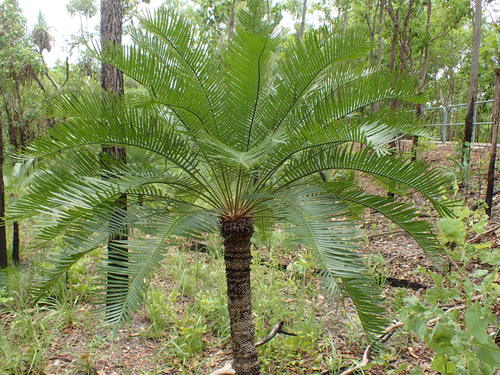
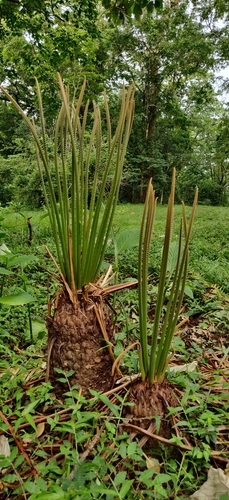
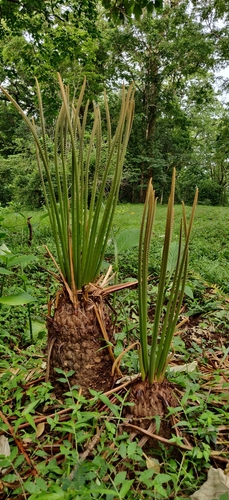
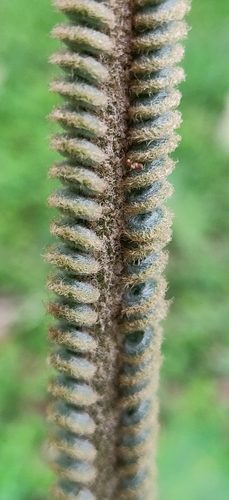
A palm like tree. It has a stout stem. It grows 12 m high. The trunk can be 50 cm across. The leaves are divided into leaflets along the stalk. The leaves are up to 1.5 m long. The leaves are produced in a cluster at the top of the trunk. The leaflets are 20-30 cm long and 1 cm wide. The male cones are oval and cylinder shaped and 60 cm long. The female flowers are brown and rusty and have 4-6 ovules/ The fruit is oval and 3-5 cm long.
How to Grow
Plants can be grown by seeds. Often pollen has to be transferred from the male plant to the female ovules to get viable seeds.
Wikipedia
Source ↗Cycas circinalis, also known as the queen sago, is a species of cycad known in the wild only from southern India. Cycas circinalis is the only gymnosperm species found among native Sri Lankan flora.
Notes
There are about 20-40 Cycas species.
References (2)
- Monsalud, M.R., Tongacan, A.L., Lopez, F.R., & Lagrimas, M.Q., 1966, Edible Wild Plants in Philippine Forests. Philippine Journal of Science. p 456
- Polinag, M. A., 2003, Food from the Wilderness. Department of Environment and Natural Resources. Laguna.