Solandra maxima
(Moc. & Sesse ex Dunal) P. S. Green
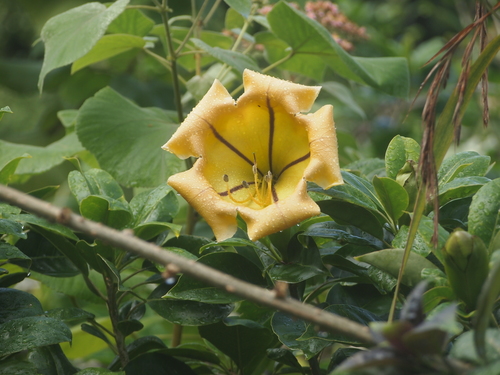
(c) J. Maughn, some rights reserved (CC BY-NC), uploaded by J. Maughn
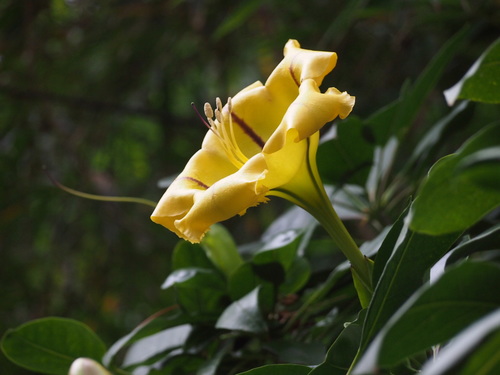
(c) Sunnetchan, some rights reserved (CC BY-NC-ND), uploaded by Sunnetchan
What to Eat
Edible parts: Fruit
The fruit are eaten.
Where to Find It
It is a tropical plant.
Belize, Canary Is., Central America, Colombia, Cook Is., Costa Rica, Ecuador, El Salvador, Fiji, Mauritius, Mexico, Nicaragua, Norfolk Is., Panama, South America, Spain, Vanuatu, Venezuela,
How to Identify
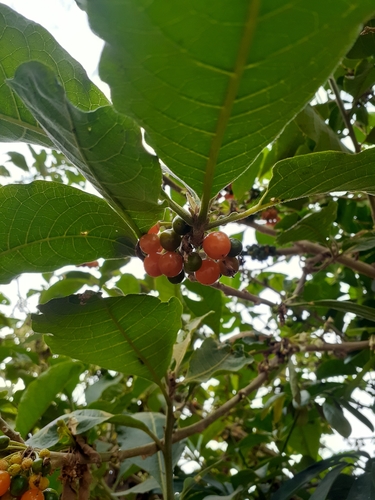
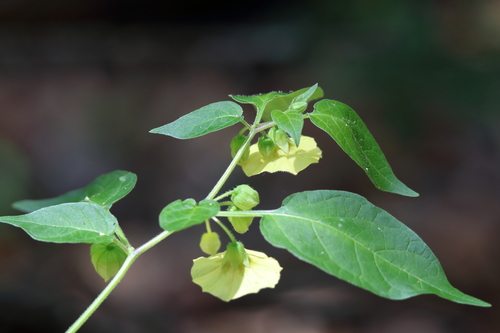
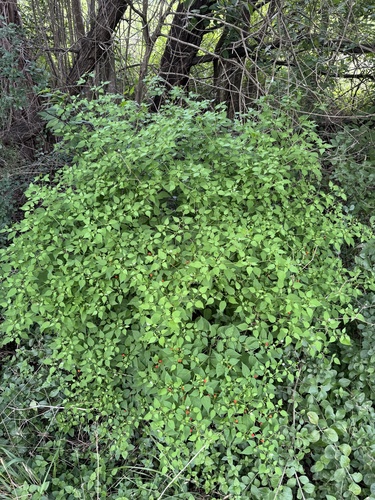
A climbing shrub. It attaches to other plants. It grows 1.6 m tall. The leaves are broadly oval and 14 cm long. They taper tot he tip. The flowers can occur singly or in a group. They are on a short stout stalk. The fruit are oval and smooth and shiny. They are 7 cm across.
Wikipedia
Source ↗Solandra maxima is a flowering plant in the family Solanaceae. It is also known as cup of gold vine, golden chalice vine, Copa de Oro, or Hawaiian lily, is a vigorous vine which is endemic to Mexico and Central America. It has very large yellow flowers and glossy leaves. It is often planted as an ornamental plant.
Other Information
It is cultivated.
Names & Synonyms
Copa de oro, Pera tetona
References (4)
- Kew Plants of the World Online
- Piedra-Malagón, E. M., et al, 2022, Edible native plants of the Gulf of Mexico Province. Biodiversity Data Journal 10: e80565 p 31
- Wiersema, J. H. & Leon, B., 2013, World Economic Plants. A Standard Reference CRC Press. 2nd Ed. p 641
- World Checklist of Useful Plant Species 2020. Royal Botanic Gardens, Kew