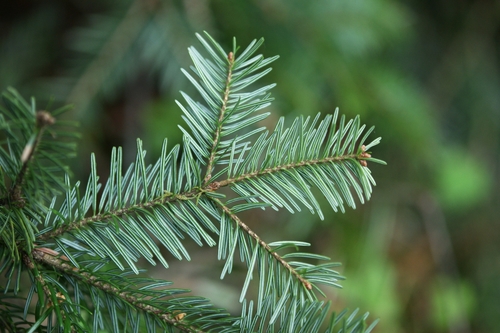
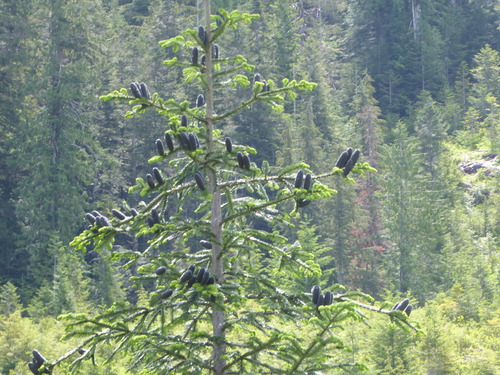
Pinus oocarpa
Schiede ex Schltdl.
Oocarpa pine
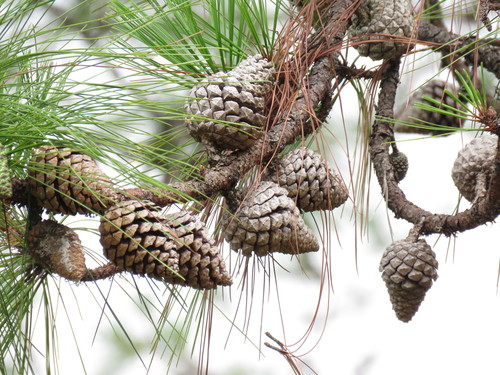
(c) Oliver Komar, some rights reserved (CC BY-NC), uploaded by Oliver Komar
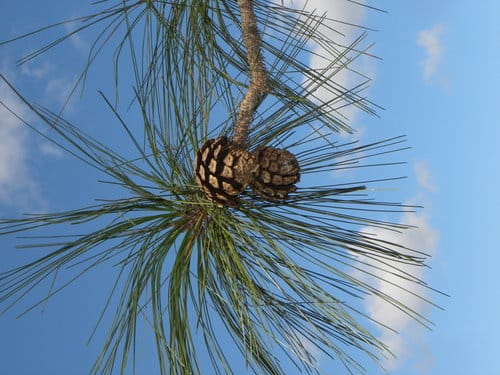
(c) María Eugenia Mendiola González, some rights reserved (CC BY-NC-SA)
What to Eat
Edible parts: Seeds
A vanillin flavouring is obtained as a by-product of resins released from the pulpwood. The seeds of all Pinus species are more or less edible; some are large, tasty, and nutritious enough to be eaten in quantity, while others are less appealing due to a strongly resinous flavour, bitterness, or more commonly a size too small to make harvesting worthwhile. No specific information is available on the desirability of this species' seeds.
Known Hazards
Where to Find It
It is a tropical plant.
Central America, Colombia, Costa Rica, Mexico, Nicaragua,
How to Identify
Fast-growing evergreen tree reaching 20m tall and 12m wide. Wind-pollinated. Prefers light sandy and medium loamy well-drained soils tolerating nutritionally poor conditions. Adapts to mildly acidic, neutral, and very acidic soils. Requires full sun, tolerates dry and moist soils with drought capability. Hardy to UK zone 10.
How to Grow
It grows in areas where the mean annual rainfall can be as low as 600 - 800 mm, in other parts of its native range annual rainfall can exceed 2,500 mm. It can tolerate a dry season of up to 5 months. Plants are not tolerant of frost. Mature plants require a sunny position, though young plants can tolerate some shade. Plants sometimes tolerate shallow soil. Most often found in the wild on shallow, sandy clay soils of moderate soil acidity (pH 4.0 - 6.5) that are well drained. Plants grow best on deep, well-drained soils and with good rainfall regimes. Young seedling plants tend to become bushy shortly after field establishment and remain that way for several years before a dominant terminal leader develops. Seedlings will resprout after heavy browsing by deer, and saplings will resprout from the base after either freezes or fires of low intensity. Continued interest in P. Oocarpa as a plantation species declined in the early to mid-1980's because provenances of P. Tecunumanii and P. Caribaea var. Hondurensis were found that yielded larger volumes of wood. The disadvantages of this species as a plantation crop include its slow initial growth on some sites, poor wind firmness, susceptibility to nutrient deficiencies and needle diseases, and a relatively light crown that permits a continuous weedy understory to develop, increasing the fire danger. However, recent problems of stem breakage in P. Tecunumanii have once again stimulated interest in planting more of this plant. Growers like its good wood quality, its ability to sprout from cut stumps, and the ease with which it vegetatively propagates. An extremely variable species in its native environment because it has evolved under diverse climatic and edaphic patterns over its 3000-km geographic distribution. In South-East Asia, plantation-grown trees often do not produce viable seed, due to unsynchronized production of male and female cones. This species is a principal host for the dwarf mistletoe Arceuthobium aureum subsp. petersonii in Oaxaca and Chiapas, and is the sole host of A. hondurense in Honduras (Hawksworth and Wiens 1996).
Propagation: Seeds do not usually require pre-treatment, though soaking them for 24 hours in warm water before sowing can improve germination rate and percentage. Seeds from the northernmost part of the range may need cold stratification. Germination begins in 7–10 days when sown in moist sand, and seedlings typically reach a field planting height of 20–25cm within 5–7 months. Cones open quickly when placed in a kiln or tobacco drying barn at 40–44°c for 24 hours. Seed can tolerate kiln temperatures of 50°c for 12–18 hours without losing viability; higher temperatures are not recommended. Because the seeds have thin coats that split or crack easily, great care is needed when dewinging by hand. Successful natural regeneration requires relatively high levels of sunlight reaching the ground. Grafting scions of this species onto P. merkusii rootstock has been shown in Indonesian trials to produce faster height growth than controls of the stock species.
Medicinal Uses
Turpentine from pine resin is antiseptic, diuretic, rubefacient, and vermifuge. Taken internally, it treats kidney and bladder complaints, and is used both internally and as a rub or steam bath for rheumatic conditions. It benefits the respiratory system and is useful for mucous membrane diseases, coughs, colds, influenza, and TB. Applied externally, it treats skin complaints, wounds, sores, burns, and boils, used in the form of liniment plasters, poultices, herbal steam baths, and inhalers.
Other Uses
As a pioneer species, this tree rapidly colonises exposed sites left bare by fire or erosion, and is planted to shade out alang-alang (Imperata cylindrica) grass. The needles release terpene when rained on, which negatively affects germination of some plants including wheat. A resin is obtained from the bark. The heartwood is light reddish brown, clearly distinct from the pale yellowish-brown sapwood; the grain is straight, the lustre medium, and the texture somewhat fine and uniform. The wood works easily with hand and machine tools, and is less prone to splitting and warping than most other pines, making it highly valued for sawn timber. The heartwood is classified as very durable against white-rot fungus and moderately durable against brown rot, though the wood does not weather well without paint or other protective coatings. It serves as a general-purpose timber and for pulp, and the pale yellowish wood is used for construction and furniture. The wood is also used for fuel and kindling.
Wikipedia
Source ↗Pinus oocarpa is a species of pine tree native to Mexico and Central America. It is the national tree of Honduras, where it is known as ocote. Common names include ocote chino, pino amarillo, pino avellano, Mexican yellow pine, egg-cone pine and hazelnut pine. It appears that it was the progenitor (original) species that served as the ancestor for some of the other pines of Mexico.
Names & Synonyms
Common names include ocote chino, pino amarillo, pino avellano, Mexican yellow pine, egg-cone pine and hazelnut pine, Pino de colorado, pino de ocote, pino prieto
References (2)
- Roa, J. A. G. & Boada, D. S. G., 2018, Fundación para el Fortalecimiento de la Fruticultura y Plantas Alimenticias no Convencionales en Colombia.
- World Checklist of Useful Plant Species 2020. Royal Botanic Gardens, Kew