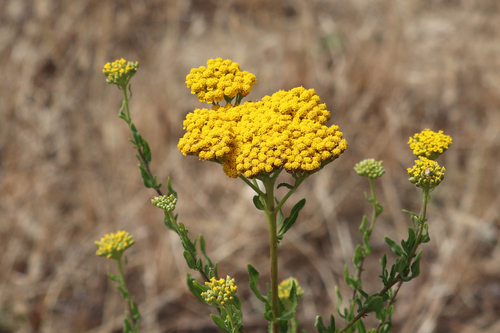
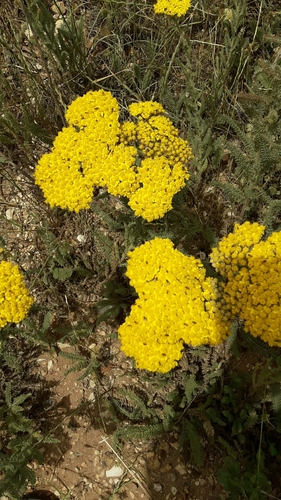
Inula crithmoides
L.
Golden samphire

(c) majazg1985, some rights reserved (CC BY-NC)
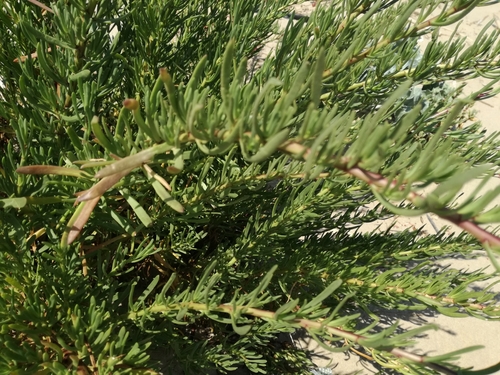
(c) Giuseppe Buscemi, some rights reserved (CC BY-NC)
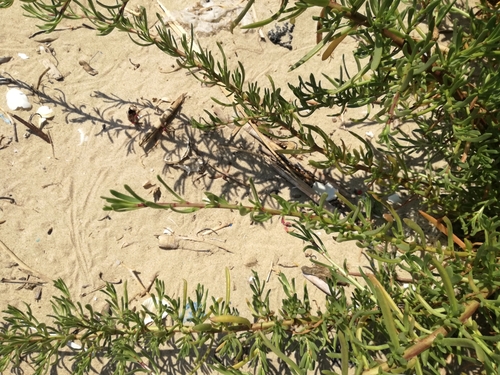
(c) Giuseppe Buscemi, some rights reserved (CC BY-NC)
What to Eat
Edible parts: Leaves, Flavouring
Young leaves can be eaten raw or cooked, and are occasionally used as a potherb. The fleshy leaves and young shoots are also pickled and used as a relish in salads. They are sometimes used as an adulterant of true samphire, Crithmum maritimum.
Where to Find It
It is a temperate plant. It grows on salt marshes.
Asia, Britain, Europe, Lebanon, Mediterranean, Middle East,
How to Identify
A herb that keeps growing from year to year. It grows 1 m tall. The flowers are yellow.
Nutrition Score: 9/100
| Part | Moisture | kJ | kcal | Protein | Vit A | Vit C | Iron | Zinc |
|---|---|---|---|---|---|---|---|---|
| Leaves | 91 | 87 | 21 | 0.9 | — | — | — | — |
How to Grow
Succeeds in an ordinary garden soil in a sunny position. One report says that the plant dislikes shade whilst another says that it succeeds in a shady border. The plant needs to be watered frequently and given some salt occasionally.
Propagation: Sow seed in a cold frame in spring or autumn. Once seedlings are large enough to handle, prick them out into individual pots and plant them out during summer. If sufficient seed is available, it is worth trying a direct sowing in situ in spring or autumn.
Medicinal Uses
No medicinal uses are known for this plant.
Other Uses
No other uses are known for this plant.
Wikipedia
Source ↗A hermaphroditic perennial reaching 1 meter, flowering July to August with seed ripening August to September. Pollinated by bees, flies, and beetles; self-fertile. Grows in light sandy, medium loamy, and heavy clay soils with preference for well-drained conditions. Tolerates mildly acid, neutral, mildly alkaline, and saline soils. Adapts to semi-shade or full sun, prefers moist soil, and withstands maritime exposure.
Other Information
It is sold locally.
References (1)
- Centofanti, T. & Banuelos, G., 2019, Practical uses of Halophytic Plants as Sources of Food and Fodder. CAB International. p 324